Watermelon Wine (makes 3 gallons)
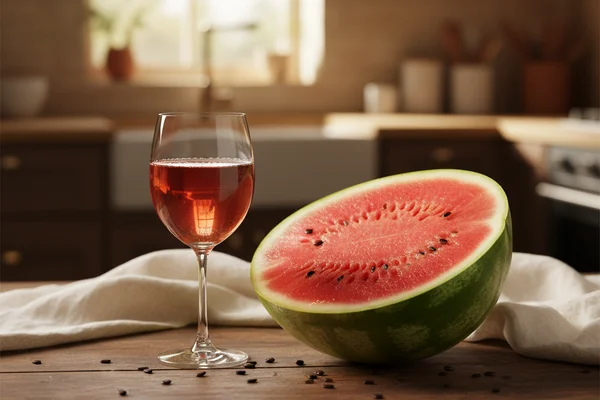
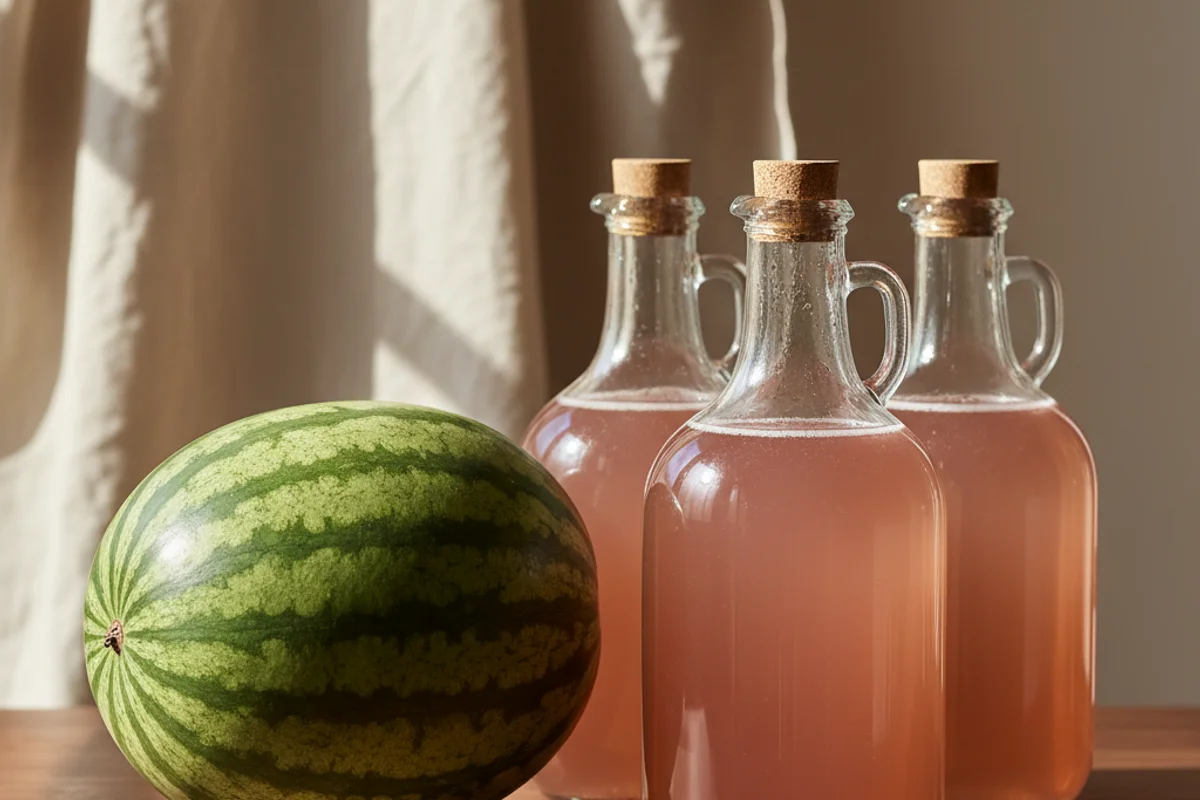
Watermelon is roughly 92% water, which sounds like a liability until you realize it’s also carrying a delicate, almost floral sweetness that disappears the second you apply too much heat or handle it too roughly. Done right, this wine holds onto that fresh-cut melon quality — light, faintly pink, and genuinely refreshing. It’s a warm-weather wine that rewards patience: a full year in the bottle transforms something thin and sharp into something you’d actually pour for guests.
The beginner trap: Skipping a hydrometer reading and dumping in the full sugar amount upfront — watermelon sweetness varies wildly between fruits, so adding sugar by weight alone almost always overshoots your target gravity.
Ingredients
- 9–11 lbs (about 2–3 large) fresh watermelon, enough to yield roughly 2¾ gallons of juice
- Up to 7½ lbs granulated white sugar, added in stages (see Method)
- 3 tsp acid blend (or 2 tsp lemon juice concentrate as a grocery-store stand-in)
- 3 tsp yeast nutrient (found at homebrew shops or online)
- 2 Campden tablets, crushed (or ¼ tsp potassium metabisulfite)
- 1 packet Champagne yeast (Lalvin EC-1118 is widely available; bread yeast is not a substitute)
Method
- Juice the watermelons using a blender, food mill, or juicer, then strain through a fine mesh bag or cheesecloth, discarding all pulp and seeds. Your target is 2¾ gallons of clear juice total.
- Pour 2 gallons + 1 quart of the juice into your primary fermenter. Seal any leftover juice in quart jars and refrigerate — you’ll need it later.
- Check the specific gravity of your juice with a hydrometer; your target starting gravity is around 1.090. Add sugar a pound at a time, stirring to dissolve and re-checking gravity until you reach that target (most batches need 6–7 lbs at this stage).
- Stir in the acid blend and yeast nutrient until fully dissolved, then stir in the crushed Campden tablets.
- Cover the fermenter with a clean cloth secured with a rubber band and leave it alone for 24 hours. This gives the sulfite time to sanitize the juice without killing the yeast you’re about to add.
- After 24 hours, sprinkle the Champagne yeast evenly over the surface of the juice — do not stir it in yet.
- Once you see active fermentation (bubbling, foam, or a rising cap), stir the juice once daily for 7 days.
- At the end of day 7, check gravity again. If you held back any sugar to hit your target, dissolve it in a small amount of warm juice and stir it in now.
- Stop stirring, re-cover the fermenter, and leave it undisturbed for another 7 days.
- Rack the wine into a 3-gallon glass carboy and fit an airlock. Do not top it up yet — leave the headspace for now.
- After 10 days, top up the carboy using your refrigerated reserve juice, reseal the airlock, and set the wine aside for 3 months. Discard any remaining reserve juice after topping up.
- Rack the wine again. If it’s crystal clear, bottle it. If it’s still hazy, refit the airlock and wait until clarity improves before bottling.
- Age bottled wine for at least 1 year before drinking.
Why this works
Watermelon juice is low in the natural acids and nutrients that yeast need to thrive, which is exactly why this recipe adds both acid blend and yeast nutrient before fermentation starts. Without that support, your yeast will stall partway through, leaving residual sugar and opening the door to off-flavors. The Campden tablet step matters too: sulfite at this concentration doesn’t sterilize the juice completely, but it knocks back wild yeast and bacteria long enough for your chosen Champagne yeast to establish dominance 24 hours later. Champagne yeast is the right call here because it ferments cleanly and tolerates the relatively high sugar load without producing harsh fusel alcohols.
Notes
Watermelon sweetness swings dramatically by variety and season, so always use a hydrometer — it’s the single most useful tool in this recipe. If you can’t find acid blend at a local homebrew shop, a half-cup of fresh lemon juice per gallon works in a pinch, though the flavor profile will shift slightly. This wine is naturally light-bodied and pale; don’t expect a deep color even from red-fleshed varieties.