WELCH’S FROZEN CONCENTRATE WINE
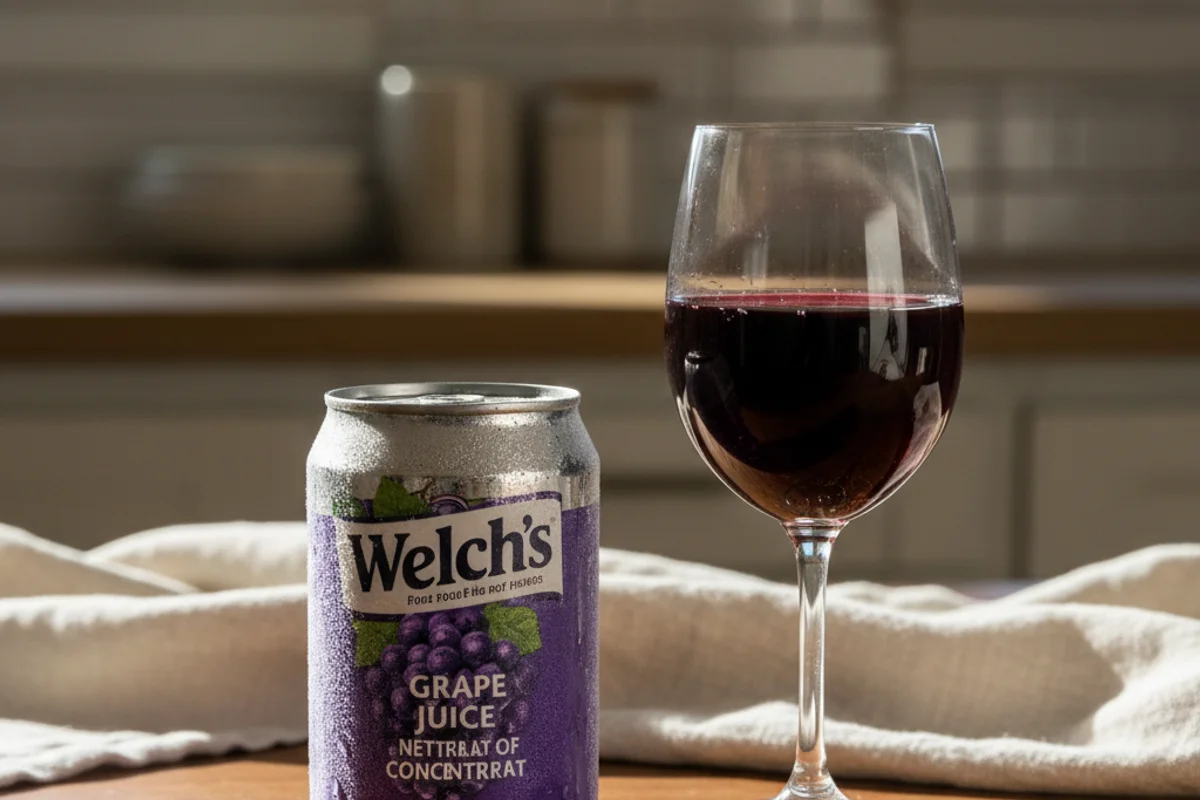
Concord grapes have a flavor scientists actually call “foxy” — a bold, jammy, almost grape-candy intensity that Vitis vinifera wine grapes simply don’t deliver. Two cans of Welch’s frozen concentrate pack all of that character into a one-gallon batch, and yeast turns it into something genuinely drinkable in about six weeks. No vineyard required. No harvest season to wait for. Just a freezer aisle, a fermentation vessel, and a little patience.
The beginner trap: Skipping the hydrometer check before adding sugar — because concentrate sugar levels vary batch to batch, you can easily overshoot your target gravity and end up with a rocket-fuel sweet wine instead of a clean 12–13% table wine.
Ingredients
- 23 oz (2 cans at 11.5 oz each) Welch’s 100% frozen grape concentrate, Concord or Niagara white
- 1¼ lbs granulated white sugar
- 2 tsp acid blend (available at homebrew shops; citric acid works as a backup)
- 1 tsp pectic enzyme
- 1 tsp yeast nutrient
- Water to bring total volume to 1 gallon
- 1 packet wine yeast (Lalvin EC-1118 or Red Star Montrachet both work well)
Method
- Bring 1 quart of water to a boil and dissolve the sugar completely, then remove the pot from heat.
- Stir in the frozen concentrate until fully thawed and blended.
- Pour the mixture into your fermentation vessel and add enough cool water to reach 1 gallon total.
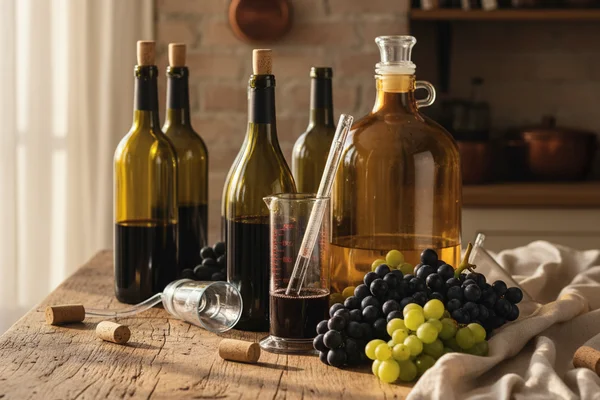
- Check the specific gravity with a hydrometer — your target is 1.085 to 1.090; adjust sugar up or down to hit that range.
- Add the acid blend, pectic enzyme, and yeast nutrient; stir well.
- Cover the vessel with a clean cloth or napkin secured with a rubber band and let it rest for 12 hours.
- Activate your wine yeast according to the packet instructions, then stir it into the must and re-cover with the cloth.
- After about 5 days, when vigorous bubbling slows down, swap the cloth for an airlock.
- Once the wine runs clear, rack it off the sediment into a clean vessel, top it up to minimize headspace, and reseal the airlock.
- After 30 more days, stabilize with potassium sorbate and potassium metabisulfite, sweeten to taste if desired, then rack into bottles.
Why this works
Concord grapes are loaded with pectin, which is why pectic enzyme earns its spot here — without it, the wine can stay stubbornly hazy no matter how long you wait. The enzyme breaks pectin chains apart so the particles can clump together and fall out of suspension. Acid blend keeps the pH in the range yeast prefer and gives the finished wine structure and brightness; without it, a grape-concentrate wine can taste flat and flabby. Yeast nutrient supplies nitrogen compounds that keep fermentation steady and reduce the risk of off-flavors from a stressed-out yeast population working through a nutrient-poor juice.
Notes
Welch’s also makes a 100% White Grape Concentrate from Niagara grapes — it produces a lighter, less tannic wine and is worth trying if you prefer something closer to a white table wine style. If acid blend isn’t available locally, start with ½ tsp citric acid and taste before adding more. For a sweeter finished wine, stabilize before back-sweetening or the yeast will simply ferment the added sugar away.