WELCH’S WHITE GRAPE AND RASPBERRY WINE
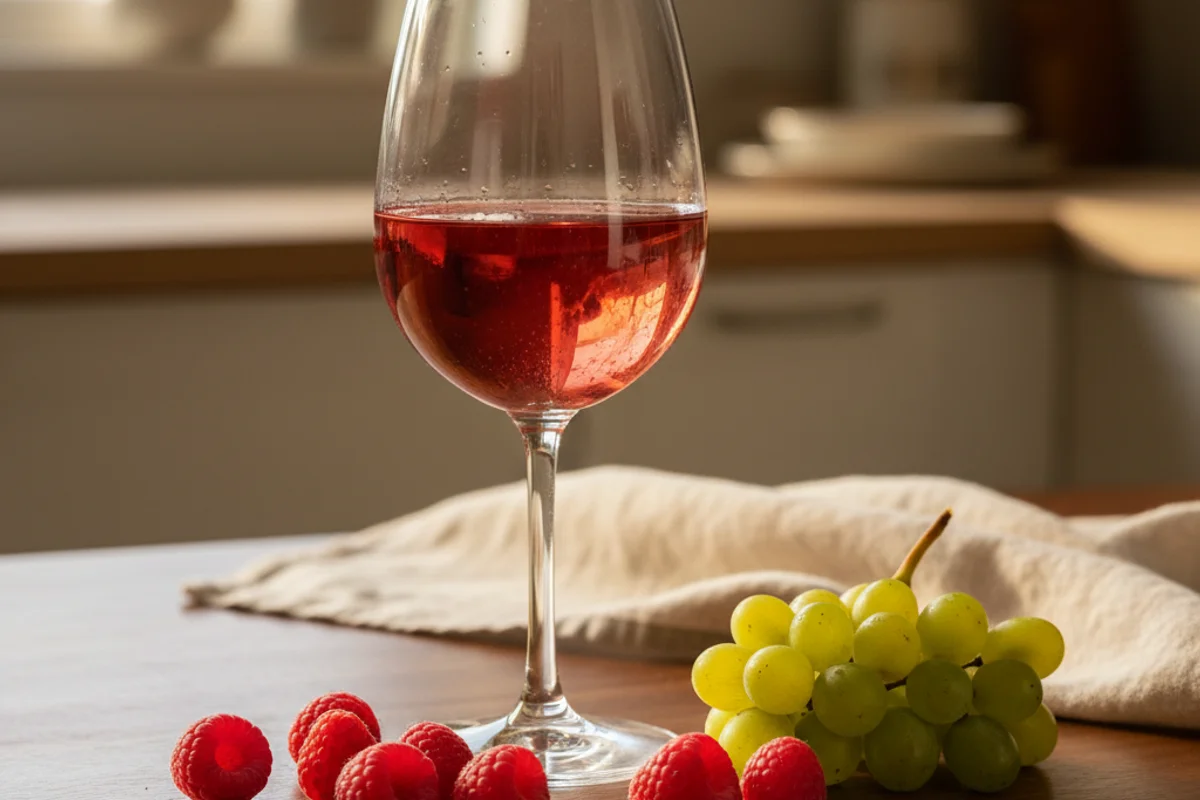
Think of this as a gateway drug to homemade wine. Two cans of frozen concentrate from the grocery store, a handful of additives, and about two months of patience will get you a light, slightly sweet wine that tastes genuinely good at a backyard lunch or a low-key gathering. The raspberry leans into the white grape’s mild sweetness without stomping on it — the result is soft, fruit-forward, and easy to drink. No vineyard required.
The beginner trap: Skipping the 12-hour wait before pitching yeast means the pectic enzyme hasn’t had time to break down fruit pectin, which leaves you with a permanently cloudy wine that won’t clear no matter how long you wait.
Ingredients
- 2 cans (11.5 oz each) Welch’s White Grape Raspberry frozen concentrate
- 1¼ lbs (about 2¾ cups) granulated white sugar
- 2 tsp acid blend (find it at a homebrew shop or online; citric acid from the grocery store works in a pinch)
- 1 tsp pectic enzyme (homebrew shop or online)
- 1 tsp yeast nutrient (homebrew shop or online)
- Water to reach 1 gallon total
- 1 packet Sauterne wine yeast (or any white wine yeast such as Lalvin 71B)
Method
- Bring 1 quart of water to a boil and stir in the sugar until fully dissolved. Remove the pot from heat.
- Add both cans of frozen concentrate to the hot sugar water and stir to combine.
- Pour the mixture into your 1-gallon fermentation vessel (secondary fermenter) and add enough cool water to bring the total volume to 1 gallon.
- Add the acid blend, pectic enzyme, and yeast nutrient. Stir well to combine everything.
- Cover the opening with a clean cloth or paper napkin secured with a rubber band. Set aside at room temperature for 12 hours — do not skip this wait.
- Activate your yeast according to the packet instructions, then add it to the must. Re-cover with the cloth.
- Fermentation will get active within a day or two. After about 5 days, once the bubbling slows down noticeably, swap the cloth for an airlock.
- Once the wine clears on its own, rack it into a clean vessel, top up with water or similar wine to minimize headspace, and refit the airlock.
- Wait 30 days, then rack again, top up, and refit the airlock.
- After another 30 days, stabilize the wine with potassium sorbate and potassium metabisulfite, sweeten to taste if you’d like, and rack into bottles.
Why this works
Frozen concentrate is already pressed, pasteurized, and flavor-concentrated — which means you’re skipping a lot of the messy fruit-prep steps and jumping straight to a clean, predictable must. The pectic enzyme is doing real work here: fruit juice contains pectin, a natural thickener that causes permanent haze if you don’t break it down before fermentation locks everything in. Acid blend fine-tunes the pH, keeping conditions friendly for your yeast while also sharpening the fruit flavors. Sauterne-style or similar white wine yeasts are chosen specifically because they tend to leave a touch of residual fruitiness rather than fermenting bone dry, which suits this style perfectly.
Notes
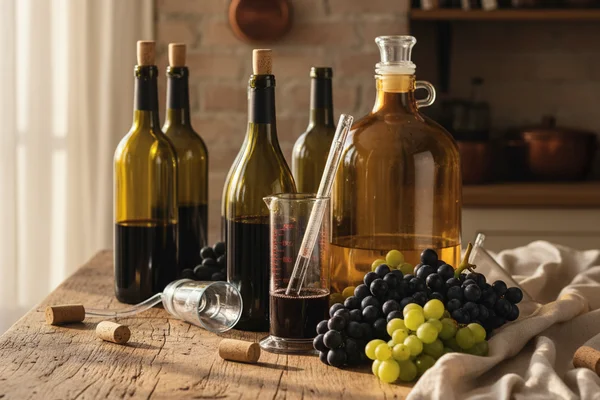
If you want a stronger wine, add a third can of concentrate and use your hydrometer to check the starting gravity before adjusting sugar — aim for a specific gravity around 1.090–1.095. Any white wine yeast works here if Sauterne yeast is hard to find; Lalvin 71B or EC-1118 are widely available at homebrew stores and online.