WHITE GRAPE-CHERRY WINE
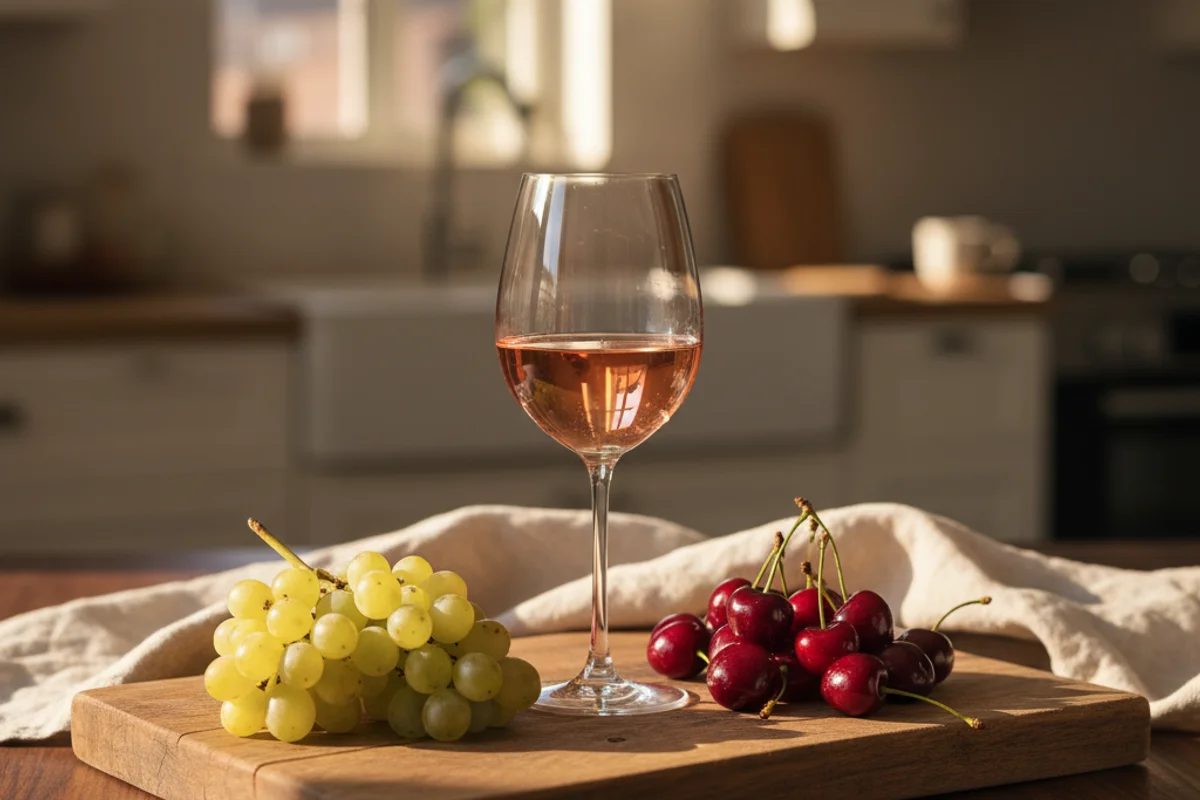
Crack open two jugs of Welch’s White Grape-Cherry juice and you’re already halfway to a genuinely interesting wine. This is a one-gallon “complex wine” — meaning the two fruit profiles ferment together rather than being blended after the fact. The result lands in a strange, pleasant middle ground: not quite white grape, not quite cherry, but something new that hints at both. Think light, slightly tart, and refreshing. It’s one of the most beginner-friendly juice wines you can make, and it punches well above its grocery-store origins.
The beginner trap: Skipping the full 6–8 minutes of stirring to dissolve the sugar — undissolved sugar throws off your starting gravity and stresses the yeast right from the start.
Ingredients
- 128 oz (two 64-oz bottles) Welch’s 100% White Grape-Cherry Juice
- 14 oz (by weight) granulated white sugar
- 1/4 tsp pectic enzyme
- 1/2 tsp acid blend (or 1/4 tsp cream of tartar + 1/4 tsp citric acid as a substitute)
- 1/8 tsp powdered grape tannin (or 1/2 cup strongly brewed black tea, cooled)
- 1 tsp yeast nutrient
- 1 packet Lalvin RC 212 wine yeast (or Lalvin EC-1118 as a widely available substitute)
- 1 Campden tablet
- Still white wine or cherry juice, for topping up
Method
- Pour one 64-oz bottle of juice into a sanitized 4-liter (or 1-gallon) jug. Add the sugar, pectic enzyme, acid blend, tannin, and yeast nutrient.
- Stir vigorously for 6–8 minutes until all the sugar is fully dissolved — no visible granules remaining.
- Pour in the second bottle of juice. The jug will not be completely full; that’s expected.
- Activate your yeast according to packet directions, then add it to the jug.
- Cover the opening with several layers of paper towel or a paper napkin secured with a rubber band. Do not use an airlock yet.
- Set the jug aside at room temperature for 3 days to allow active fermentation to get going.
- Remove the paper covering, fit a bung and airlock, and let fermentation run to completion.
- Once fermentation stops and the wine begins to clear, rack it into a clean 1-gallon jug. Crush and dissolve one Campden tablet and stir it in. Top up with cherry juice or a neutral white wine.
- Refit the airlock and leave undisturbed for 2 months.
- Rack again, then stabilize with potassium sorbate and sweeten to taste — or bottle as-is if you prefer it dry. If you sweeten, wait another 2–3 weeks under airlock before bottling.
- The wine is drinkable after 2 months in the bottle, though another month improves it noticeably.
Why this works
Fermenting two fruit juices together does something a simple blend of finished wines cannot: it lets their chemistries interact during fermentation. Enzymes produced by the yeast work on both fruit profiles simultaneously, breaking down pectin, converting sugars, and producing esters and alcohols that reflect the combined substrate — not two separate ones. Pectic enzyme helps here by breaking down the fruit pectin in the juice, which otherwise causes haze and can mute flavor. The tannin adds just enough structure to keep the wine from feeling flat and thin, which is the natural weakness of a juice-only base. What comes out the other side is genuinely its own thing.
Notes
Welch’s White Grape-Cherry is widely available in the juice aisle; if you can’t find it, Welch’s White Grape-Peach makes a solid substitute with a similar flavor profile. Acid blend is sold at homebrew shops, but the cream of tartar and citric acid swap works fine for this style of light fruit wine. If the finished wine tastes too tart after clearing, sweeten with a simple syrup rather than adding more juice.