WILD CHOKECHERRY DESSERT WINE
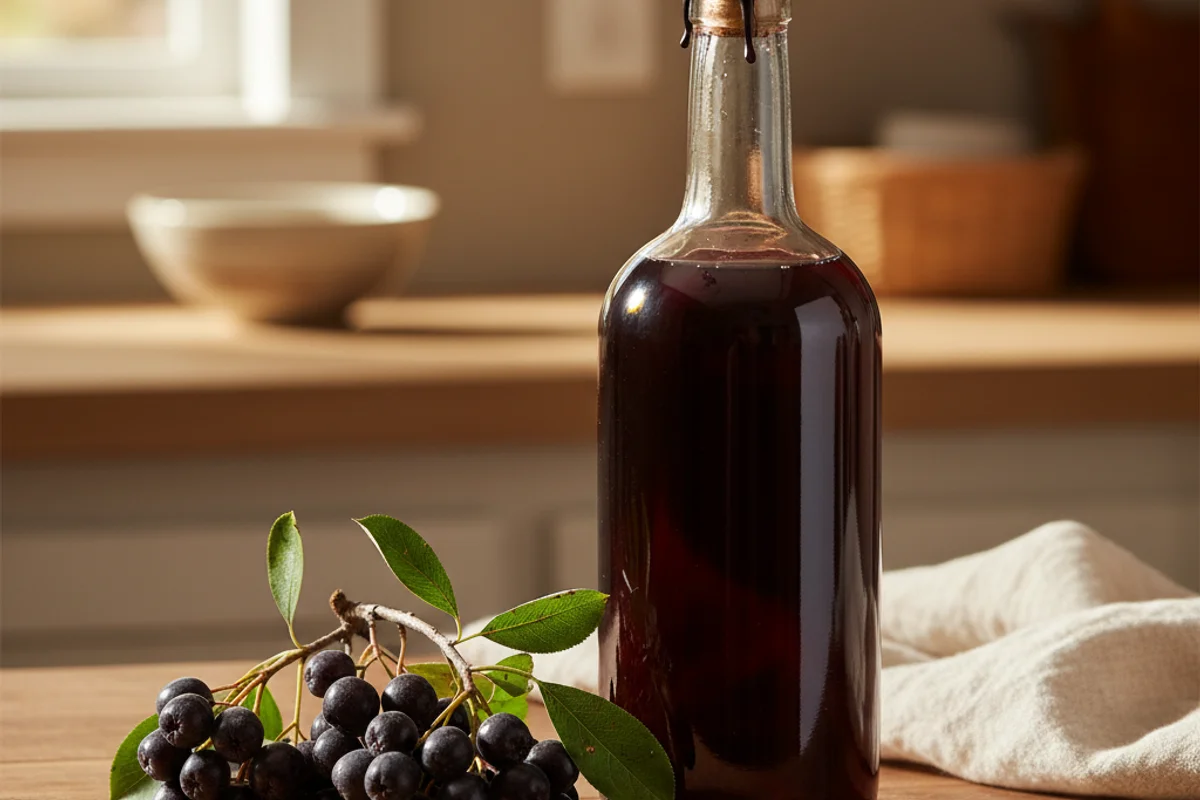
Chokecherries earn their name honestly — bite one raw and your mouth will pucker into next Tuesday. But heat, time, and a little sugar chemistry transform that aggressive astringency into something genuinely complex: a deep garnet dessert wine with dark cherry and almond undertones, a hint of tannin, and enough residual sweetness to balance the whole act. This is a wine that rewards patience. The fruit is intense, the color is stunning, and the finished bottle tastes like it came from somewhere far more expensive than your garage.
The beginner trap: Crushing the pits during berry processing releases bitter, potentially toxic compounds — keep your squeezing gentle and work with your hands, not a press or blender.
Ingredients
- 8 lbs ripe wild chokecherries, fresh or frozen, destemmed and sorted
- 2¾ lbs granulated white sugar, divided
- 6½ pints (about 13 cups) water
- 1 crushed Campden tablet (potassium or sodium metabisulfite)
- 1 tsp pectic enzyme
- 1 tsp yeast nutrient (available at homebrew shops or online)
- ½ tsp yeast energizer (substitute an extra ½ tsp yeast nutrient if unavailable)
- 1 packet wine yeast (Lalvin EC-1118 or Red Star Côte des Blancs work well)
- ½ cup granulated sugar + ¼ cup water for back-sweetening at bottling
Method
- Destem and sort the chokecherries, discarding any bruised or moldy fruit. Place the berries in a nylon mesh straining bag, tie it closed, and set it in your primary fermenter (a food-grade bucket works fine).
- Bring the water to a full boil, then pour it over the bagged fruit. Cover the fermenter loosely with a plastic sheet or lid and let it sit for 2–3 hours.
- Reach into the bag and crush the berries by hand, squeezing the flesh without cracking the pits. Work thoroughly but gently.
- Add half the sugar (about 1⅜ lbs) along with the Campden tablet, yeast nutrient, and yeast energizer. Stir well until the sugar fully dissolves, then re-cover the fermenter.
- After 12 hours, stir in the pectic enzyme. After another 12 hours, pitch the wine yeast.
- Squeeze and stir the fruit bag twice daily for 5 days to extract color and flavor.
- On day 5, dissolve the remaining sugar in a small amount of the fermenting liquid, then stir it back into the must. Continue fermenting for 3 more days.
- On day 8, lift and gently squeeze the fruit bag to drain it, then siphon the liquid into a dark glass carboy or secondary fermenter. Fit an airlock.
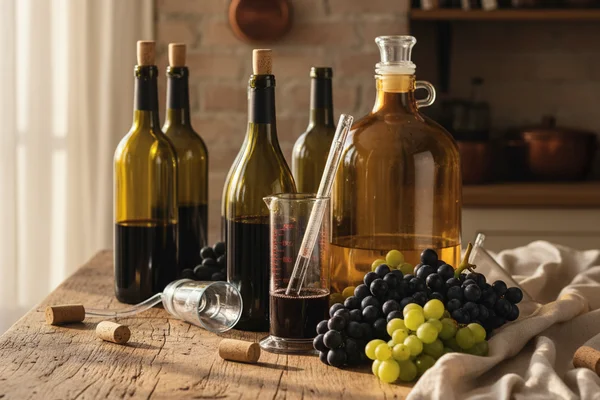
- After 30 days, rack the wine into a clean vessel, leaving the sediment behind. Repeat this racking process every two months for a total of four rackings.
- After the third racking, stabilize the wine with a fresh Campden tablet and potassium sorbate (follow package directions) to stop any remaining fermentation.
- Before bottling, dissolve ½ cup sugar in ¼ cup boiling water, let it cool completely, and stir it into the wine to back-sweeten. Bottle in dark glass and age at least 9–12 months.
Why this works
Chokecherries are loaded with tannins and anthocyanins — the same pigment compounds that give red wine its color and structure. The boiling-water steep pulls those compounds out without a long cold maceration. Splitting the sugar addition matters: dumping it all in at once can stress the yeast and stall fermentation. Adding the second half on day 5 keeps the yeast working at a manageable sugar level. The pectic enzyme breaks down fruit pectin, which would otherwise leave the finished wine hazy no matter how long you wait. Dark glass at bottling isn’t just aesthetic — anthocyanins degrade fast under UV light, and a beautiful garnet wine can turn brownish-orange in clear bottles within months.
Notes
Frozen chokecherries work well here and are often easier to source; thaw them fully before use and skip the boiling-water wait time by about 30 minutes since freezing already breaks down cell walls. If you can’t find chokecherries at all, this method translates well to tart pie cherries, though the flavor profile will be milder. Yeast energizer is a blend of micronutrients — if your homebrew shop doesn’t carry it, doubling the yeast nutrient is a reasonable stand-in.