WILD CHOKECHERRY WINE (1)
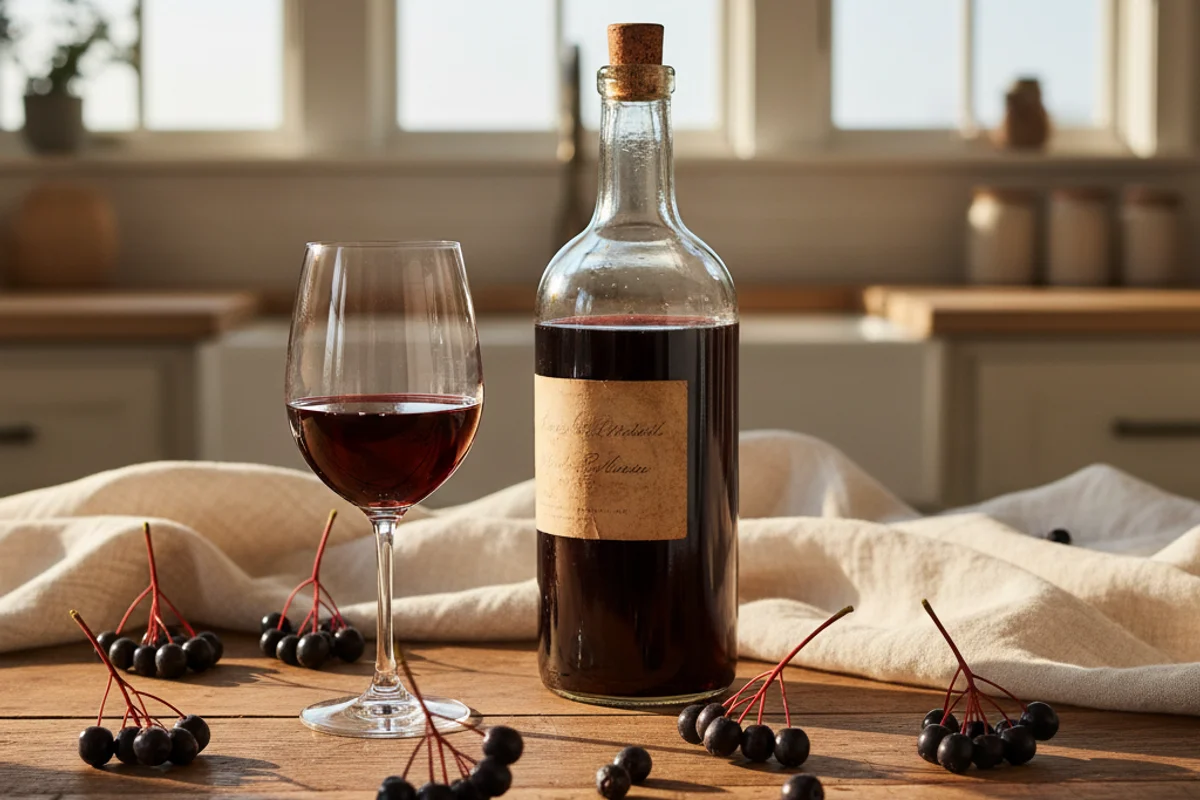
Chokecherries earn their name honestly — pop one raw and your mouth will pucker like you owe it money. But fermentation performs a kind of alchemy on these tart little wild fruits, coaxing out a deep, ruby-red wine with a flavor somewhere between black cherry and dark plum, with just enough grippy tannin to keep things interesting. This is a slow-build wine: it needs time in the bottle the way a good cast-iron skillet needs seasoning. Patience is the secret ingredient no one lists.
The beginner trap: Skipping the pit-removal step — chokecherry pits contain compounds that turn bitter fast under fermentation, and no amount of aging will fix that off-flavor once it’s in the wine.
Ingredients
- 2½ lbs fresh wild chokecherries (fresh or frozen; see Notes)
- 2½ lbs granulated white sugar, divided
- 7 pints water
- 1 tsp acid blend (citric acid from the grocery store works in a pinch)
- ¼ tsp grape tannin (or 1 cup strong-brewed unsweetened black tea)
- ½ tsp pectic enzyme
- 1 tsp yeast nutrient
- 1 Campden tablet, crushed
- 1 packet Champagne or Sauterne wine yeast
Method
- Sort berries carefully, keeping only fully ripe ones. Remove all stems and pits, then blend the berries with 1 cup of the water until roughly chopped.
- Pour the chopped fruit into a nylon straining bag, tie it closed, and place it in your primary fermenter.
- Add half the sugar, the remaining water, acid blend, grape tannin, and crushed Campden tablet. Stir until the sugar fully dissolves.
- Cover the fermenter and let it rest for 12 hours.
- Add the pectic enzyme, stir gently, cover again, and wait another 12 hours.
- Sprinkle in the yeast and yeast nutrient, stir, and cover the fermenter.
- Squeeze the fruit bag gently twice a day to pull juice out of the pulp. Keep this up for 7 days.
- After 7 days, lift the bag and squeeze it firmly to extract as much juice as possible, then discard the solids.
- Stir in the remaining sugar until fully dissolved, then transfer the liquid to your secondary fermenter and fit an airlock.
- Wrap the secondary in brown paper or use a dark-colored vessel — light destroys the wine’s color.
- Ferment for 30 days, then rack to a clean vessel. Rack again after 2 months, then once more 2 months after that.
- To sweeten, add potassium sorbate stabilizer, wait 10 days, then dissolve no more than ¼ cup sugar in ⅛ cup warm water and stir it in.
- Bottle in dark glass and store away from light. The wine is drinkable at 6 months but hits its stride at 1 year.
Why this works
Chokecherries are loaded with anthocyanins — the same pigment molecules responsible for the wine’s dramatic color — but those pigments are light-sensitive and will fade fast if exposed to UV. That’s why the dark fermenter and dark bottles matter, not just for aesthetics but for flavor stability. The two-stage sugar addition is equally deliberate: dumping all the sugar at once would spike the osmotic pressure in the must, stressing the yeast before it gets going. Splitting the addition gives the yeast a gentler start, then a mid-ferment fuel boost. The pectic enzyme breaks down cell-wall pectin in the fruit, which dramatically improves juice clarity and yield.
Notes
Frozen chokecherries work well here — freezing actually ruptures cell walls and helps release more juice during fermentation. If you can’t find acid blend at a homebrew shop, cream of tartar (tartaric acid) from the baking aisle is a reasonable substitute. If your finished wine tastes flat or thin, a small addition of acid blend after fermentation can bring it back into balance.