WILD CHOKECHERRY WINE (3)
Chokecherries earn their name honestly — pop one raw and your mouth puckers like you owe it money. But ferment those same bitter, tannic little berries with a boost of red grape concentrate, and something remarkable happens. The astringency softens, a deep ruby color develops, and you end up with a wine that tastes like a cross between a rustic Burgundy and a wild bramble. This is a fruit wine that actually rewards patience. Give it a full year in the bottle and you’ll wonder why you ever doubted it.
The beginner trap: Crushing the fruit too aggressively — cracking those small pits releases bitter compounds that no amount of aging will fully fix, so squeeze gently and stop when the flesh is broken.
Ingredients
- 2½ lbs ripe wild chokecherries, fresh or frozen, destemmed and sorted
- ½ pint (1 cup) red grape concentrate (Welch’s 100% grape juice concentrate works as a grocery-store substitute)
- 2¼ lbs (about 5 cups) granulated white sugar
- 1 tsp acid blend (or 1½ tsp lemon juice as a substitute)
- ½ tsp pectic enzyme (found at homebrew shops or online)
- 7¼ pints (about 3.6 quarts) boiling water
- 1 Campden tablet, crushed (potassium metabisulfite powder works too — use ¼ tsp)
- 1 tsp yeast nutrient
- 1 packet wine yeast (Montrachet or Red Star Côte des Blancs are good choices)
Method
- Bring your water to a boil. While it heats, destem the chokecherries and discard any bruised or shriveled fruit — bad berries make bad wine.
- Place the sorted berries into a nylon mesh straining bag, tie it closed, and set it in your primary fermenter (a food-grade bucket works great).
- Pour the boiling water directly over the bag of fruit, then cover the fermenter loosely with a plastic sheet or lid and let it sit for 2–3 hours.
- Reach into the bag and crush the berries by hand, pressing firmly but carefully — you want broken skins, not broken pits.
- Add the sugar, grape concentrate, acid blend, crushed Campden tablet, and yeast nutrient. Stir well until the sugar fully dissolves, then cover and leave it alone for 12 hours.
- Uncover, stir in the pectic enzyme, re-cover, and wait another 12 hours.
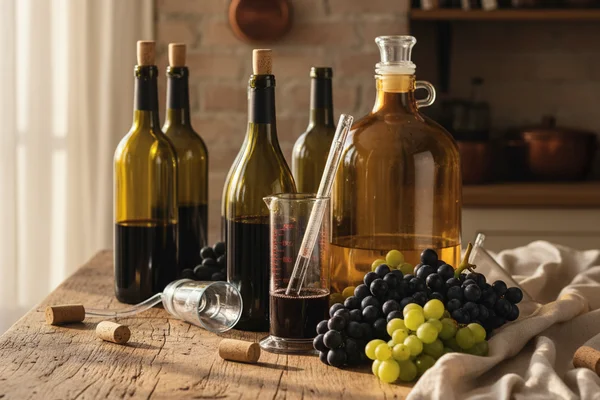
- Sprinkle in the wine yeast, re-cover, and squeeze the fruit bag once daily. Check your specific gravity (S.G.) with a hydrometer starting around day 3.
- When S.G. drops to 1.030 (typically 5–6 days), gently squeeze the bag one last time and remove it. Siphon the liquid into a dark glass secondary fermenter and fit an airlock.
- After three weeks, rack the wine off its sediment into a clean vessel. Repeat this racking process three more times, roughly every two months.
- Before bottling after the final racking, stabilize the wine (potassium sorbate plus a Campden tablet) and add a small amount of dissolved sugar if you prefer a touch of sweetness.
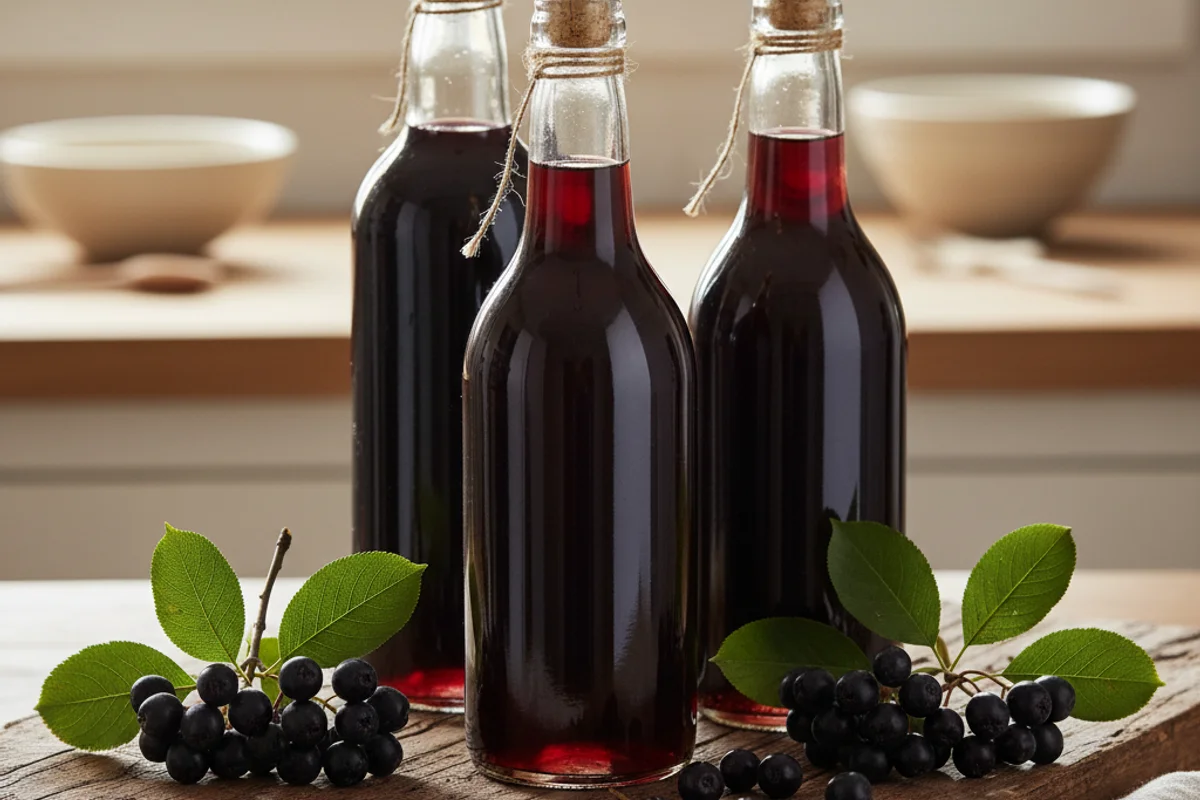
- Bottle in dark glass, or store clear bottles in a dark place. Age at least 9–12 months before opening.
Why this works
Chokecherries are loaded with tannins and anthocyanins — the same compounds that give red wine its structure and color. Boiling water extracts these along with the fruit’s sugars and acids, but it also risks setting the pectin, which clouds the wine. That’s why pectic enzyme is added after the must cools — the enzyme is denatured by heat, so adding it hot is a waste. The 12-hour wait before pitching yeast lets the Campden tablet do its job: killing off wild yeast and bacteria so your chosen wine yeast gets a clean head start. Red grape concentrate adds body and a deeper color while contributing natural grape tannins that help the wine age gracefully.
Notes
Frozen chokecherries work extremely well here — freezing ruptures the cell walls, so you actually get better juice extraction than from fresh berries. If you can’t find acid blend at a local homebrew shop, it’s widely available online; lemon juice is a passable substitute but won’t give you the same clean acidity. Patience is non-negotiable with this recipe — tasting it at six months will disappoint you, but tasting it at twelve months will not.