Wild Damsons
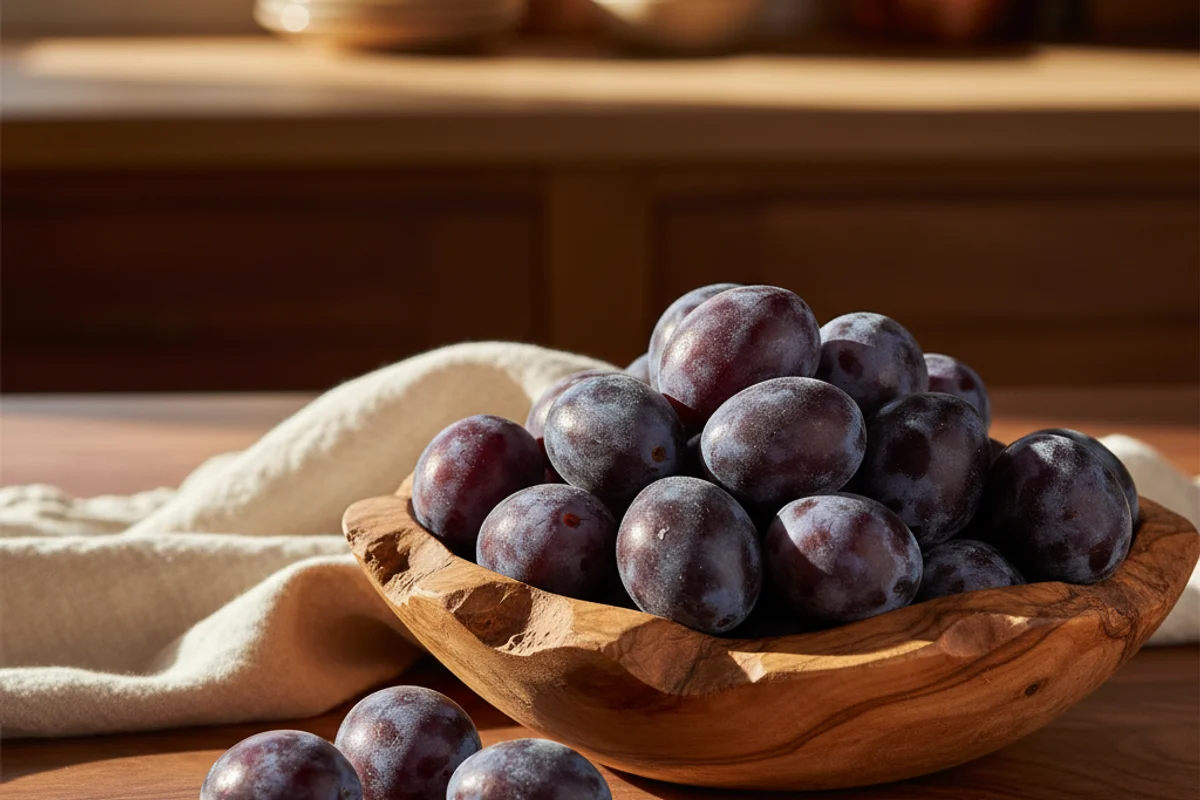
Damsons are small, tart, bluish-black plums with roots stretching back to ancient Damascus. They pack more astringency and depth than the sweet plums you find at the grocery store, and that intensity translates directly into the wine. Fresh off fermentation, this wine will taste harsh and almost unpleasant — and that’s completely normal. Give it time and it transforms into something dark, complex, and genuinely impressive. Think glazed duck, roasted game birds, or a quiet evening two years from now.
The beginner trap: New winemakers taste this wine right after fermentation, panic at how astringent and rough it is, and either dump it or drown it in sugar — when the only real fix is patience.
Ingredients
- 4 lbs ripe damsons or wild plums, fresh or frozen, destemmed and pitted
- 2½ lbs granulated white sugar, divided
- 1 cup red grape juice concentrate (like Welch’s 100% grape, or a winemaking concentrate)
- 1 tsp acid blend (available at homebrew shops; or use 1 tsp lemon juice as a rough substitute)
- 1 tsp pectic enzyme
- ¼ tsp grape tannin powder (or 1 cup strong-brewed black tea, cooled)
- 1 Campden tablet, crushed
- 1 tsp yeast nutrient
- Water to make 1 gallon (about 5–6 pints total)
- 1 packet Bordeaux or Burgundy wine yeast (or any full-bodied red wine yeast)
Method
- Bring ½ gallon of water to a boil. While it heats, wash, sort, destem, and pit the fruit.
- Place the fruit in a nylon mesh straining bag and set it inside a sanitized primary fermenter that is marked in pint increments up to 1 gallon.
- Add the grape concentrate, then pour the boiling water over the fruit. Cover and let cool to lukewarm (around 70–75°F).
- Add the crushed Campden tablet, cover again, and wait 12 hours.
- Crush the fruit by squeezing the bag firmly with clean hands. Add half the sugar and stir well until dissolved.
- Lift the bag and let it drain for about 2 minutes, then add enough water to bring the total liquid to 7 pints. Return the bag to the fermenter.
- Take a hydrometer reading and record it. Then stir in the acid blend, tannin, pectic enzyme, and yeast nutrient.
- After 12 hours, sprinkle in the yeast. Squeeze the pulp bag twice daily throughout fermentation.
- After 7 days, remove the bag and let it drip-drain over the fermenter for 2–3 hours. Squeeze gently at the end — do not wring it hard.
- Using your recorded hydrometer reading and a sugar addition chart, calculate how much of the remaining sugar to add to reach a specific gravity (S.G.) of 1.095. Stir it in until fully dissolved.
- Let the must settle overnight, then rack into a sanitized 1-gallon secondary fermenter (glass jug). Fit an airlock but do not top up yet.
- After 7 days, top up the secondary with water or a neutral wine to minimize headspace.
- Rack again after 1 month, top up, and refit the airlock. Repeat after another 2 months.
- Once the wine clears, wait one more month, then rack, top up, and set it aside for bulk aging. Check the airlock water level monthly.
- After 6 months, stabilize with potassium sorbate and a crushed Campden tablet. Wait 10 days, rack if needed, and sweeten to taste before bottling.
- Store the bottles in a cool, dark place and do not open them for at least 1 year — 2 to 3 years is even better.
Why this works
Damsons are loaded with tannins and organic acids — compounds that make fresh damson wine taste sharp and almost medicinal. Over time, those tannins bind together into longer chains and slowly fall out of suspension. Acids mellow as they react with alcohols to form esters, which are the molecules responsible for fruity, complex aromas. The red grape concentrate adds body and a small boost of natural tannins and sugars to support fermentation. Pectic enzyme breaks down the pectin in the fruit cell walls, which prevents a stubborn haze and helps you extract more juice and flavor. The two-stage sugar addition keeps the yeast from being overwhelmed early on, leading to a cleaner, more complete ferment.
Notes
Frozen damsons work beautifully here — freezing ruptures the cell walls and actually speeds up juice extraction. If you can’t find damsons, use ripe Italian prune plums or any tart dark plum; reduce the acid blend slightly since cultivated plums tend to be less acidic. If you prefer a drier finish, ferment all the way down to S.G. 0.990–0.995 and skip back-sweetening at bottling.