Wild Greengages
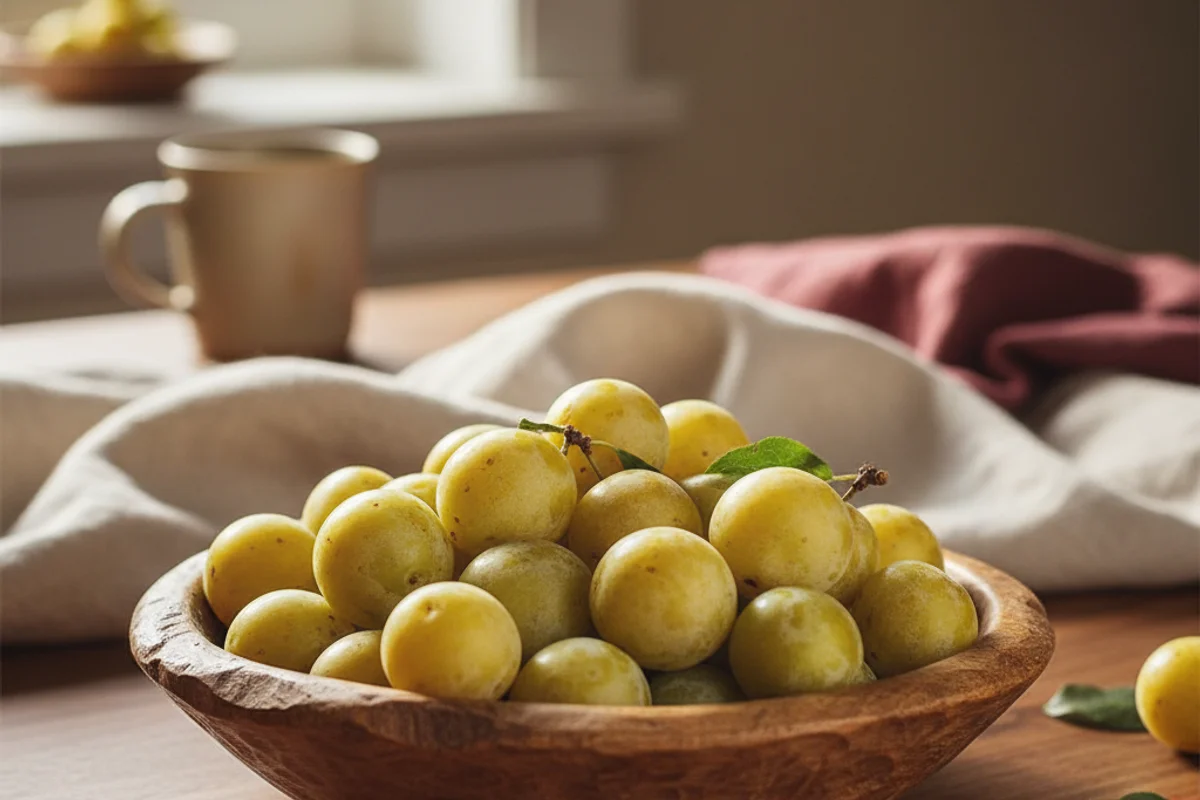
Think of the greengage as the plum’s more refined cousin — smaller, rounder, and wearing a skin the color of a sunlit lime. The flavor is almost candied, more honey and apricot than the sharp tang you expect from a stone fruit. Even wild trees that have gone feral for generations hold onto a surprising sweetness. That natural sugar and gentle acidity make greengage one of the fastest-maturing fruit wines you can produce, ready to drink well before most stone-fruit wines even hit their stride.
The beginner trap: Skipping the pectic enzyme step — or not giving it enough time — leaves you with a hazy, pectin-clouded wine that never fully clears no matter how long you wait.
Ingredients
- 4 lbs ripe greengages (fresh or frozen), washed, pitted, and chopped
- 1¼ to 1½ lbs granulated white sugar, divided
- ½ lb pearl barley, minced or cracked (regular pearled barley from the grocery store works fine)
- 1 tsp pectic enzyme
- 1 Campden tablet, crushed
- 1½ tsp yeast nutrient
- 1 packet Lalvin K1V-1116 wine yeast (a Montrachet-style yeast is a workable substitute)
- Water to make up 1 gallon (roughly 7 pints total)
Method
- Bring ½ gallon of water to a boil. While it heats, crack or mince the barley, then pit and roughly chop the greengages, keeping every drop of juice.
- Combine the fruit, juice, and barley in your primary fermenter, then pour the boiling water over them. Cover and let the mixture cool to lukewarm (around 70–75 °F).
- Stir in the crushed Campden tablet, cover the fermenter, and leave it alone for 12 hours.
- Add the pectic enzyme, cover again, and let it sit for 4 full days, stirring once daily.
- Pour the pulp through a nylon straining bag set over a large bowl; squeeze the bag firmly to press out as much liquid as possible. Discard the solids.
- Stir in half the sugar and all the yeast nutrient until fully dissolved, then transfer the liquid to your secondary fermenter and pitch the yeast. Cover the opening with a sanitized cloth held on with a rubber band.
- After 7 days of active fermentation, dissolve the remaining sugar in a small amount of the must, stir it back in, and fit the airlock.
- Rack into a clean vessel after one month, top up with a little water or neutral wine to minimize headspace, and refit the airlock.
- Rack again once the wine runs clear, then set it aside for 4 more months.
- Stabilize with potassium sorbate and potassium metabisulfite (follow package directions), wait 10 days, then rack into bottles. Drink young or cellar for up to a year for best results.
Why this works
The barley is doing double duty here. Its starches convert — slowly and partially — into fermentable sugars, adding a subtle body and a faint cereal depth that rounds out the fruit. More importantly, barley contributes beta-glucans, long-chain carbohydrates that give the finished wine a slightly fuller mouthfeel without making it heavy. The split sugar addition is a deliberate move to keep the yeast happy: dumping all the sugar in at once raises osmotic pressure and can stress or even stall the fermentation. Adding the second half after a week of active fermentation gives the yeast a chance to build a healthy population first, which means a cleaner, more complete ferment and less residual sweetness from a stuck batch.
Notes
Frozen greengages work extremely well here — freezing ruptures cell walls and actually boosts juice yield when the fruit thaws. If you can’t find greengages at all, ripe yellow plums or mirabelle plums are the closest substitutes and will produce a very similar wine. If the finished wine tastes thin, bump the sugar slightly toward the higher end of the range listed above.