WILD MIXED BERRY WINE
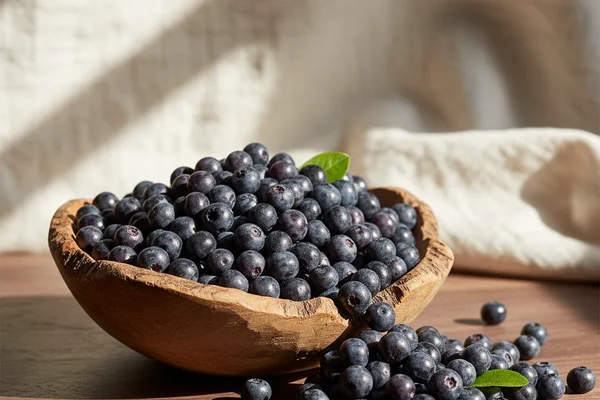
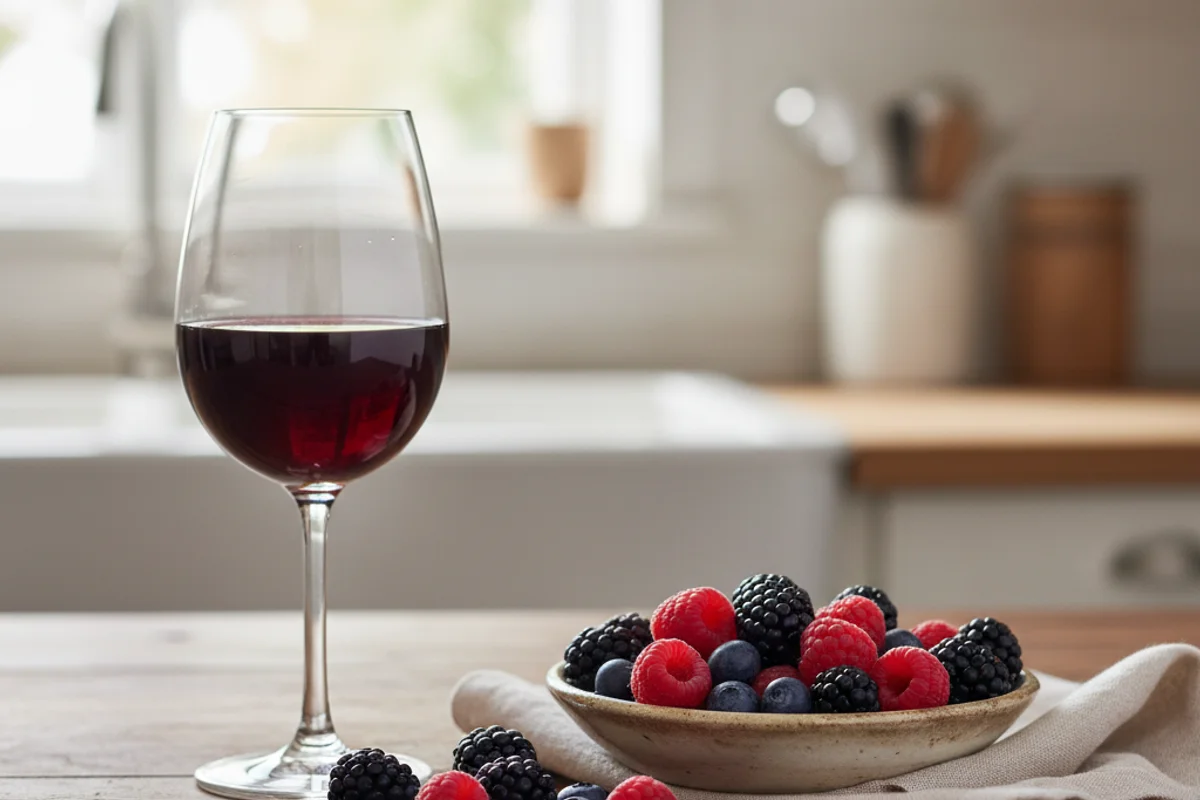
Think of this wine as a greatest-hits album pressed from whatever the hedgerows and hiking trails gave you this season. Blackberries bring the depth. Huckleberries or blueberries add body and a quiet sweetness. Raspberries bring the brightness — but too many and they’ll hijack the whole blend with sharp acidity. The goal is balance: a dark, fruit-forward wine with enough complexity to surprise you a year from now when you finally pop a bottle. This recipe makes 3 gallons.
The beginner trap: Loading up on tart berries like raspberries throws the acid so far out of balance that no amount of back-sweetening will save the finished wine — keep tart varieties to no more than 20–25% of your fruit mix.
Ingredients
- 12 lbs ripe mixed berries, fresh or frozen (aim for blackberries or blueberries as the majority; raspberries as a minority)
- 5½ lbs granulated white sugar
- 2 tsp acid blend (found at homebrew shops; or use 1½ tsp tartaric acid as a substitute)
- 1½ tsp pectic enzyme
- 3 Campden tablets, crushed (potassium or sodium metabisulfite)
- 3 tsp yeast nutrient
- 1 packet wine yeast (Lalvin 71B or EC-1118 work well)
- Water to reach 3 gallons total volume
Method
- Heat 1½ gallons of water over high heat, add the sugar, and stir until fully dissolved. Remove from heat immediately once clear.
- Sort and rinse all berries, discarding any that are underripe, moldy, or damaged.
- Place the berries into two or three nylon straining bags; if possible, keep tart berries (raspberries, etc.) in a separate bag from the rest. Tie the bags closed and place them in your primary fermenter.
- Crush the berries well inside the bags, then pour the hot sugar-water over them.
- Stir in the acid blend and yeast nutrient, then add another gallon of cool water. Cover the fermenter.
- Once the must has cooled to room temperature, stir in the crushed Campden tablets. Cover and wait 12 hours.
- Stir in the pectic enzyme, cover again, and wait another 12 hours.
- Prepare your yeast according to packet directions, then add it to the must. Cover the fermenter loosely.
- Squeeze the bags twice daily to extract juice. If you separated tart berries into their own bag, remove that bag after 3 days; remove the remaining bags after 7 days total. If all berries are in one batch of bags, remove everything after 5 days.
- Squeeze the bags gently but firmly over the fermenter to recover juice — stop before pulp pushes through the mesh. Let the collected must settle overnight.
- Rack into a 3-gallon secondary fermenter and fit an airlock. Do not top up yet.
- After 7 days, top up to the shoulder of the vessel and refit the airlock.
- Rack after 1 month, top up, and refit the airlock.
- Wait 2 more months, rack again, top up, and refit the airlock.
- Age for 3 months, then rack, top up, and refit the airlock.
- After another 3 months, check for sediment. If the wine is clear, stabilize with ½ tsp potassium sorbate plus 1 crushed Campden tablet, sweeten to taste if desired, wait 10 days, then bottle. If sediment remains, rack one more time before stabilizing and bottling.
Why this works
Pectic enzyme is doing quiet but important work here. Berries are full of pectin — the same stuff that makes jam gel. Without an enzyme to break it down, your finished wine can end up hazy no matter how long you wait. Adding pectic enzyme after the Campden tablet (not before — sulfite inhibits the enzyme) gives it a clean window to work. The 24-hour delay between the Campden addition and the enzyme addition lets the sulfite off-gas enough to stop interfering. Meanwhile, keeping tart berries in a separate bag and pulling them early gives you precise control over how much sharp acidity they contribute, without sacrificing the flavor they bring to the blend.
Notes
Frozen berries work excellently here — freezing ruptures the cell walls and actually improves juice extraction. A store-bought mix of frozen blackberries, blueberries, and raspberries is a perfectly solid substitute if wild-foraged fruit isn’t available. If you can’t find acid blend at a local homebrew shop, look online or substitute cream of tartar (tartaric acid) in the same quantity.