WINE FROM UNIDENTIFIED BACKYARD GRAPES
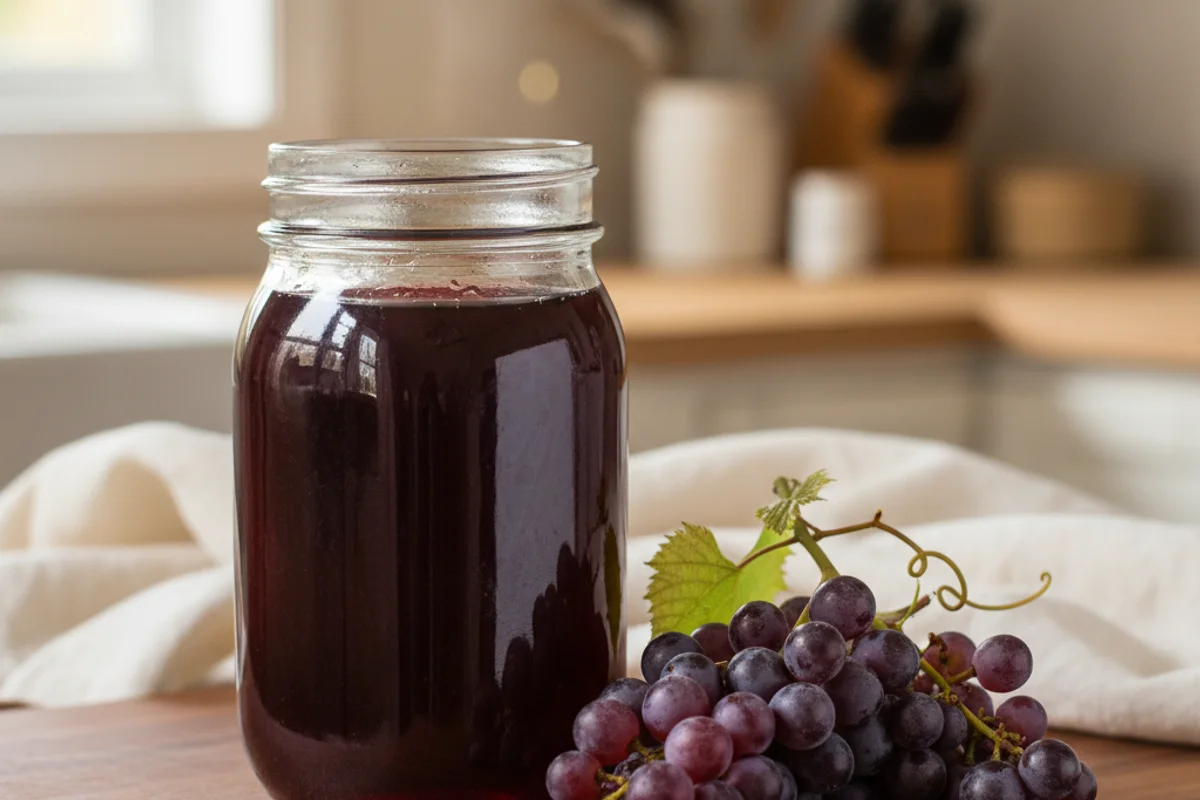
Those dark, fat clusters hanging off the backyard arbor aren’t a mystery — they’re almost certainly Concord grapes, or something close enough that it doesn’t matter. Concord is America’s yard grape: winter-tough, disease-resistant, and loaded with that deep, jammy, “grape jelly” flavor you know from childhood. It ripens bluish-purple in late summer, tastes great off the vine, and makes a wine that’s bold, fragrant, and genuinely satisfying — especially with just a touch of residual sweetness to balance its natural punch.
The beginner trap: Skipping the pectic enzyme step means your wine stays hazy no matter how long you wait — Concord juice is packed with pectin, and enzyme is the only thing that breaks it down.
Ingredients
- 7½ pints (about 3.5 liters) fresh-pressed grape juice (from roughly 12 lbs of grapes)
- Granulated white sugar, enough to raise specific gravity to 1.095
- 1 tsp pectic enzyme (found at homebrew shops or online)
- 1 Campden tablet, finely crushed and dissolved (potassium metabisulfite powder works too — use ¼ tsp)
- 1 tsp yeast nutrient
- 1 packet wine yeast (Montrachet or Premier Cuvée work well; Lalvin EC-1118 is a widely available substitute)
Method
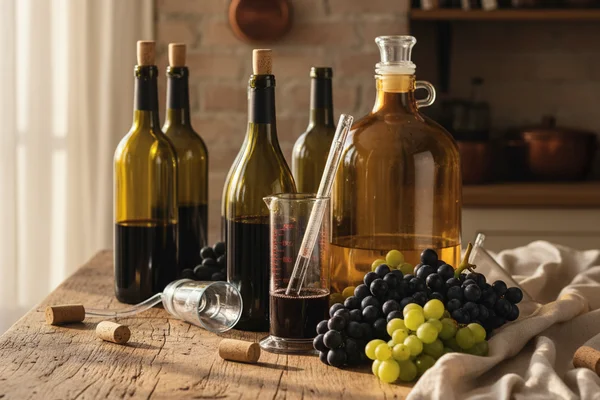
- Wash, destem, and sort your grapes, discarding any that are shriveled or unripe. Crush them by hand or with a heavy flat-bottomed bottle, then press the juice through a nylon straining bag — squeeze firmly to get every drop.
- Check the specific gravity of your juice with a hydrometer. Add sugar if it reads below 1.095, add water if it reads above, or add more juice if you’re right on target.
- Pour the juice into your primary fermentation vessel. Dissolve the Campden tablet in a small amount of juice, stir it in, cover the vessel with a sanitized cloth, and leave it alone for 10–12 hours.
- Add the pectic enzyme, re-cover, and wait another 8–10 hours. This two-stage pause lets the sulfite do its job before the enzyme goes to work.
- Stir in the yeast nutrient, then add your activated yeast. Re-cover the vessel.
- When the specific gravity drops to 1.015 or lower, transfer the wine to a clean secondary vessel (a glass carboy works great) and attach an airlock.
- Once fermentation fully stops and the airlock has been still for two weeks, rack the wine into a fresh, clean vessel, top it up to minimize headspace, and refit the airlock.
- Wait 4–6 more weeks, then rack again into a clean vessel that already contains one freshly dissolved Campden tablet and ½ tsp potassium sorbate. Top up and refit the airlock.
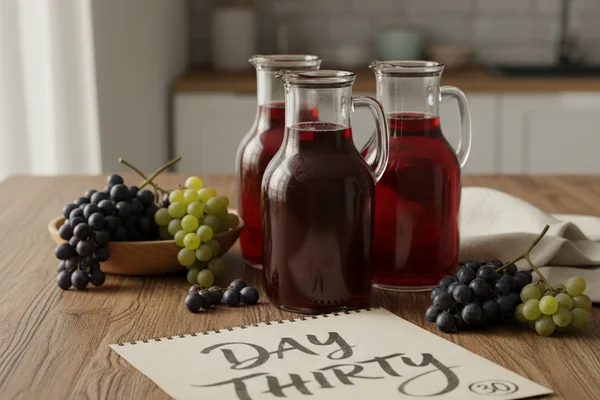
- After 30 days, taste and sweeten if desired, then bottle. Wait at least two months before opening a bottle.
Why this works
Concord grapes are rich in pectin — the same stuff that makes jam gel. In a finished wine, loose pectin chains scatter light and create permanent haze that settling and fining can’t fully fix. Pectic enzyme (pectinase) cuts those long chains into short fragments that clump together and fall out of suspension. The catch: sulfite (from the Campden tablet) can slow the enzyme down, which is why you add them in sequence rather than together. Give the sulfite its window to knock out wild yeast and bacteria, then let the enzyme clear the path for a bright, clean ferment.
Notes
If you have more grapes than you can press at once, freeze the extras in zip-lock bags — freezing ruptures the grape skins and actually makes juice extraction easier when they thaw. If you prefer a dry wine, skip the sweetening step in Step 9 and bottle straight after the 30-day wait. Potassium sorbate (Step 8) is sold at most homebrew shops; without it, any residual yeast can restart fermentation in the bottle if you back-sweeten.