Wineberry Wine
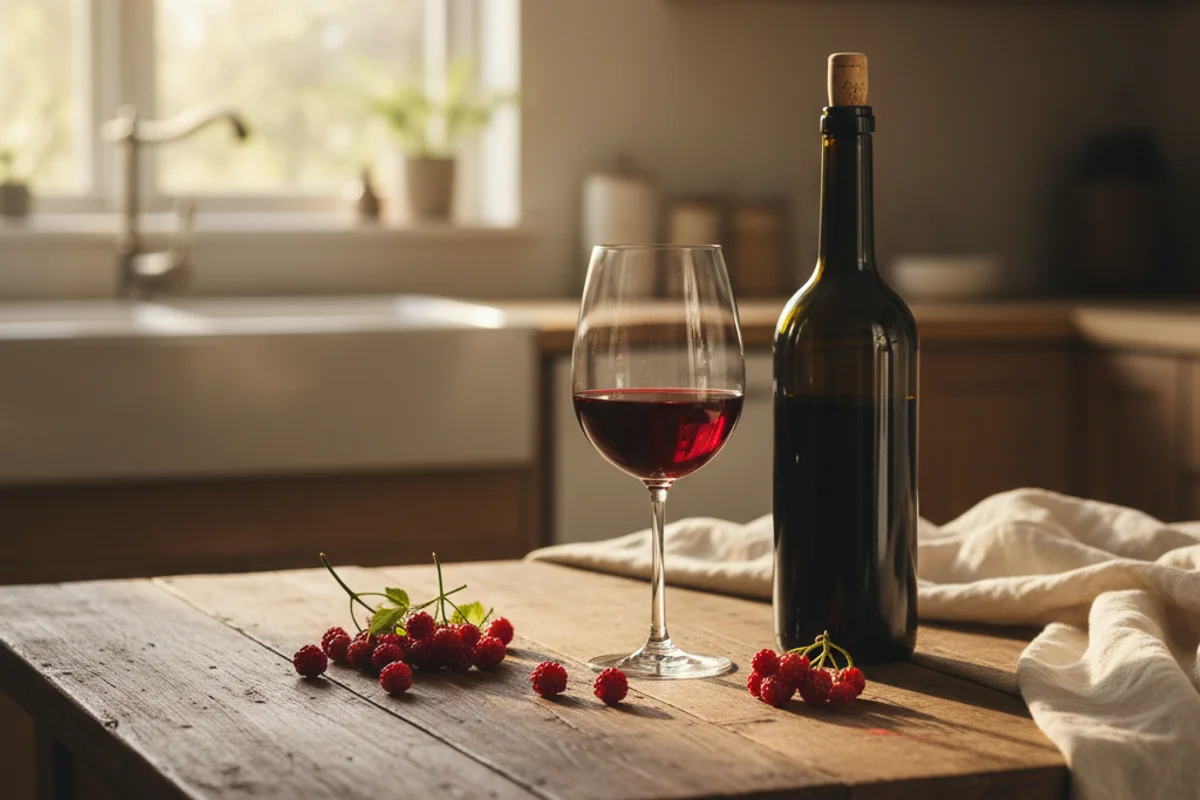
Think of a wineberry as a raspberry that spent time abroad and came back more interesting. These small, jewel-red fruits (Rubus phoenicolasius) originated in East Asia and now grow wild across much of eastern North America — juicier than a raspberry, sharper on the tongue, and packed with a fruity intensity that translates beautifully into wine. The finished bottle lands somewhere between a classic raspberry wine and a light red: bright, aromatic, and just tart enough to keep every sip honest. Worth the scratches it takes to pick them.
The beginner trap: Skipping the pectic enzyme means pectin from the crushed berries will cloud your wine and stubbornly refuse to clear, no matter how long you wait.
Ingredients
- 2½ lbs ripe wineberries, fresh or frozen, washed and destemmed
- 2 lbs granulated white sugar
- 1 tsp acid blend (available at homebrew shops; citric acid works as a backup)
- ½ tsp pectic enzyme
- ¼ tsp grape tannin (or 1 cooled cup of strong black tea)
- 7½ pints (about 15 cups) boiling water
- 1 Campden tablet, crushed
- 1 tsp yeast nutrient
- 1 packet wine yeast (Lalvin 71B or EC-1118 work well)
Method
- Crush the berries thoroughly in your primary fermenter — a food-grade bucket works fine.
- Add the sugar, acid blend, pectic enzyme, tannin, crushed Campden tablet, and yeast nutrient directly to the crushed fruit.
- Pour the boiling water over everything and stir well until the sugar fully dissolves.
- Cover the bucket loosely with plastic wrap and let it cool to 70–75°F before adding yeast.
- Sprinkle in the yeast, recover the bucket, and stir the must once daily for 5 to 6 days.
- Strain out the fruit pulp through a mesh bag or fine strainer, pressing firmly to extract all the juice.
- Transfer the liquid to a 1-gallon glass jug (secondary fermenter), top up to the shoulder with water if needed, and fit an airlock.
- Move the jug to a dark spot at 60–65°F and leave it alone for 3 weeks, then rack (siphon) the wine off its sediment into a clean jug.
- Rack again after 3 months, then once more 3 months after that.
- After the final racking, stabilize with a crushed Campden tablet and ½ tsp potassium sorbate, sweeten to taste if you like, and wait at least 1 month before bottling.
- Store bottles in the dark and age for at least 1 year for best flavor.
Why this works
Wineberries are high in natural pectin — the same stuff that makes jam set. That’s great for preserves, but terrible for clear wine. Pectic enzyme breaks those long pectin chains apart early in fermentation, before they can lock haze into your finished wine. The Campden tablet added at the start knocks out wild yeast and bacteria on the fruit, giving your chosen wine yeast a clean runway. Racking multiple times removes dead yeast cells (lees) that would otherwise add off-flavors over time. Storing the finished wine away from light protects the anthocyanins — the pigments responsible for that deep red color — which degrade quickly when exposed to UV.
Notes
Frozen wineberries work excellently here; freezing ruptures the cell walls and actually improves juice yield when you crush them. If you can’t find wineberries, raspberries make a near-perfect substitute at the same weight. Acid blend is sold at most homebrew supply stores, but in a pinch, ½ tsp of citric acid (sold in the canning aisle) gets you close.