winemaking: Brazos blackberry wine
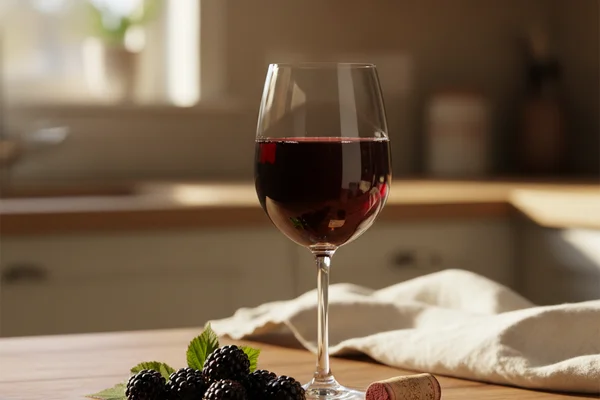
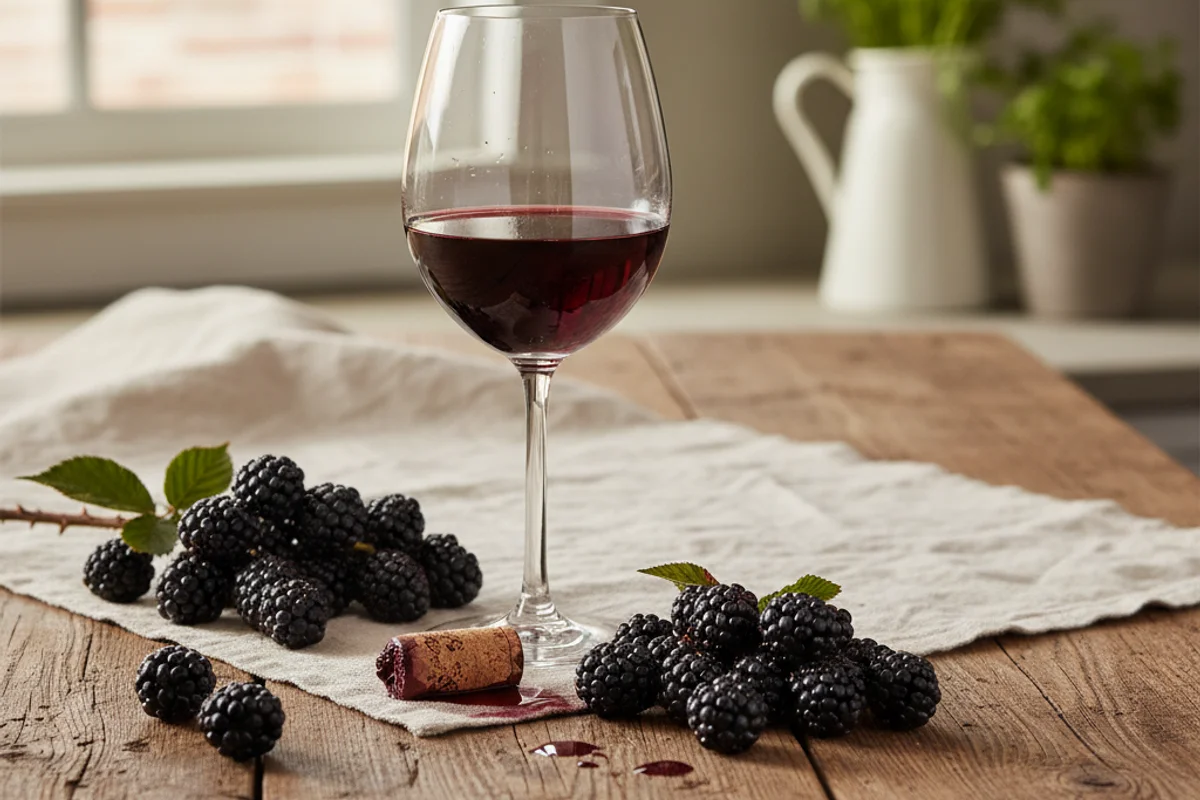
Brazos blackberries grow wild across Texas — from the Red River all the way down to the Rio Grande — and they make a wine that is deeply colored, earthy, and packed with jammy fruit. Think of it as a bold country red that costs you nothing but patience. The color is spectacular: dark purple-black in the glass, the kind of hue that makes people stop mid-conversation. That color, though, is also this wine’s most fragile quality — and protecting it is half the job.
The beginner trap: New winemakers skip the light protection step and end up with a faded, dull-pink wine instead of that gorgeous deep purple — always ferment and store this one away from light.
Ingredients
- 5–6 lb. fresh blackberries (fresh or frozen; any large, ripe blackberry variety works)
- 2½ lb. granulated white sugar
- 7 pints (3.5 quarts) water
- ½ tsp. pectic enzyme
- 1 tsp. yeast nutrient
- 1 packet wine yeast (Lalvin 71B or EC-1118 work well)
Method
- Sort through the berries and keep the fully ripe, deep-black ones — slightly overripe is fine, underripe is not. Rinse them well in a colander.
- Crush the berries in a large bowl, then transfer the crushed fruit to your primary fermentation vessel.
- Bring the water to a boil, pour it over the crushed fruit, and stir. Cover and let it steep for 48 hours.
- Strain the liquid through a fine mesh strainer or nylon bag into a clean bucket, pressing the pulp to extract as much juice as possible. Discard the solids.
- Add the sugar to the strained juice and stir until it fully dissolves.
- Stir in the pectic enzyme, cover the vessel, and let it sit for 24 hours.
- Add the yeast nutrient and sprinkle in the yeast. Cover loosely and stir once daily for 5–6 days.
- Transfer the wine to a secondary fermentation vessel — use dark glass if you have it, or wrap a clear glass carboy in brown paper bags or a dark towel. Top up to the shoulder with water and fit an airlock.
- Move the carboy to a cool, dark spot (60–65°F) and leave it for three months.
- Rack the wine off the sediment into a clean carboy, refit the airlock, and let it rest another two months.
- Rack one more time, then bottle in dark glass. Store the bottles in a dark place for at least 6 months before tasting; a full year of aging brings out the best flavor.
Why this works
Blackberries get their deep color from pigments called anthocyanins — the same compounds that make blueberries blue and red cabbage purple. The problem is that anthocyanins are photosensitive: UV light breaks the molecular bonds that create the color, turning your wine from royal purple to washed-out pink in a matter of weeks. Keeping the must and finished wine away from light at every stage preserves those pigments. The pectic enzyme is also doing important work here — blackberries are high in pectin, a natural thickener, and without the enzyme your wine could end up hazy no matter how long you wait. The enzyme breaks the pectin down and lets the wine clear properly.
Notes
Frozen supermarket blackberries are an excellent substitute for fresh Brazos berries — freezing actually ruptures the cell walls, which helps juice extraction during the crush step. If you can’t find wine yeast, a bread yeast will work in a pinch, but the flavor will be noticeably rougher; wine yeast is worth the few dollars. If your finished wine tastes thin, bump the blackberries to the full 6 lb. next time.