winemaking: Huckleberry Wine
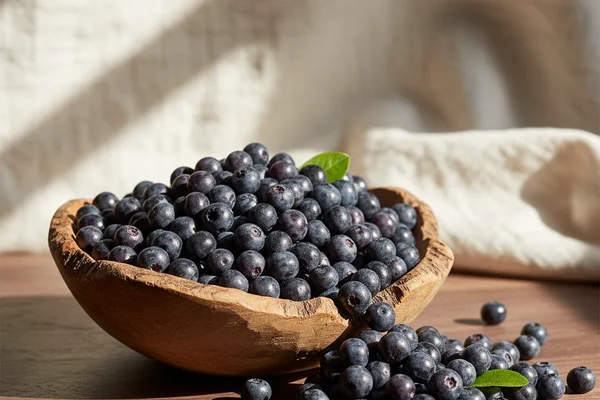
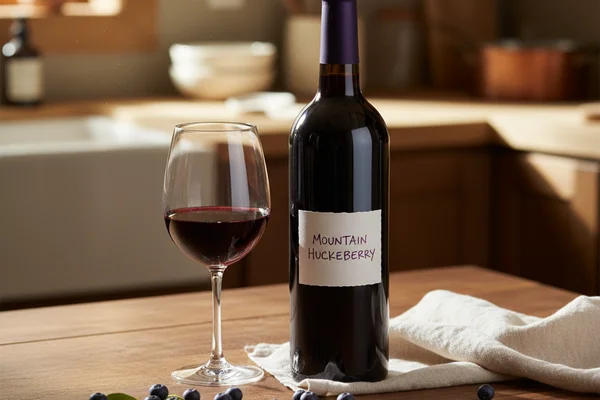
Think of the huckleberry as the blueberry’s more intense, slightly rebellious cousin. These small, jet-black berries pack a deeper, earthier flavor than the blueberries you find at the grocery store — more tart, more complex, with a faint woodsy edge that carries beautifully into wine. The result in the glass is something smooth and dark, with enough acidity to stay lively and enough fruit to feel rich. If you’ve ever wanted to bottle a late-summer hike through the woods, this is about as close as you’re going to get.
The beginner trap: New winemakers often squeeze the straining bag to get every drop of juice, which releases bitter tannins from the seeds and skins — let gravity do the work instead.
Ingredients
- 4 lbs huckleberries, fresh or frozen
- 2½ lbs granulated white sugar
- 1½ tsp acid blend (available at homebrew shops; citric acid is a workable grocery-store substitute)
- 1 tsp yeast nutrient
- 1 Campden tablet, crushed
- 7¼ pints (about 3.6 quarts) water
- 1 packet Champagne wine yeast (or other dry wine yeast)
Method
- Bring the water to a full boil. While it heats, sort through the berries and discard any that are soft, moldy, or unripe, then rinse them well.
- Place the cleaned berries in your sanitized primary fermenter and crush them thoroughly with a sanitized potato masher or the back of a large wooden spoon.
- Add the sugar to the crushed berries, then pour the boiling water over everything, stirring until the sugar fully dissolves.
- Cover the fermenter with a sanitized cloth and let the must cool completely to room temperature — this takes a few hours, so be patient.
- Once cool, stir in the acid blend, yeast nutrient, and crushed Campden tablet. Cover again and leave it alone for 24 hours.
- Activate your yeast according to the packet instructions, then add it to the must. Stir twice daily once fermentation is going strong, and keep this up for 10 days.
- Pour the must through a nylon straining bag set over your secondary fermenter. Let it drip drain for 30–45 minutes — do not squeeze the bag.
- Fit an airlock to the secondary and move it somewhere cool and dark.
- Rack the wine into a clean vessel every 60 days for 6 months, topping up each time to minimize headspace and refitting the airlock.
- At the final racking, either bottle the wine as-is or stabilize it, sweeten to taste, wait 10 days, then bottle.
Why this works
Huckleberries are naturally low in wild yeast — that waxy “bloom” you see on blueberries or grapes is mostly absent here — which is actually good news. It means the Campden tablet can knock out whatever competing microbes are present without a fight, leaving the field clear for your chosen yeast to do clean, predictable work. The twice-daily stirring during primary fermentation keeps the berry solids (the “cap”) wet and in contact with the juice, pulling out color, flavor, and tannin at a controlled rate. Letting the bag drip rather than squeezing limits harsh seed tannins, and the long, slow secondary aging gives those tannins time to soften and bind together — which is exactly why this wine finishes so smooth.
Notes
Frozen huckleberries work just as well as fresh and are often easier to find; freezing also breaks down the cell walls, so you get better juice extraction during mashing. If you can’t find huckleberries at all, wild or cultivated blueberries make a solid substitute with a slightly milder flavor profile. Acid blend is sold at any homebrew supply store, but if you’re in a pinch, ½ tsp of citric acid (found in the canning aisle) can stand in.