winemaking: (Texas Wild Plum Wine)
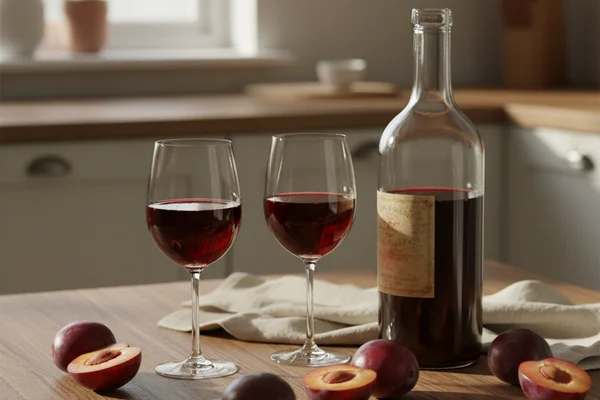
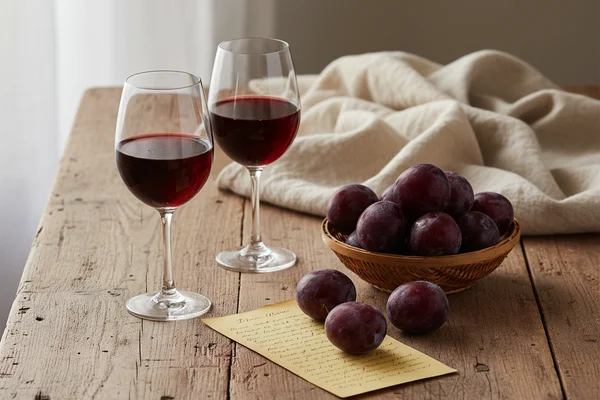
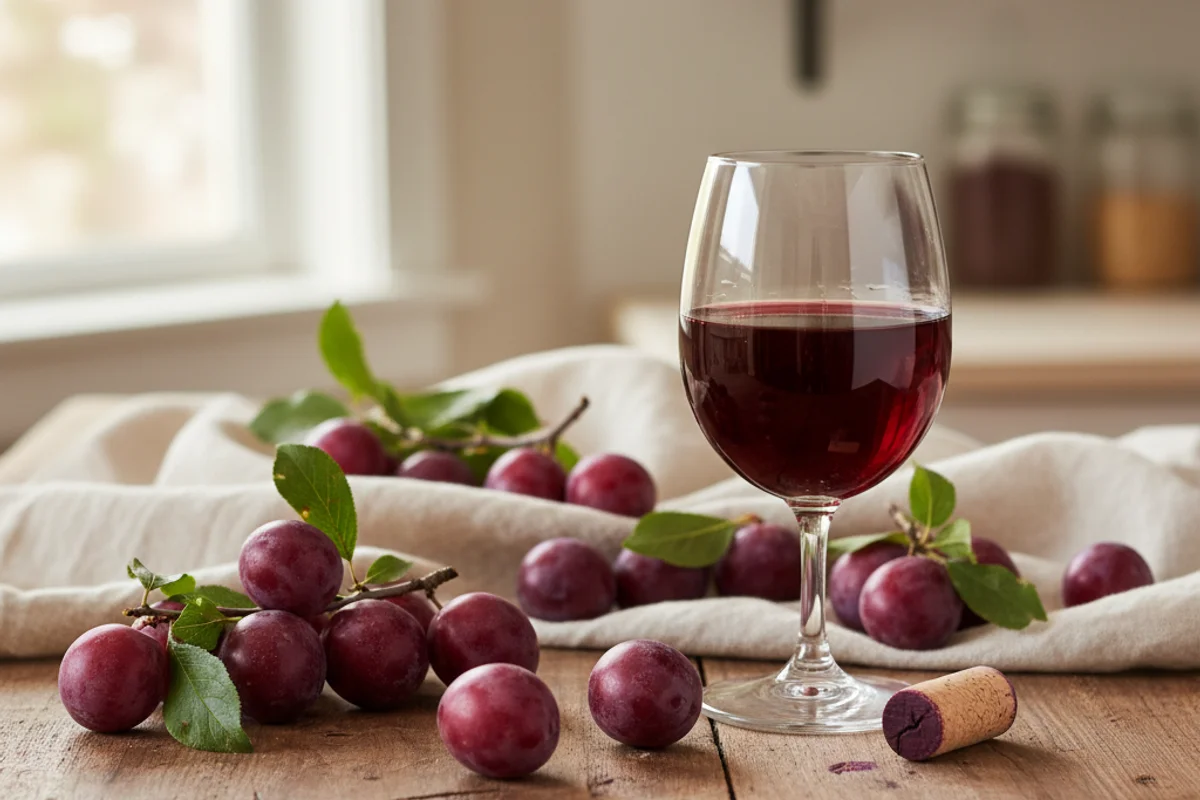
Texas wild plums are the overachievers of the fruit world — marble-to-golf-ball sized, loaded with tart flavor, and gone from the tree before summer even gets comfortable. Alone, they make a thin, tannic wine that bites back hard. But pair them with overripe bananas for silkiness and golden raisins for body, and you get something worth cellaring. This is a long game wine — think three years minimum — but the payoff is a complex, fruit-forward finish that most store-bought plum wines can’t touch.
The beginner trap: Tasting this wine too early; it will seem harsh and disappointing at one year, but it needs at least two to three years in the bottle before it becomes what it’s meant to be.
Ingredients
- 5–6 lbs wild Texas plums (or any small tart wild plum; fresh or frozen)
- 2/3 lb golden raisins, finely chopped (substitute: regular raisins, though flavor will vary slightly)
- 2 lbs overripe bananas (the blacker the peel, the better)
- 1-1/2 lbs granulated white sugar
- 7-1/2 pints (about 15 cups) water
- 1 Campden tablet, crushed
- 1 tsp pectic enzyme
- 1 tsp yeast nutrient
- 1 packet Champagne wine yeast (Red Star Pasteur Champagne or similar dry wine yeast)
Method
- Wash the plums, discard any with insect damage, and spread them on paper towels to dry for at least two hours.
- Place the dried plums in a bowl and refrigerate for one to two weeks until they darken; this concentrates flavor and softens the skins.
- Let your bananas ripen on the counter until the peels are heavily spotted or nearly black; discard only flesh that has turned brown.
- When the plums are ready, bring the water to a full boil and finely chop the raisins.
- Put the plums in a sanitized fermentation bucket and crush them by hand or with a sanitized blunt tool — mash them firmly but do not crack the pits.
- Peel and thinly slice the bananas (no thicker than 1/2 inch) and add them to the bucket along with the raisins and sugar.
- Pour the boiling water over everything, stir well to dissolve the sugar, and cover the bucket with a clean cloth.
- Once the must cools to 70–75°F, stir in the crushed Campden tablet, re-cover, and wait 12 hours.
- Stir in the pectic enzyme and yeast nutrient, re-cover, and wait another 12 hours.
- Sprinkle the dry yeast over the surface — do not stir — cover, and leave undisturbed for 24 hours.
- Once fermentation is clearly active (about 3 days for dry yeast), punch down the fruit cap twice daily to keep it submerged.
- After 7 days of active fermentation, check the specific gravity; continue fermenting and checking until it reaches 1.020 (may take up to 10 days total).
- Strain the pulp through a nylon mesh bag, squeeze out as much juice as possible, discard the solids, and return all the juice to the bucket for two more days of fermentation.
- Siphon the wine off the sediment into a clean secondary fermenter (glass carboy or food-grade jug) and fit an airlock.
- Once bubbling slows to a steady, lazy pace, top up the fermenter to within one inch of the airlock.
- After 60 days, rack into a clean secondary, top up, and refit the airlock; repeat this process at 60-day intervals until the wine is clear and fully still.
- Once the wine is clear and fermentation has completely stopped, rack into bottles and store somewhere dark and cool for a minimum of two years — three is better.
Why this works
Wild plums are high in tannin and acid but low in dissolved solids, which gives an unaided plum wine a harsh, thin character. The bananas pull double duty here: their flesh is rich in potassium and long-chain carbohydrates that break down during fermentation, adding a soft, round mouthfeel without adding much flavor. The golden raisins contribute fermentable sugar, but more importantly they bring body-building compounds and a subtle dried-fruit depth that fills in what the plums lack. Pectic enzyme breaks down the pectin in the fruit cell walls, which improves juice extraction and prevents a pectin haze from clouding your finished wine. The long aging gives harsh tannins time to polymerize and fall out of solution, turning a sharp young wine into something smooth and genuinely enjoyable.
Notes
Any small, tart wild plum species works here — Beach Plum, Chickasaw Plum, or American Plum are all solid substitutes depending on your region. Frozen wild plums work well and have the added benefit that freezing ruptures cell walls, improving juice yield without the refrigerator-darkening step. If your finished wine is still hazy after multiple rackings, a fining agent like bentonite (available at homebrew shops) will clear it quickly.