YARROW WINE
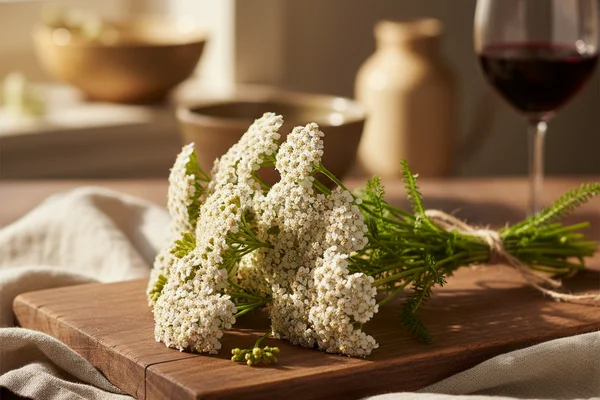
Walk through a meadow in summer and you’ll likely brush past yarrow without knowing it — those flat-topped clusters of tiny white flowers with the faintly medicinal, herbal bite. Achillea millefolium grows wild across most of North America, and it turns out those flowers can carry a batch of wine from start to finish. The result is dry, lightly floral, and quietly complex — not a showstopper, but an honest country wine with real character. Citrus juice keeps it bright, and a Sauterne-style yeast pulls the whole thing into balance.
The beginner trap: Harvesting yarrow too late in the bloom cycle gives you bitter, over-mature flowers that can make the wine harsh — pick the heads when they’re fully open but still fresh.
Ingredients
- 1 gallon yarrow flowering tops, freshly picked and rinsed
- 2 lbs finely granulated white sugar
- 7 pints water
- 1 lemon, juiced
- 1 orange, juiced
- 1 tsp yeast nutrient
- 1 packet Sauterne wine yeast (or any dry white wine yeast)
Method
- Bring the water to a full boil. While it heats, trim the thick stems from the flower heads and place the flowers in your primary fermenter.
- Add the sugar and the juice from the lemon and orange directly to the flowers.
- Pour the boiling water over everything and stir thoroughly until the sugar is completely dissolved.
- Cover the fermenter and let the must cool to room temperature, around 65–75°F.
- Activate your yeast according to the packet instructions, then stir it into the cooled must and re-cover.
- After 5 days, strain out the flowers and discard them, keeping the liquid.
- Continue fermentation until the specific gravity drops to 1.015, then rack the wine into a secondary fermenter and attach an airlock.
- After 6 weeks, rack again, top up to minimize headspace, and reattach the airlock.
- Repeat that racking step after another 6 weeks.
- Stabilize the wine, sweeten to your taste, and let it rest for 2 weeks.
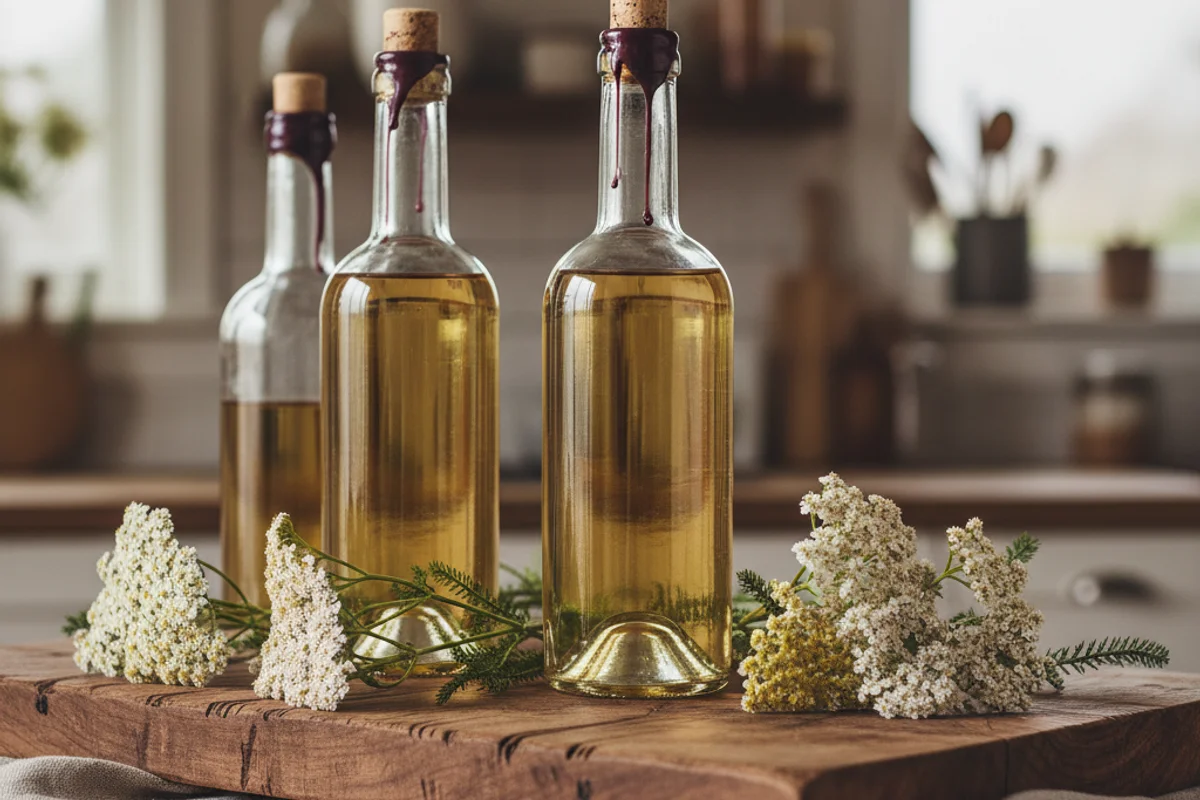
- Rack into bottles and age for at least 6 months before opening.
Why this works
Yarrow flowers carry aromatic compounds — camphor, achilleic acid, and various terpenes — that give the wine its herbal backbone. Boiling water extracts these volatile compounds efficiently without the harsh tannins you’d get from a long cold soak. The citrus juice does double duty: it drops the pH into a range where yeast thrive and spoilage organisms struggle, and it adds a brightness that balances yarrow’s earthy bitterness. A Sauterne-style yeast is chosen here because it ferments cleanly at moderate temperatures and leaves just enough residual character to complement floral wines — it stays out of the way and lets the flower do the talking.
Notes
Any dry white wine yeast works fine if Sauterne yeast isn’t available at your local homebrew shop — Lalvin 71B is a solid grocery-store-accessible alternative. If you can’t forage yarrow yourself, dried yarrow flowers are available online; use about 2–3 oz dried in place of 1 gallon fresh. Avoid harvesting from roadsides or sprayed fields.