Yarrow
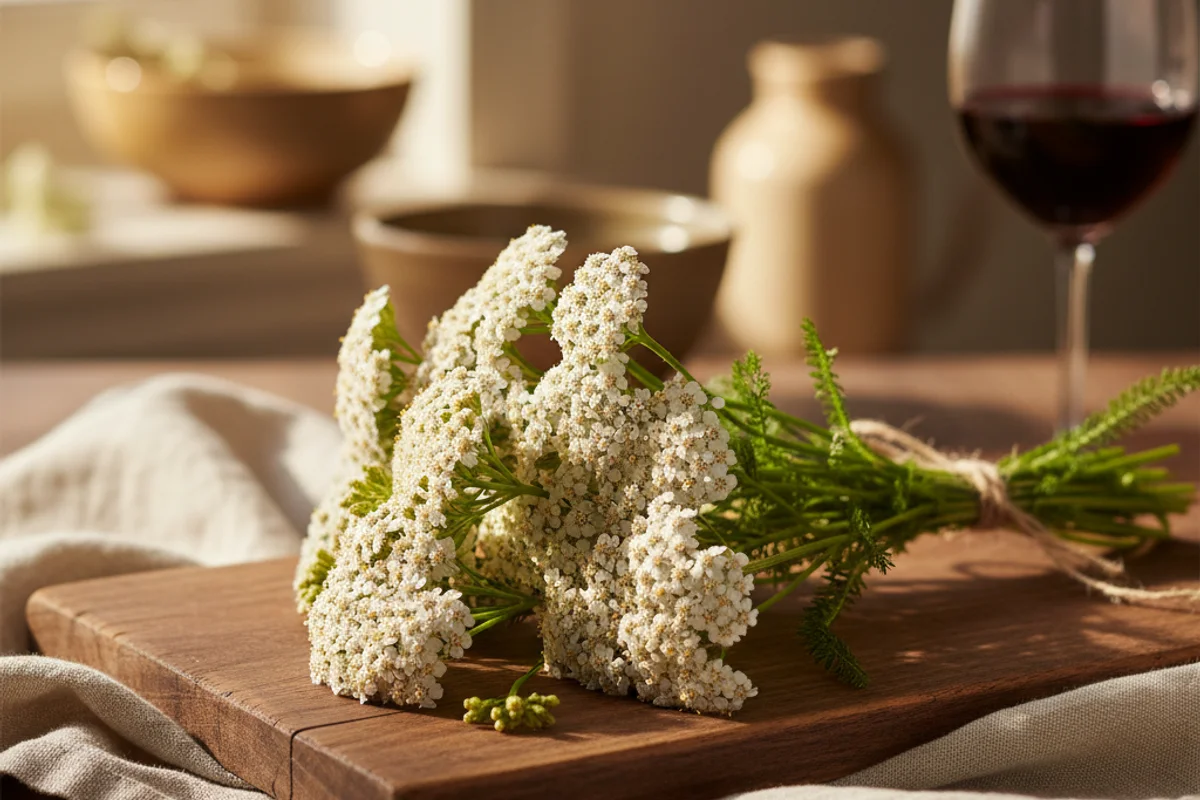
Yarrow (Achillea millefolium) is that feathery-leafed, flat-topped wildflower you’ve probably walked past a hundred times without a second thought. It grows just about everywhere across North America, smells faintly herbal and medicinal, and — here’s the surprising part — it makes wine. The result is light, dry, and quietly aromatic: not a showstopper, but an honest, food-friendly white that rewards patience. Think of it as the wild-foraged cousin of a simple country wine, best served cold on a warm afternoon.
The beginner trap: Harvesting yarrow too late in the bloom cycle leaves you with bitter, over-mature flower heads that muddy the flavor — pick when the clusters are fully open but still fresh and bright.
Ingredients
- 1 gallon yarrow flowering tops, freshly picked (stems trimmed back)
- 2½ lbs granulated white sugar
- 7 pints water
- 1 orange, juiced
- 1 lemon, juiced
- 1 tsp yeast nutrient
- 1 packet Sauterne wine yeast (or any dry white wine yeast such as Lalvin 71B)
Method
- Bring the water to a full boil. While it heats, strip the flower heads from any large stems and place them into your primary fermenter.
- Add the sugar and the juice of both the orange and lemon directly to the flowers in the fermenter.
- Pour the boiling water over everything and stir thoroughly until the sugar is fully dissolved.
- Cover the fermenter and let it cool to room temperature, around 68–72°F.
- Activate your yeast according to the packet instructions, then add it along with the yeast nutrient. Re-cover the fermenter.
- After 5 days, strain out and discard the flower heads. Continue fermentation in the primary until the specific gravity reaches 1.015.
- Rack the wine into a clean secondary fermenter (a glass carboy works well) and fit it with an airlock.
- After 6 weeks, rack again into a clean vessel, top up to minimize headspace, and reattach the airlock.
- Repeat that racking after another 6 weeks.
- Stabilize the wine with potassium sorbate and potassium metabisulfite, then sweeten to taste if desired. Let it rest for 2 weeks.
- Rack into bottles and age at least 6 months before opening.
Why this works
Yarrow flowers contain bitter sesquiterpene lactones and aromatic volatile compounds. Steeping them in boiling water rather than fermenting them whole draws out their flavor while limiting harsh tannin extraction. The citrus juice does double duty: it acidifies the must, keeping the pH in a range where yeast thrive and bacteria struggle, and it adds fresh brightness that balances yarrow’s herbal edge. The long aging period — six months minimum — matters here because those aromatic compounds are initially sharp and need time to integrate. Sugar levels are calibrated to finish around 12% ABV, dry enough to let the floral character show through cleanly.
Notes
If you can’t source Sauterne yeast locally, Lalvin 71B or any all-purpose white wine yeast from a homebrew shop works well. If fresh yarrow isn’t available, some specialty herb suppliers sell dried yarrow flowers — use about a quarter of the volume, since dried flowers are more concentrated. Avoid any yarrow that has been sprayed with pesticides or herbicides; if you’re foraging, pick from areas well away from roadsides and lawns.