ZINFANDEL WINE
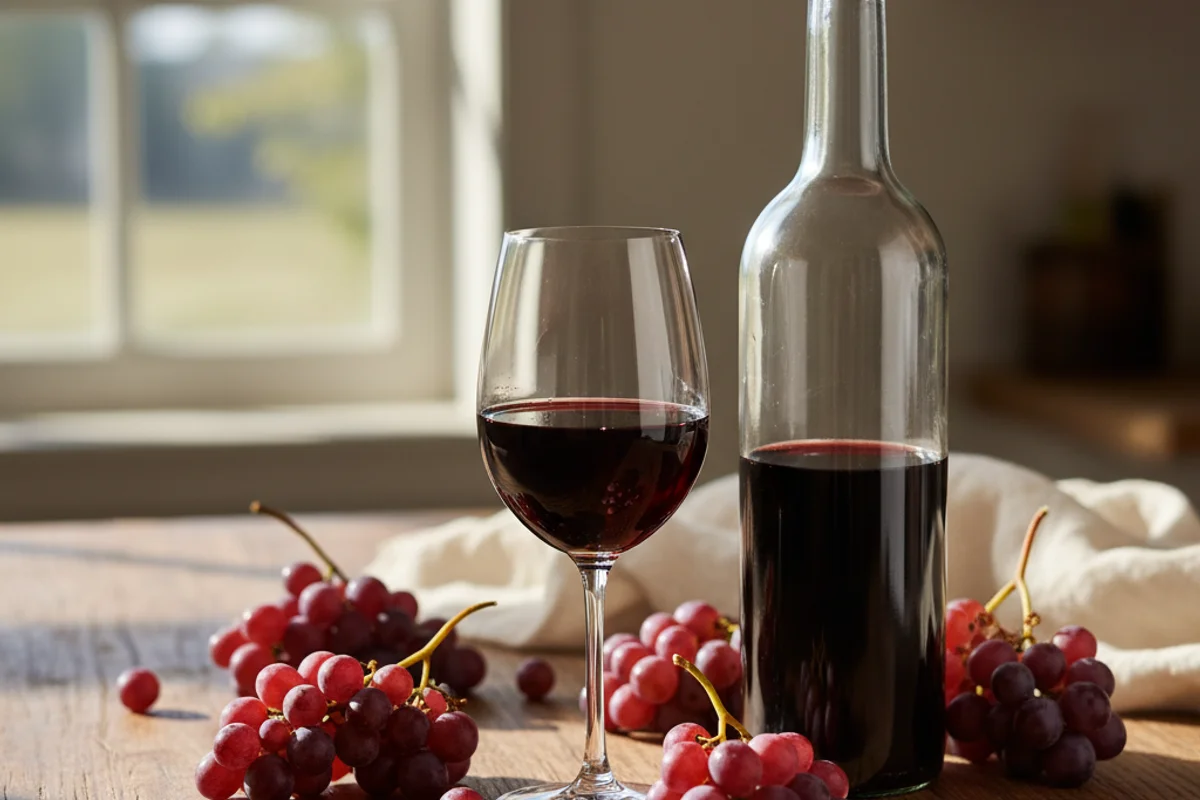
Zinfandel is California’s grape — not by biology (DNA testing outed it as Italy’s Primitivo), but by sheer force of history. Since the 1860s it’s been growing in the California sun, producing wines that punch with dark fruit, black pepper, and a spicy backbone that can handle a good steak or a cold winter evening. This recipe aims for a claret-style red: deep garnet, full-bodied, with oak character and a smooth finish earned through malo-lactic fermentation and patient aging. It takes months to make and longer to fully appreciate — and that’s exactly the point.
The beginner trap: Skipping malo-lactic fermentation (MLF) leaves you with a sharp, harsh wine — MLF is what converts the mouth-puckering malic acid into softer lactic acid, and it’s not optional here.
Ingredients
(Makes 5 gallons)
- 60–75 lbs fresh Zinfandel grapes (or the freshest wine grapes you can source from a local vineyard or harvest festival)
- 4 tsp pectic enzyme
- ¾ tsp potassium metabisulfite (also sold as “K-meta” or “Campden tablets”), divided across several additions
- 3–3½ tsp yeast nutrient (Fermaid-O or Fermaid-K work well)
- 3 tbsp oak powder (Oak-Mor or any wine-grade oak powder; medium-toast French or American oak chips are a common substitute)
- 1 packet malo-lactic culture (available at homebrew shops or online)
- 1 packet wine yeast — Bordeaux or Red Star Premier Cuvée both work; Lalvin BM4x4 or EC-1118 are grocery-store-accessible alternatives
Method
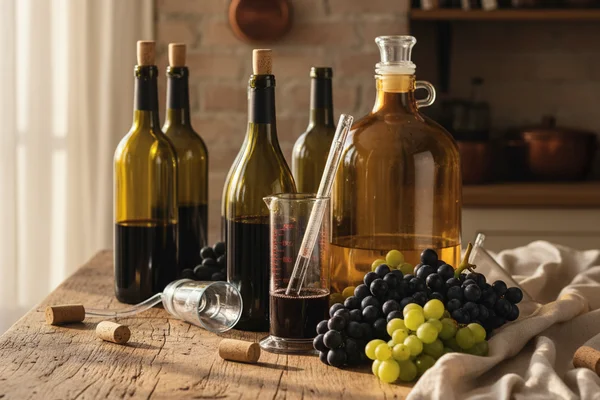
- Sort through your grape clusters and remove any crushed, moldy, or unripe berries. Crush and destem the grapes into your primary fermenter.
- Add the pectic enzyme and ¼ tsp potassium metabisulfite to the crushed grapes, then stir thoroughly with a sanitized paddle. Cover the vessel and let it rest overnight.
- The next day, check the sugar level with a hydrometer and adjust if needed; stir in the yeast nutrient and oak powder. Prepare your yeast starter according to the packet directions, then pitch it into the must.
- Cover the primary fermenter and punch down the grape cap twice each day — this keeps the skins submerged so color and tannin keep extracting into the wine.
- Once the free sulfur dioxide level in the wine drops below 15 ppm (10 ppm is ideal — test strips or a titration kit will tell you), add the malo-lactic culture and stir it in gently.
- When the specific gravity reaches 1.000, scoop the grape solids into a wine press and squeeze out the remaining juice. Transfer everything to a clean 5-gallon glass carboy and fit an airlock. Taste for oak — if it needs more, add 1 extra tbsp of oak powder now.
- After one month, rack the wine into a freshly sanitized carboy, top it up to minimize headspace, and reattach the airlock.
- Track malo-lactic fermentation using a paper chromatography kit (available at homebrew shops). When MLF is complete — usually around the two-month mark — rack again and stir in ¼ tsp potassium metabisulfite.
- Rack once more every month for three to four months, adding ¼ tsp potassium metabisulfite every other racking. Stop when the wine runs clear.
- Bottle the clear wine and store it somewhere cool and dark. Wait at least six months before opening your first bottle.
Why this works
Two big things are happening here that turn grape juice into a wine worth waiting for. First, punching down the cap keeps the grape skins in contact with the fermenting juice, pulling out anthocyanins (color pigments) and tannins that give red wine its structure and aging ability. Second, malo-lactic fermentation is a bacterial process — not a yeast one — where Oenococcus oeni bacteria convert sharp malic acid (think green apple tartness) into softer lactic acid (think yogurt). The result is a rounder, creamier mouthfeel. You wait until free SO₂ drops below 15 ppm before adding the MLF culture because sulfur dioxide at higher levels kills the bacteria before they can do their job.
Notes
If fresh Zinfandel grapes aren’t available near you, look for frozen must from a wine-supply retailer — it works well and skips the crush step entirely. Potassium metabisulfite is sold at most homebrew shops; if you use Campden tablets instead, one tablet per gallon equals roughly ¼ tsp of K-meta powder. Paper chromatography kits for monitoring MLF are inexpensive and available online — don’t skip this step, as bottling before MLF finishes can cause unwanted fizzing or off-flavors in the bottle.