ZUCCHINI WINE
Zucchini is basically a water-delivery vehicle — mild, neutral, and almost aggressively humble. That’s exactly what makes it interesting in a wine. Strip away the vegetable context, add some grape juice concentrate for body, fresh ginger for backbone, and the right yeast for a clean finish, and you’ve got a light, off-dry white that surprises people every time. Think crisp, faintly floral, with a whisper of warmth from the ginger. It won’t taste like salad. It will taste like a good decision.
The beginner trap: Skipping the full aging time — this wine needs at least three months in the bottle after clearing, or it tastes thin and raw.
Ingredients
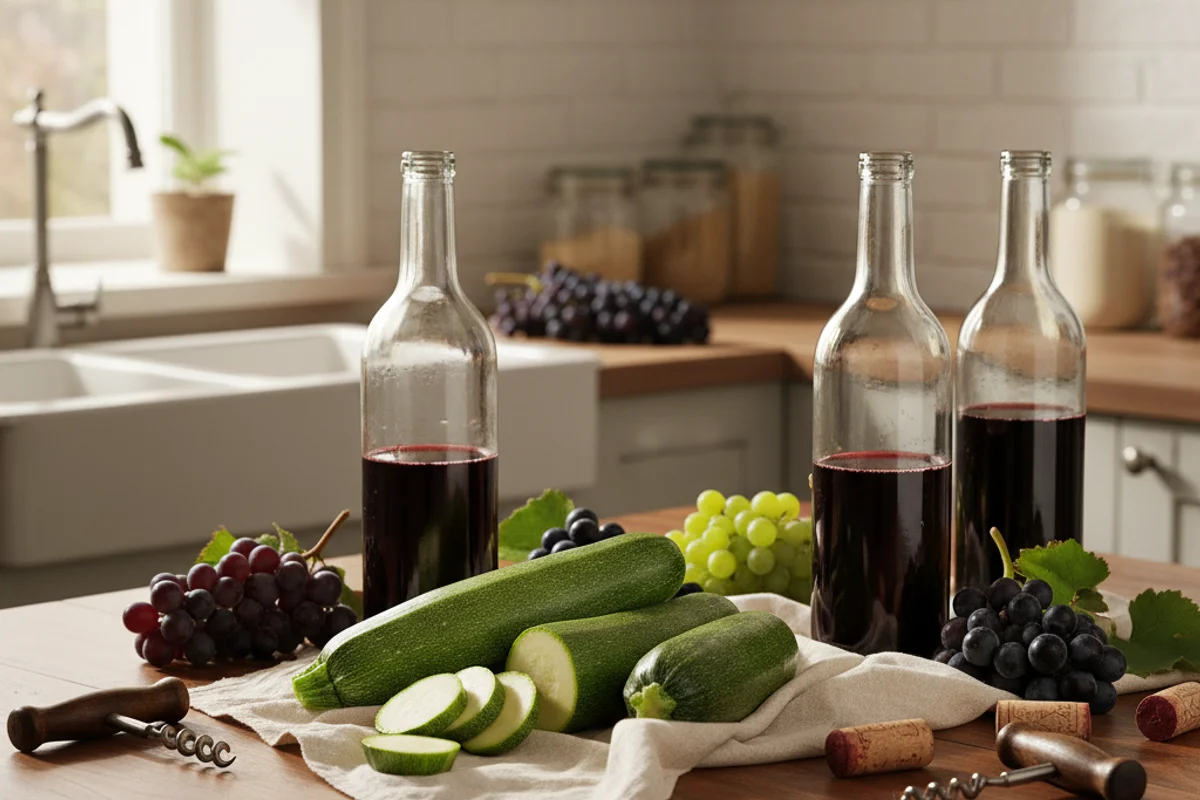
- 5–6 lbs fresh zucchini, unpeeled, chopped into ½-inch rounds
- 1¾ lbs granulated white sugar
- 1 (11 oz) can Welch’s 100% White Grape Juice Frozen Concentrate (or any white grape juice concentrate)
- 1⅓ tsp acid blend (available at homebrew shops; substitute 1 tsp lemon juice per ⅓ tsp as a rough stand-in)
- ½ oz fresh ginger root, thinly sliced
- 1 Campden tablet, crushed
- 6½ pts (about 13 cups) water, divided
- 1 tsp yeast nutrient
- 1 packet Champagne, Sauternes, or Hock yeast (Lalvin EC-1118 works well)
Method
- Bring 3 cups of water to a boil and dissolve the sugar completely. Remove from heat and set aside to cool.
- Wash the zucchini and chop it crosswise into ½-inch rounds — no peeling needed.
- Combine the zucchini, sugar syrup, grape juice concentrate, acid blend, ginger, Campden tablet, yeast nutrient, and remaining water in your primary fermenter. Stir well, cover, and let it sit for 10–12 hours.
- Activate your yeast according to packet directions, then add it to the must. Cover the fermenter loosely.
- Stir the must every 6–8 hours for 3 days to keep the solids wet and encourage even fermentation.
- Strain out the solids and transfer the liquid to your secondary fermenter. Press the solids lightly and set that extra liquid aside in a covered container — don’t discard it.
- Once the vigorous bubbling slows down, add the reserved pressed liquid. Top up with water if needed to minimize headspace, then attach an airlock.
- Rack after 4 weeks, top up again, and reattach the airlock.
- Rack a second time after another 4 weeks. If the wine is still cloudy, stir in amylase enzyme per the package instructions and wait one more month.
- Fine with bentonite if desired, then rack again 10 days later. Stabilize with potassium sorbate and sweeten to taste if you want a softer finish.
- Wait 3 weeks to confirm the wine is stable, then bottle. Age at least 3 months before opening.
Why this works
Zucchini is mostly water with a small amount of starch and very little natural sugar or acid — which is why this recipe leans on three outside supports. The frozen grape juice concentrate provides fermentable sugar, body, and trace flavor compounds that give the wine somewhere to go. The acid blend keeps the pH in a range where yeast thrive and where the finished wine tastes balanced rather than flat. The amylase enzyme in step 9 is a safety net: any residual starch from the zucchini can cause permanent haze, and amylase breaks those starch chains into simple sugars that either ferment out or drop clear. Ginger adds volatile aromatic compounds that survive fermentation and give the wine a subtle, warming lift.
Notes
Fresh ginger from the grocery store works perfectly here — no specialty ingredient needed. If your wine stays stubbornly hazy after amylase treatment, a dose of bentonite fining agent (also available at homebrew stores or online) will pull most remaining particles out. This recipe is a good candidate for a slightly sweet finish, since the neutral base lets a little residual sugar shine without becoming cloying.