Aronia Berries
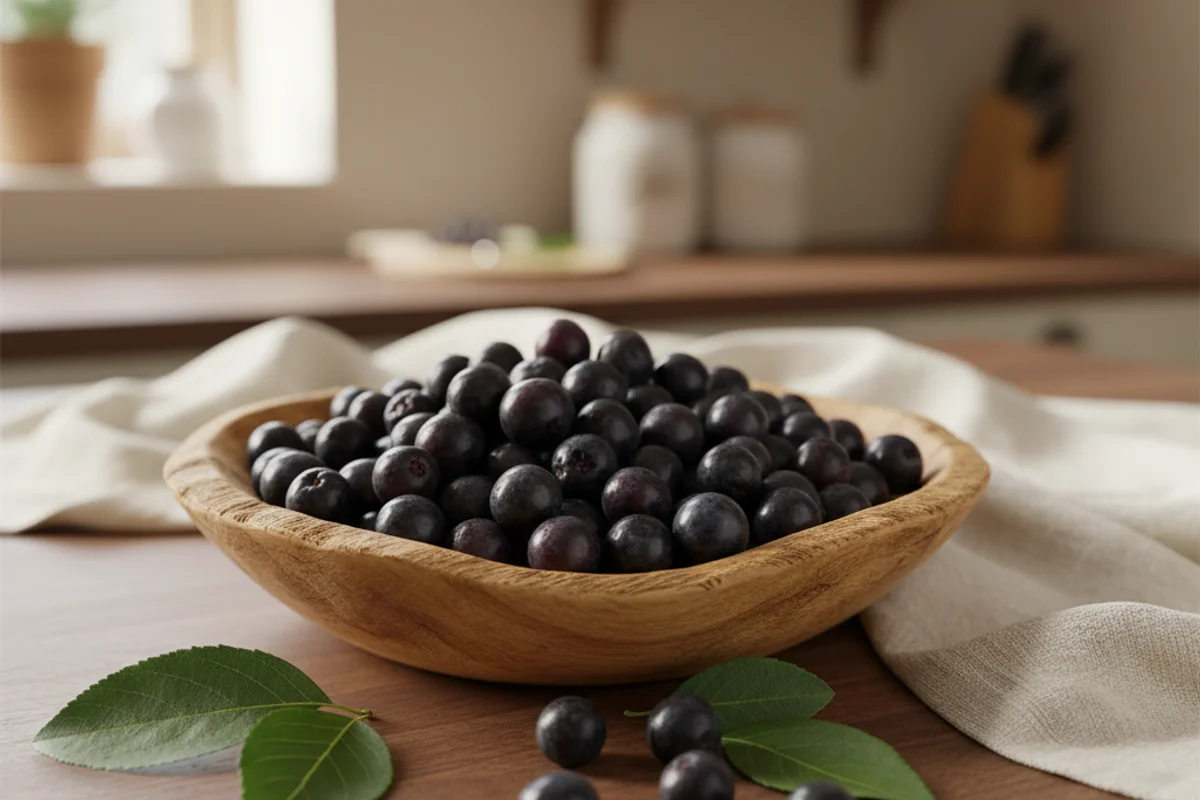
Sometimes called chokeberry — and yes, that name is earned. These glossy, violet-black little berries pack tannin, citric acid, and anthocyanin levels that put cranberries to shame. Raw, they’ll make your mouth pucker like a drawstring bag. Fermented, they produce a deeply colored, bold wine that rewards patience. The flavor can be elusive on its own, but the structure is always there — think of aronia as the backbone, not the melody. Blending with blackberry, black cherry, or blackcurrant turns this into something genuinely special.
The beginner trap: Skipping the full aging timeline — this wine needs at least six months post-fermentation to shed its harsh tannin edge and show what it’s actually made of.
Ingredients
- 3 lbs aronia berries (fresh or frozen; also sold as chokeberries)
- ½ lb dark raisins, finely chopped (adds body and a hint of depth)
- 2 lbs granulated white sugar
- 1 tsp citric acid (or the juice of one large lemon, strained)
- 1½ tsp yeast nutrient
- 1 Campden tablet, crushed
- ¾ tsp pectic enzyme
- Water to make 1 gallon
- 1 packet Lalvin 71B wine yeast (or any Burgundy-style wine yeast)
Method
- Bring 1 quart of water to a boil and pour it over the chopped raisins, sugar, and citric acid in your primary fermenter. Stir until the sugar fully dissolves, then cover.
- After 2 hours, stir in the crushed Campden tablet and re-cover. Let the mixture rest for 12 hours or overnight.
- Place the aronia berries in a nylon straining bag and mash them thoroughly by hand directly in the primary — wear rubber gloves, because this juice stains aggressively and permanently.
- Stir in the pectic enzyme, yeast nutrient, and 2½ quarts of cold water. Cover and wait another 12 hours.
- Activate your yeast according to packet directions, add it to the must, and re-cover the fermenter.
- Once a day for 7 days, stir the must and squeeze the berry bag while wearing gloves to pull out as much color and flavor as possible.
- After 7 days, remove and squeeze the berry bag to extract all remaining juice, then discard the spent berries. Re-cover and let the raisins ferment for 3 more days.
- Strain out the raisins while transferring the liquid into your secondary fermenter (a 1-gallon glass jug works well). Top up to the shoulder and fit an airlock.
- Rack into a clean jug, top up, and refit the airlock every 30 days for 90 days total.
- Set the wine aside for another 90 days, then rack one final time, stabilize with a fresh Campden tablet and ½ tsp potassium sorbate, and sweeten to taste.
- If the wine tastes flat or thin, dissolve ⅛ tsp grape tannin (available at homebrew shops, or substitute a cooled cup of strong black tea) in a small amount of wine and stir it in. Top up, refit the airlock, and wait 30 more days before bottling — or blend with another berry wine.
Why this works
Aronia berries are loaded with anthocyanins — the same pigment compounds that color blueberries and red cabbage. These molecules are also antioxidants that interact with tannins during aging to form stable color complexes, which is why a well-aged aronia wine holds its deep purple hue far longer than most fruit wines. The pectic enzyme breaks down pectin in the cell walls early on, which releases more juice and prevents a cloudy, gel-like haze later. Lalvin 71B is chosen deliberately here: this yeast metabolizes a portion of the malic acid in the must, softening the wine’s sharp, sour edge without a full malolactic fermentation. The raisins stay in during secondary for extra complexity — their natural sugars and amino acids give the yeast more to work with while adding a subtle dried-fruit note to the finished wine.
Notes
Frozen aronia berries work just as well as fresh and are often easier to find — check health food stores, online retailers, or Eastern European grocery stores where they may be labeled “black chokeberries.” If the finished wine is too tart even after aging, add your sweetener gradually and taste as you go — a little back-sweetening goes a long way with this fruit. This wine shines as a blending partner; try mixing it 50/50 with a finished blackberry or black cherry wine for a complex, deeply colored result.