BLACKBERRY-BLUEBERRY WINE
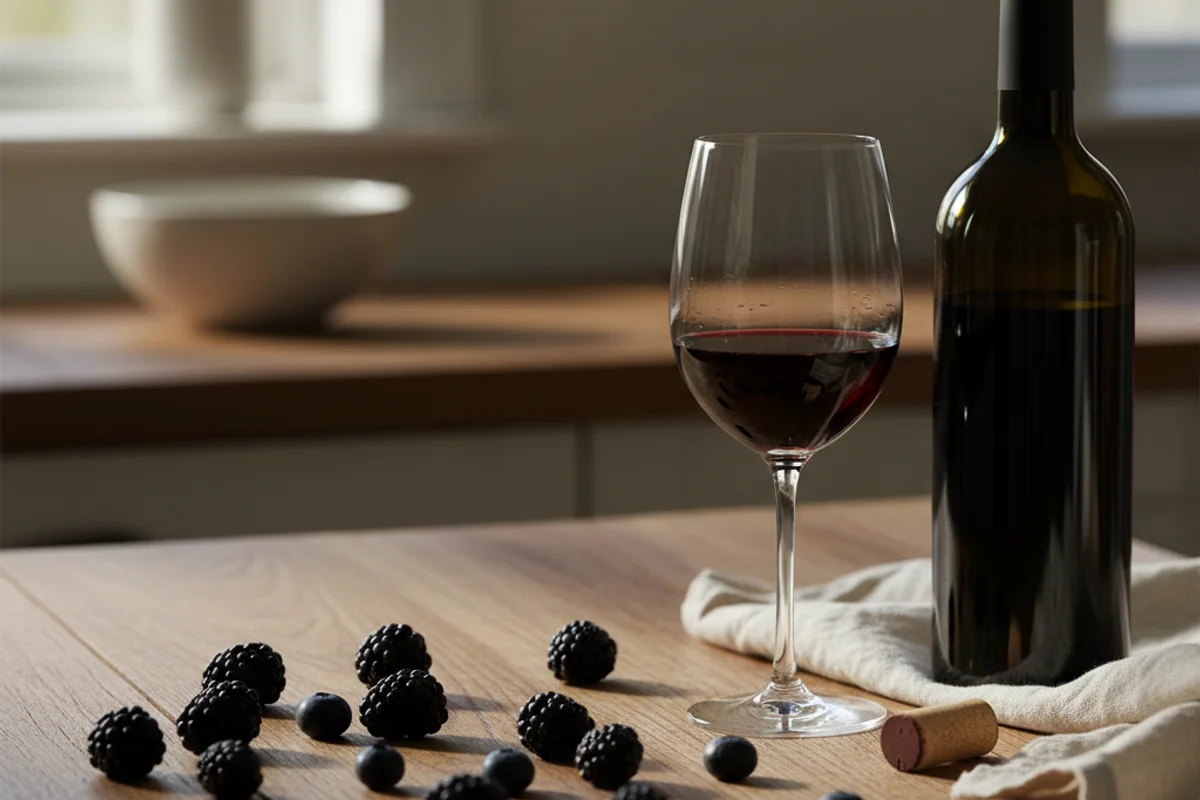
Blackberries bring tannin, tartness, and a deep purple punch. Blueberries bring body, a hint of earthiness, and enough natural sugar to keep things interesting. Put them together and you get a fruit wine that’s more complex than either berry could manage alone — dark, jammy, and just acidic enough to keep your palate awake. This recipe is built for the home winemaker who wants a serious result without tracking down exotic ingredients. Everything here comes from a grocery store or a garden.
The beginner trap: Squeezing the fruit bag during draining at the end releases harsh tannins and haze-causing solids — let it drip on its own and walk away.
Ingredients
- 4 lbs blackberries, fresh or frozen
- 4 lbs blueberries, fresh or frozen
- 2 lbs granulated white sugar
- 3 quarts water
- 1 tsp pectic enzyme
- ½ tsp acid blend (or 1 tsp fresh-squeezed lemon juice as a substitute)
- 1 tsp yeast nutrient
- 1 packet wine yeast (Lalvin 71B or EC-1118 work well)
- 1 nylon straining bag
Method
- Bring the water to a full boil, then set it aside. Wash and sort both fruits, discarding any that are moldy or underripe.
- Place the fruit in a nylon straining bag, tie it closed, and set it in your primary fermenter. Mash the fruit through the bag using clean hands or a sanitized potato masher.
- Add the sugar to the fermenter, then pour the hot water over the fruit and sugar. Stir until the sugar fully dissolves.
- Cover the fermenter loosely and let the must cool to lukewarm — around 70–75°F (21–24°C).
- Stir in the acid blend, pectic enzyme, and yeast nutrient. Re-cover the fermenter and wait 12 hours.
- Sprinkle the yeast over the surface and gently press it in after a few minutes. Squeeze the fruit bag gently twice a day for 7 days to pull color and flavor from the fruit.
- After 7 days, lift the bag and let it drip drain completely into the fermenter — do not squeeze it. Discard the spent fruit pulp.
- Transfer the liquid to your secondary fermenter (a glass carboy or food-grade jug) and attach an airlock.
- Once active fermentation slows — usually 5 to 7 days — top the vessel up to reduce headspace and reseat the airlock.
- Ferment for 2 months, then rack the wine into a clean, sanitized secondary fermenter. Top up and refit the airlock.
- Continue fermenting until the wine clears completely. Wait an additional 2 months, then rack into bottles and age for 6 to 12 months before drinking.
Why this works
Blackberries and blueberries are both high in anthocyanins — the pigment molecules that give them their deep color. Those same molecules are mildly astringent, which is why the twice-daily squeeze during primary fermentation is capped at a gentle press: you want extraction, not over-extraction. Pectic enzyme breaks down pectin, a natural gelling agent in fruit cell walls that would otherwise leave your finished wine hazy and dull. Acid blend fine-tunes the pH so yeast stays happy and the finished wine tastes alive rather than flat. The long aging period lets harsh young tannins soften and the fruit flavors knit together into something that actually resembles wine rather than juice.
Notes
Frozen fruit is an excellent choice here — freezing ruptures cell walls and speeds up juice extraction during the mash step. If acid blend isn’t available at your local homebrew shop, you can order it online or substitute one teaspoon of lemon juice per half teaspoon of acid blend as a rough workaround. If your finished wine still looks hazy after clearing, a second dose of pectic enzyme early in fermentation often solves the problem.