BLACKBERRY-GRAPE CONCENTRATE WINE
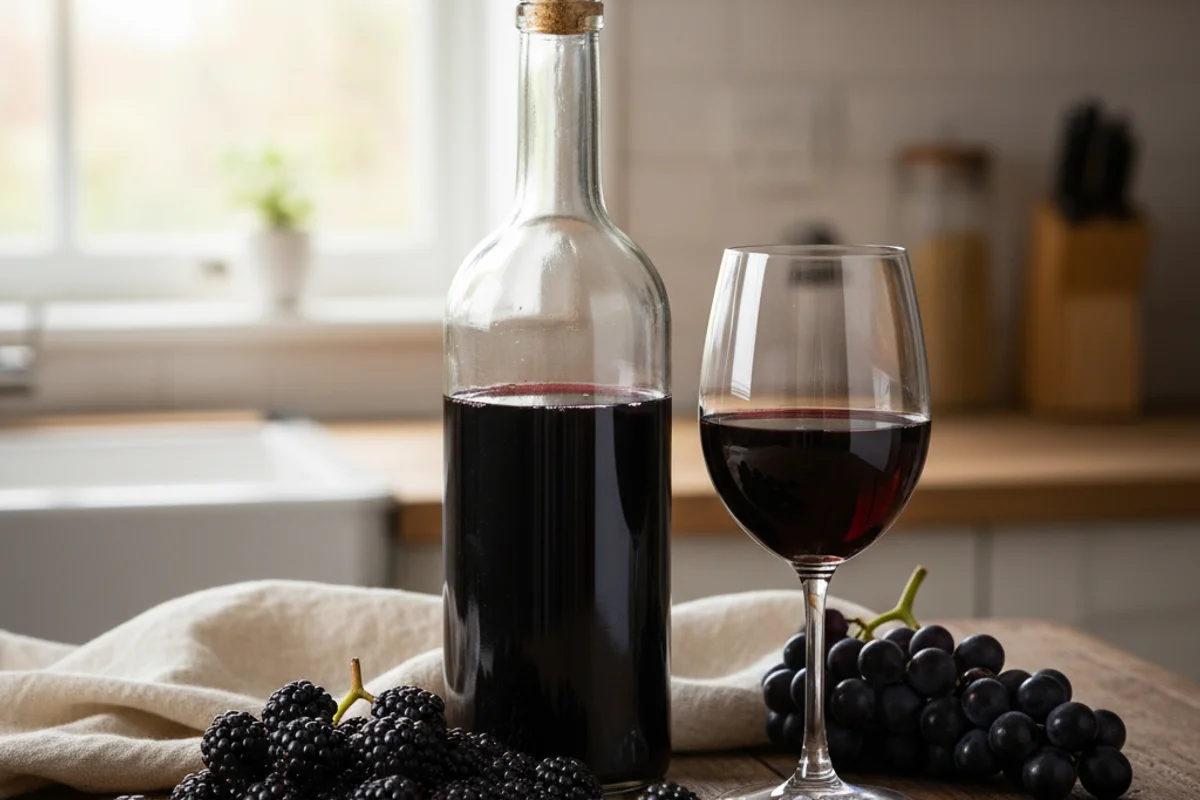
Blackberries bring big color and bold, jammy flavor — but on their own they can taste thin and sharp once fermented. Red grape concentrate is the secret handshake: it adds body, tannin, and a backbone that turns a decent berry wine into something that actually improves with age. The result is deep ruby, full of bramble fruit, with enough structure to reward a year of patience in the bottle. Think of it as blackberry doing its best Bordeaux impression.
The beginner trap: Skipping the pectic enzyme — or adding it while the must is still hot — leaves your wine permanently cloudy, no matter how long you wait.
Ingredients
- 3–4 lbs blackberries, fresh or frozen
- 12 oz red grape concentrate (canned, from a homebrew shop or online)
- 2¼ lbs granulated sugar
- Water to make 3½ quarts total
- ½ tsp pectic enzyme
- 1 tsp yeast nutrient
- 1 packet wine yeast (Lalvin 71B or EC-1118 work well)
Method
- Bring 3 quarts of water to a full boil. While it heats, rinse and sort the blackberries, removing any stems or damaged fruit.
- Place the blackberries in a nylon straining bag, tie it closed, and set it in your primary fermenter. Mash the fruit through the bag with your hands or a potato masher.
- Pour the boiling water directly over the bag of fruit. Add the grape concentrate and sugar, then stir until the sugar fully dissolves.
- Cover the fermenter loosely with a clean cloth and let the must cool to below 75°F (around room temperature).
- Once cool, stir in the pectic enzyme and yeast nutrient. Cover again and wait 12 hours.
- Sprinkle or rehydrate the yeast according to the packet instructions, then add it to the must. Cover and ferment for 5–7 days, squeezing the fruit bag gently once a day.
- Lift out the bag, let it drain without squeezing hard, then pour the liquid into your secondary fermenter (a 1-gallon glass jug or carboy). Fit an airlock and ferment for 5 more days.
- Top up the carboy to reduce headspace, refit the airlock, and let it ferment for 2 months.
- Rack into a clean carboy, top up again, and refit the airlock. Repeat this racking step 2 months later.
- After one final 2-month rest, rack once more, then bottle. Age the bottled wine for at least 1 year before opening.
Why this works
Blackberry juice is naturally high in pectin — the same stuff that makes jam set. Pectic enzyme (pectinase) breaks those long pectin chains apart so they can’t form a haze in your finished wine. Heat destroys the enzyme, which is why you wait until the must cools before adding it. The red grape concentrate adds two things yeast love: fermentable sugar and natural tannins. Tannins act as a preservative and give the wine a dry, structured finish. The multiple racking steps remove spent yeast (lees) before they can break down and release off-flavors — a process called autolysis. Patience during aging lets harsh alcohol and sharp acids mellow into something smooth.
Notes
Frozen blackberries work just as well as fresh and are often more consistent — the freeze-thaw cycle even helps break down cell walls, so you get better juice extraction. If you can’t find red grape concentrate at a homebrew shop, look for 100% Concord grape juice concentrate in the frozen juice aisle and use the same amount. For a slightly drier wine, reduce the sugar by ¼ lb; for a richer, sweeter result, keep the full amount.