BRAMBLE TIP WINE
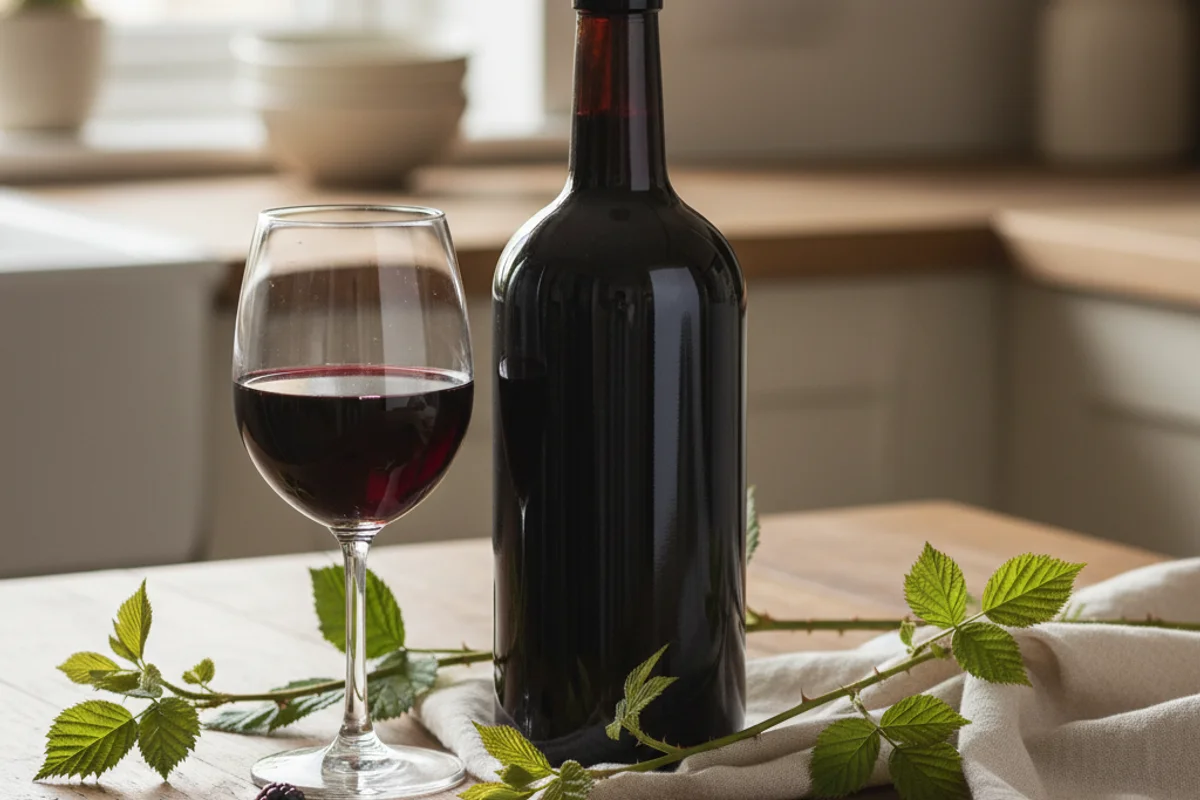
Most people look at a blackberry bush and see fruit. But before those berries show up, the plant is already doing something interesting — pushing out soft, green shoot tips full of tannins, aromatic compounds, and enough character to carry a whole gallon of wine. This is a country wine in the oldest sense: foraged, frugal, and genuinely surprising. Expect a dry, lightly tannic wine with herbal and earthy notes — closer to a rustic white than anything berry-forward.
The beginner trap: Skipping the full one-hour boil shortchanges flavor and tannin extraction — don’t cut it short to save time.
Ingredients
- 1 gallon loosely packed young blackberry shoot tips (tender green ends only)
- 2 lbs granulated white sugar
- 1 tsp acid blend (or 1½ tsp lemon juice as a backup)
- 1 tsp yeast nutrient
- 7 pints water, plus extra to replace evaporation during boiling
- 1 packet Montrachet wine yeast (or any dry wine yeast)
Method
- Rinse the blackberry tips well, then place them in a large pot with the water and bring to a boil. Boil for one full hour, adding water as needed to keep the volume stable.
- Place the sugar in your primary fermenter. Strain the hot liquid directly onto the sugar and stir until fully dissolved.
- Cover the fermenter and let the must cool to room temperature (below 75°F / 24°C).
- Stir in the acid blend and yeast nutrient.
- Activate your yeast according to packet instructions, then add it to the must. Cover loosely and move to a warm spot (68–75°F).
- Stir daily. After about 7 days, when vigorous bubbling slows, transfer the must to a sanitized secondary fermenter (glass jug or carboy) and fit an airlock.
- Leave in a warm place until fermentation stops completely — no more bubbles for at least 48 hours.
- Rack into a clean, sanitized secondary, top up to minimize headspace, and refit the airlock. Move to a cool location for 6 months.
- Rack again into bottles and age for an additional 6 months before drinking.
Why this works
Blackberry shoot tips are rich in tannins and aromatic plant compounds — the same chemicals that give green tea its bite and fresh herbs their punch. Boiling extracts these compounds into the water, essentially making a strong herbal tea that becomes your wine base. The long boil also kills off any wild microbes clinging to the foraged material, giving your cultured yeast a clean environment to work in. The extended aging — a full year total — gives harsh tannins time to soften and the flavors time to knit together into something cohesive. Skip the aging and you’ll have something sharp and rough; be patient and it rounds out considerably.
Notes
Harvest only the soft, flexible tips of new growth — avoid any woody or thorned sections, which can add bitter off-flavors. Wear thick gloves when harvesting; blackberry thorns mean business. If acid blend is hard to find locally, a measured amount of tartaric acid (available online) or a squeeze of lemon juice works as a substitute.