Bramble Tips
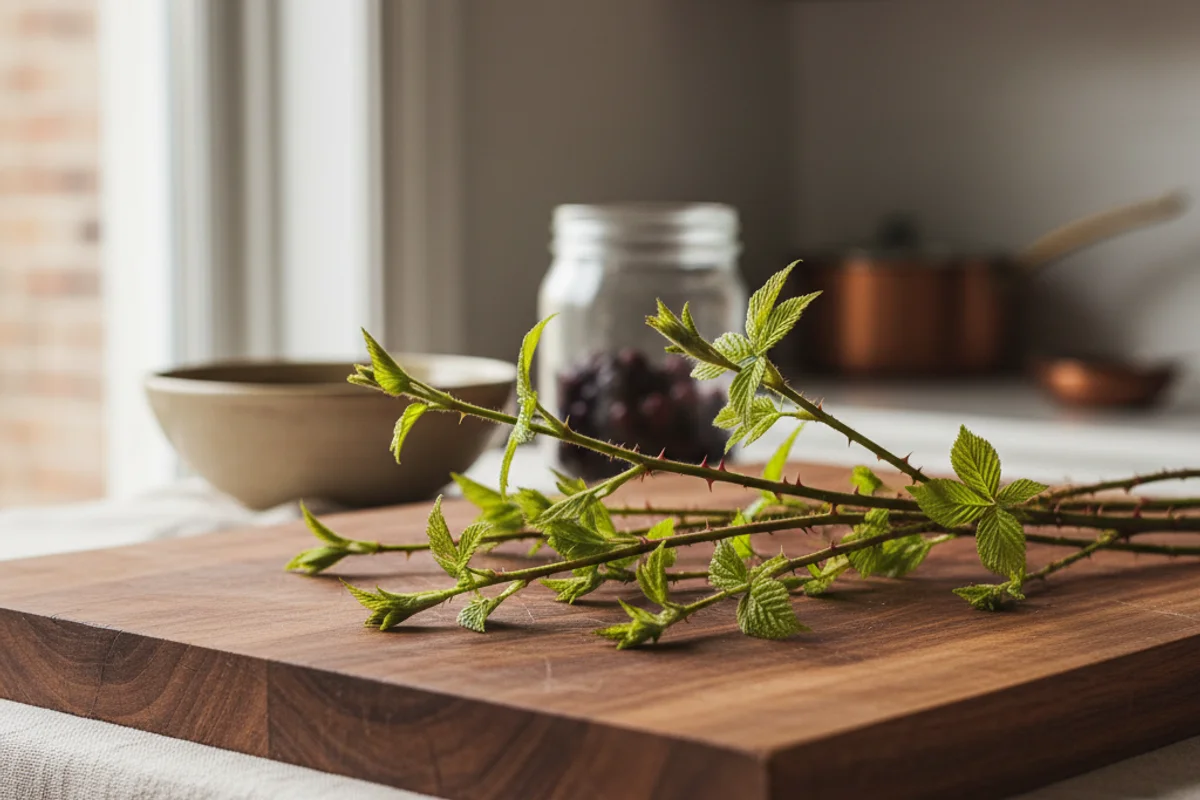
Blackberry canes are basically the plant world’s barbed wire — all threat, no apparent reward. But those soft, bright-green tips pushing out in spring? They’re loaded with tannins, subtle vegetal character, and enough extractable flavor to build a genuinely interesting country wine. Think light, dry, and faintly earthy with a backbone that surprises people who expected something simple. This is foraged winemaking at its most low-cost and high-reward.
The beginner trap: Skipping the full one-hour boil because it seems excessive — that long simmer is what pulls the tannins and flavor compounds out of the woody shoots, so cutting it short leaves you with thin, watery wine.
Ingredients
- 1 gallon blackberry shoot tips, loosely packed (tender new growth only)
- 2¼ lbs granulated white sugar
- 7 pints water, plus extra to replace evaporation
- 1¼ tsp acid blend (or 1 tsp cream of tartar as a backup)
- 1 tsp yeast nutrient
- 1 packet Montrachet wine yeast (or any dry white wine yeast)
Method
- Collect the soft, young tips from blackberry canes — the last 4 to 6 inches of new growth work best. Rinse them well.
- Bring the tips and water to a boil in a large pot. Boil for a full hour, adding water as needed to maintain the original volume.
- Place the sugar in your primary fermenter. Strain the hot liquid over the sugar and stir until fully dissolved. Discard the spent tips.
- Cover the fermenter and let the must cool to below 75°F (24°C).
- Stir in the acid blend and yeast nutrient. Activate your yeast according to the packet instructions, then add it to the must. Cover loosely with a cloth or lid.
- Ferment in a warm spot (68–75°F) for about 7 days, or until the vigorous bubbling slows down noticeably.
- Transfer the wine to a sanitized secondary fermenter (a 1-gallon glass jug works well) and fit an airlock.
- Let it sit until fermentation stops completely — no more bubbles passing through the airlock.
- Rack into a clean, sanitized secondary, top up to minimize headspace, and refit the airlock. Move to a cool location for 6 months.
- Rack into bottles and age for at least another 6 months before drinking.
Why this works
Boiling plant material in water is a classic decoction technique — heat breaks down cell walls and forces water-soluble compounds like tannins, chlorophyll derivatives, and trace sugars out into the liquid. Blackberry canes contain tannins similar to those in grape skins, which give the finished wine structure and a slight astringency that softens during aging. The long cold rest after fermentation lets suspended solids drop out and allows harsh young tannins to polymerize and mellow. That’s why patience pays off here — a 6-month-old bottle of this wine tastes noticeably rougher than a 12-month-old one.
Notes
Thick rubber gloves are non-negotiable when harvesting — blackberry thorns are no joke. If you can’t forage fresh shoots, this recipe doesn’t translate well to dried or frozen material; fresh or freshly harvested tips are really the only option here. Acid blend is available at any homebrew shop; if you can’t find it, a small amount of lemon juice can pinch-hit, though the flavor will shift slightly.