CHRYSANTHEMUM WINE
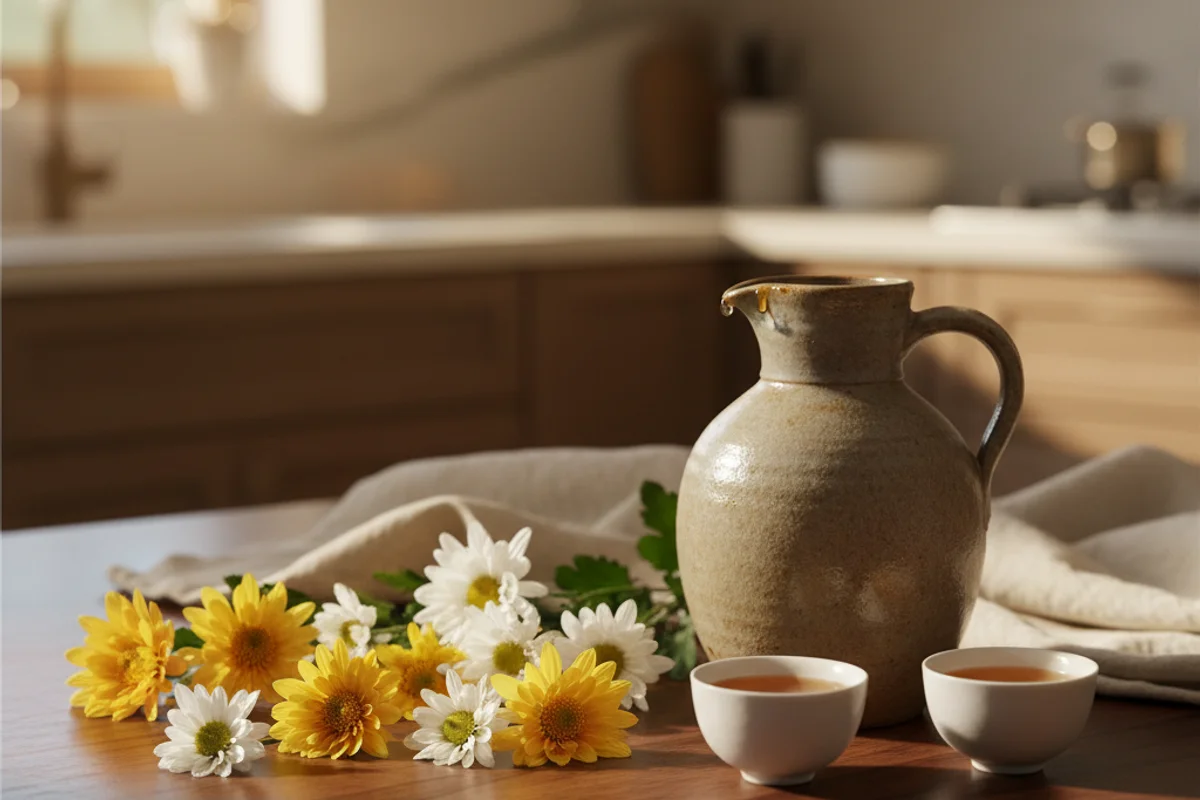
Think of chrysanthemum wine as the floral cousin of a dry Riesling — light, slightly bitter at the edges, with a faint peppery note that softens into something almost honeyed once fermentation does its work. Mums have been eaten and brewed across Asia for centuries, so this isn’t as wild as it sounds. The petals bring aroma and flavor; a splash of white grape concentrate rounds out the body. Finished semi-sweet and served cold, this wine is genuinely surprising in the glass — in a good way.
The beginner trap: Using the whole flower head instead of petals only — the green stems and sepals add harsh bitterness and can irritate skin, so strip the petals and compost everything else.
⚠️ Safety note: People with ragweed allergies or asthma triggered by composite flowers (daisies, chamomile) should be cautious — chrysanthemums belong to the same plant family and can cause similar reactions in sensitive individuals.
Ingredients
- 2 quarts chrysanthemum petals, loosely packed (petals only, no green parts)
- 1¾ lbs (about 3¾ cups) granulated white sugar
- 1 can (11 oz) frozen white grape juice concentrate, thawed (Welch’s 100% White Grape works well)
- 1 tsp tartaric acid (substitute: 1½ tsp acid blend, found at homebrew shops or online)
- ¼ tsp wine tannin (substitute: 1 tsp strong plain black tea)
- 1 tsp yeast nutrient
- 1 Campden tablet, finely crushed
- 6½ pts (about 13 cups) water, divided
- 1 packet Champagne, Sauternes, or Hock wine yeast
Method
- Pull petals free from the flowers and place them in your primary fermenter (a food-grade bucket works fine). Discard all stems, leaves, and green flower parts.
- Bring 1 quart of the water to a boil and stir in the sugar until fully dissolved.
- Add the grape juice concentrate, tartaric acid, tannin, and yeast nutrient to the petals in the primary fermenter.
- Pour the hot sugar water over the petal mixture and stir gently to combine. Cover the fermenter loosely with a clean cloth or lid.
- Let the mixture steep for 24 hours at room temperature, then strain out the petals and discard them. Return the liquid to the primary fermenter.
- Activate your yeast according to the packet instructions, then add it along with the remaining cool water to the fermenter. Stir well.
- Ferment in the primary, loosely covered, until vigorous bubbling slows — usually 5 to 7 days. Then transfer to a sanitized secondary fermenter (a 1-gallon glass jug works well) and fit with an airlock.
- Once all visible fermentation stops, rack the wine into a sanitized secondary containing the crushed Campden tablet. Top up to minimize headspace and refit the airlock.
- When the wine runs clear, rack again into a clean vessel, top up, and refit the airlock.
- After 60 days, rack once more, add a stabilizer (potassium sorbate plus a fresh Campden tablet), top up, and refit the airlock.
- After another 60 days, rack only if sediment has formed. Sweeten to taste — aim for a specific gravity of 1.004–1.007 for a pleasant semi-sweet finish — then bottle.
- Wait at least 3 months before opening a bottle. The wine peaks around the 1-year mark, so plan to enjoy it within that window.
Why this works
Chrysanthemum petals contain aromatic compounds — mostly terpenoids and flavonoids — that dissolve readily into hot water, which is why the 24-hour hot steep pulls so much character from a relatively small volume of petals. The white grape concentrate isn’t just filler; it adds fermentable sugar, a small protein backbone, and natural grape acids that give the finished wine structure it couldn’t get from petals alone. Finishing semi-sweet (a tiny bit of residual sugar) is deliberate: it softens the petals’ inherent bitterness the same way a pinch of sugar balances a bitter espresso. A cool-fermenting yeast like Champagne or Hock keeps the delicate floral esters intact instead of blowing them off as heat.
Notes
If you can’t source tartaric acid locally, citric acid or acid blend from a homebrew supplier are easy substitutes — use the same quantity. Frozen petals work if you have a large mum crop; freeze them in 2-quart portions in zip-lock bags and thaw completely before use. If you experience skin irritation when handling fresh flowers, wear kitchen gloves during the petal-stripping step.