COWSLIP WINE
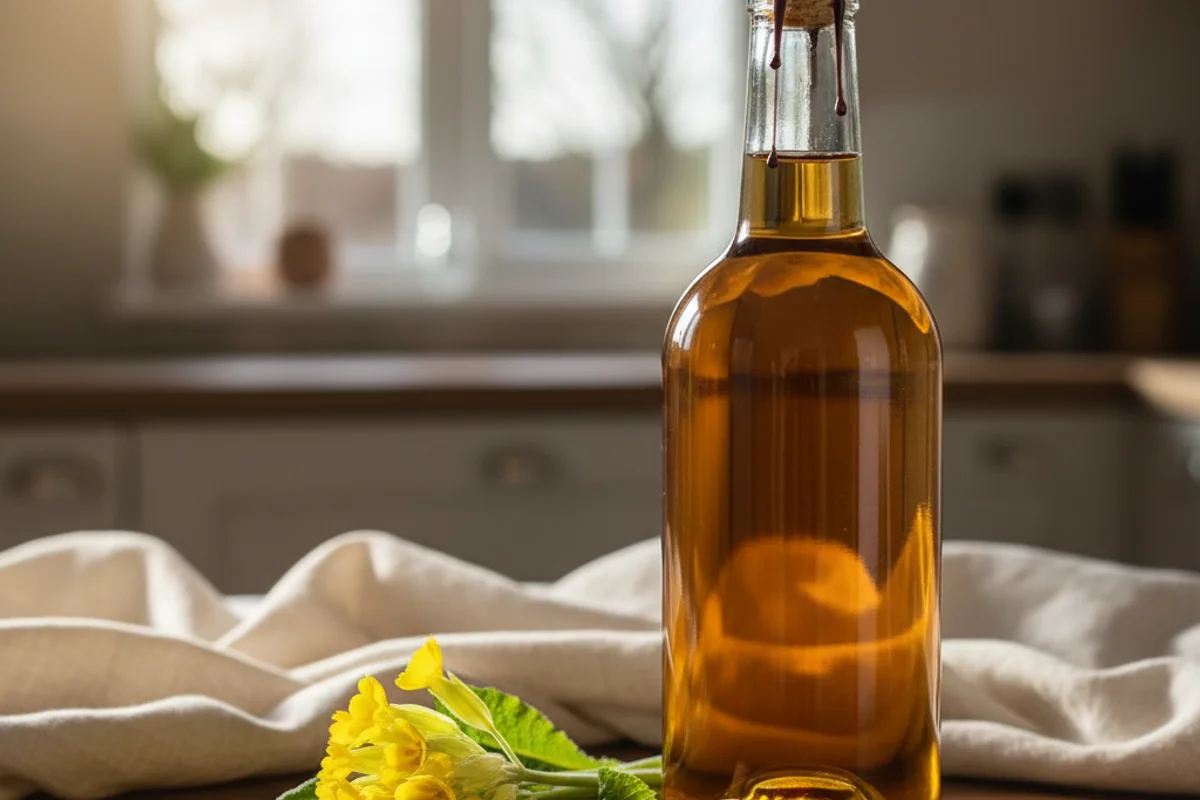
Cowslip flowers smell like honey and spring rain, and they translate that into a wine that’s delicate, floral, and genuinely surprising. Use 2 quarts of blooms and you get a lovely sipper for any occasion. Push it to 4 quarts and the wine takes on mild sedative properties — it’s been used as a natural sleep aid for centuries. Either way, you’re working with one of nature’s more underrated fermentation ingredients. The white grape concentrate adds body and a clean fruit backbone without competing with the flowers.
The beginner trap: Skipping the full 24-hour Campden tablet rest before pitching yeast — wild microbes on the flowers will fight your wine yeast and produce off-flavors.
Ingredients
- 2–4 quarts cowslip flowers, fresh (washed)
- 11.5 oz frozen Welch’s 100% white grape juice concentrate, thawed
- 1¾ lbs (about 3½ cups) granulated white sugar
- 7 pints (3.5 quarts) water
- 2 tsp acid blend (found at homebrew shops; lemon juice is not a reliable substitute)
- 1 tsp yeast nutrient
- ¼ tsp wine tannin (or 1 cup strong-brewed unsweetened black tea)
- 2 Campden tablets (potassium or sodium metabisulfite), used at separate stages
- 1 packet Champagne wine yeast (or any dry white wine yeast)
Method
- Place flowers in a nylon mesh straining bag and set it in your primary fermenter (a food-safe bucket works great).
- Bring the water to a boil, add the sugar, and stir until fully dissolved. Remove from heat.
- Slowly pour the hot sugar water over the bag of flowers. Add the acid blend, yeast nutrient, and tannin, then stir to combine.
- Cover the bucket with a clean cloth and let the must cool to room temperature (below 75°F).
- Once cool, add the thawed grape concentrate and stir well. Squeeze the flower bag several times to pull out color and flavor, then lift it out and let it drip into the bucket before discarding.
- Crush and add 1 Campden tablet, stir, cover, and leave undisturbed for 24 hours.
- Activate your yeast according to the packet directions, then stir it into the must and re-cover.
- Stir the must twice daily. When the specific gravity (SG) drops below 1.020 — typically 7–10 days — transfer to a glass carboy or secondary fermenter and fit an airlock.
- When SG reaches 1.000, rack the wine off the sediment into a clean vessel, top up to minimize headspace, and refit the airlock.
- After 60 more days, rack again into a clean vessel. Dissolve the second Campden tablet in a small amount of warm water and stir it in. Refit the airlock and wait 30 days.
- If the wine is clear, rack one final time, stabilize with potassium sorbate if you plan to sweeten, sweeten to taste if desired, wait 10 days, then bottle.
- If the wine is still hazy, fine it with a gelatin fining agent, wait for it to drop clear, then rack, stabilize, sweeten if desired, wait 10 days, and bottle.
Why this works
Cowslip petals contain flavonoids and mild saponins, but very little sugar, acid, or tannin on their own — which is exactly why this recipe builds those elements from outside sources. The acid blend keeps the pH in range for healthy yeast activity and helps preserve the wine long-term. Tannin provides structure and also acts as a mild antimicrobial. The white grape concentrate brings fermentable sugars, amino acids, and a neutral fruit base that thickens the mouthfeel without turning this into a grape wine. Champagne yeast is chosen here because it’s a clean, reliable finisher that won’t leave behind off-flavors that would mask the subtle floral character you’re trying to preserve.
Notes
Cowslip (Primula veris) is foraged in the wild or sometimes available through specialty herb suppliers — it is not a grocery-store item. Do not substitute common primrose; the flavor profile is different. Use 2 quarts of flowers for a light table wine and 4 quarts if you want the traditional stronger version — but note that the stronger batch can cause drowsiness, so plan accordingly. This wine is drinkable young but noticeably better after 6 months in the bottle.