DAISY WINE
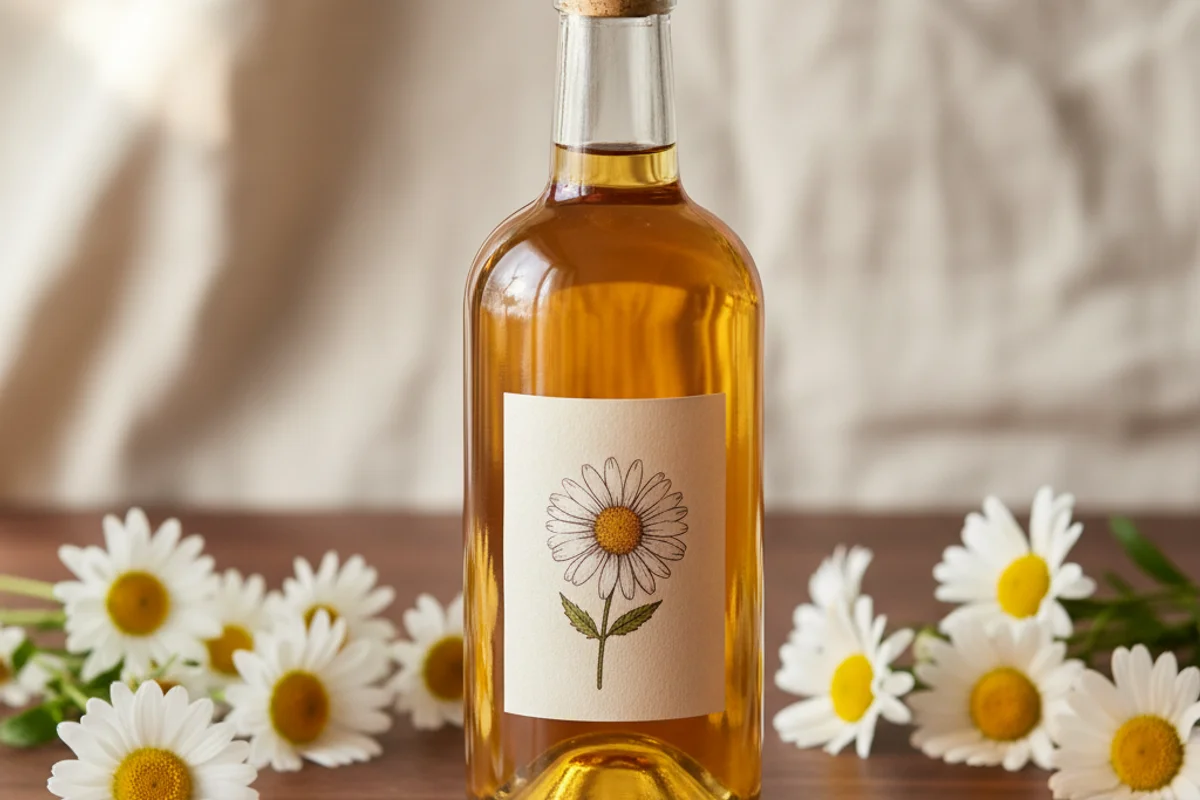
Daisies don’t taste like much when you eat them, but steep a gallon of flower heads in water for a couple of days and something quietly interesting happens. The petals give up a faint honey-like sweetness, a whisper of green, and a floral note that no grape wine can quite replicate. Golden raisins bring body and a touch of richness, while lemon and orange push the acidity and aroma into balance. The result is a pale, delicate wine — light enough for a summer afternoon, unusual enough to earn a second glass.
The beginner trap: Skipping the two-day cold steep and going straight to fermentation — that short soak is where almost all the flavor comes from, so rushing it leaves you with expensive sugar water.
Ingredients
- 1 gallon fresh daisy flower heads (oxeye or shasta work well — petals and yellow centers, no stems)
- 1 pint (about 2 cups) golden raisins, finely chopped
- 2 lemons, peeled and thinly sliced
- 1 orange, peeled and thinly sliced
- 1 lb 13 oz (about 3¾ cups) granulated white sugar
- 7½ pints (about 15 cups / just under 1 gallon) water
- ¼ tsp wine tannin (or 1 cup plain brewed black tea, cooled)
- 1 tsp yeast nutrient
- 1 packet Champagne or Hock wine yeast (dry bread yeast works in a pinch but expect a blander result)
Method
- Pick flower heads after the morning dew has dried off. Rinse them gently under cool water, then place them in your primary fermenter.
- Pour the water — hot or cold — over the flowers and cover the fermenter with a cloth or loose lid. Let it steep for two full days.
- After two days, strain out the flowers and squeeze the blossoms firmly to pull out as much liquid as possible. Discard the spent flowers.
- Add the chopped raisins, lemon slices, orange slices, sugar, tannin, and yeast nutrient to the strained liquid. Stir thoroughly until the sugar is completely dissolved.
- Cover the fermenter and leave it at room temperature for two weeks, stirring once each day.
- Strain the liquid into a glass secondary fermenter (a 1-gallon jug works well), discarding the raisins and citrus. Fit an airlock.
- Let the wine ferment undisturbed until bubbling stops and the wine has cleared — usually 4 to 6 weeks.
- Rack the wine into a clean vessel, top it up to minimize headspace, and refit the airlock. Wait one month.
- Rack again into a second clean vessel, wait another month, then bottle. Drink within one year for the best aroma.
Why this works
Flower wines succeed or fail on extraction. Daisy petals hold their aromatic compounds loosely, so a cool-water steep is enough to pull them into solution without cooking off the delicate top notes the way a hot infusion would. The golden raisins do double duty: their natural sugars feed the yeast steadily, and their grape solids add body and a soft mouthfeel that plain sugar water can’t provide. Tannin — whether from a packet or a cup of black tea — gives the wine structure and helps it clarify. Champagne yeast is chosen here because it ferments clean and dry without adding its own flavor, letting the flowers stay front and center.
Notes
Only use daisies you are certain have not been sprayed with pesticides or herbicides — roadside flowers are risky; garden-grown or farmer’s market flowers are safer. If wine tannin isn’t available at your local homebrew shop, substitute 1 cup of strong-brewed black tea (cooled before adding). This wine peaks young; drink it within 12 months before the floral bouquet fades.