Dandelion and Elderflower Wine
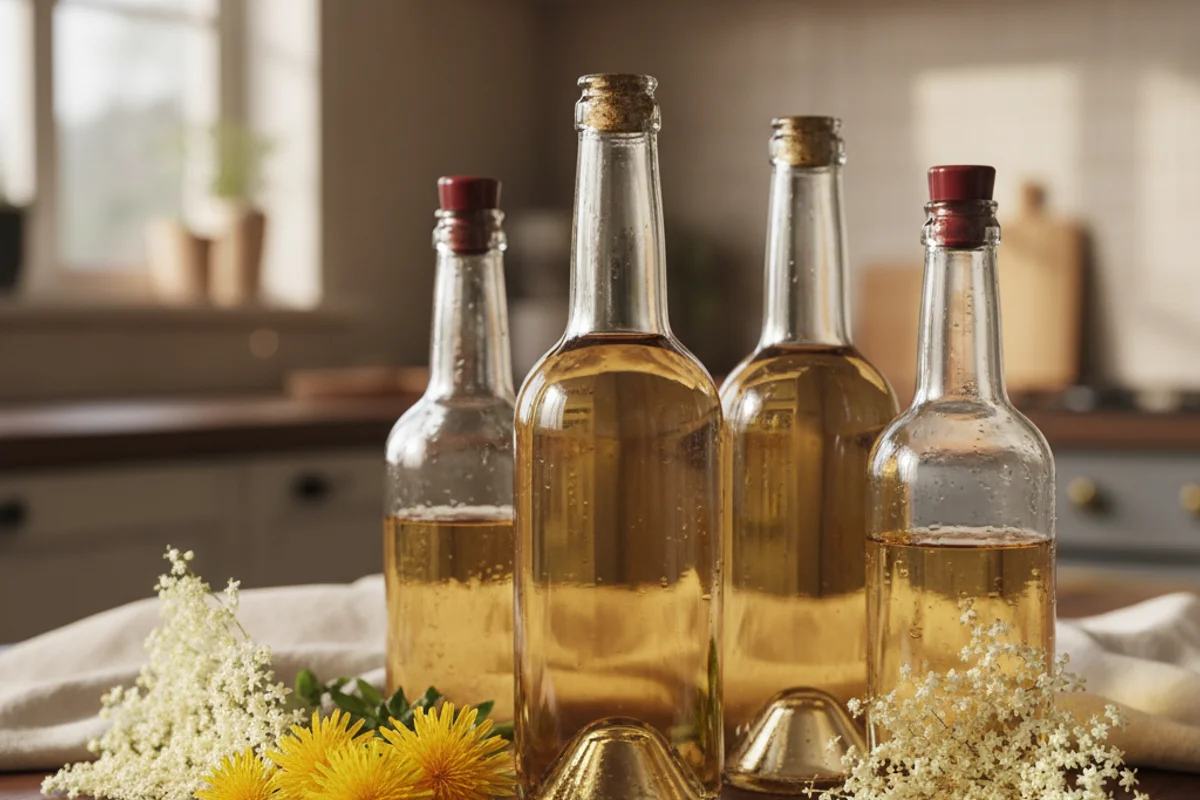
Spring in a bottle — that’s the best way to describe what happens when dandelion petals and elderflowers ferment together. Dandelion brings a faint honey-like bitterness and a golden hue; elderflower adds that unmistakable floral musk that smells like warm weather and cut grass. Citrus juice ties it all together, keeping the wine bright and alive. The result is something delicate, dry, and surprisingly complex — the kind of wine people sip slowly and then ask what on earth it is.
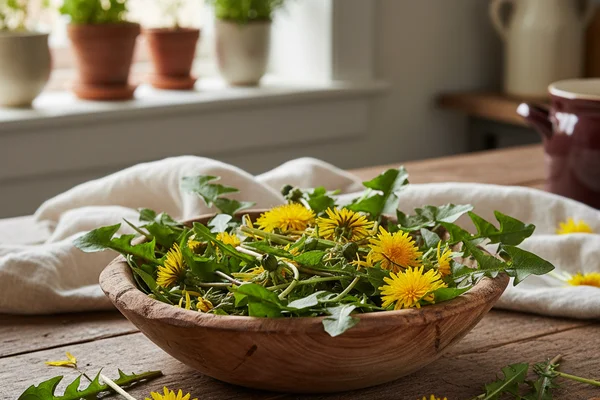
The beginner trap: Green dandelion parts (stems, sepals, leaves) sneak bitterness into the wine that no amount of aging will fix — pull petals only, every single one.
Ingredients
- 2 quarts dandelion petals, green parts fully removed
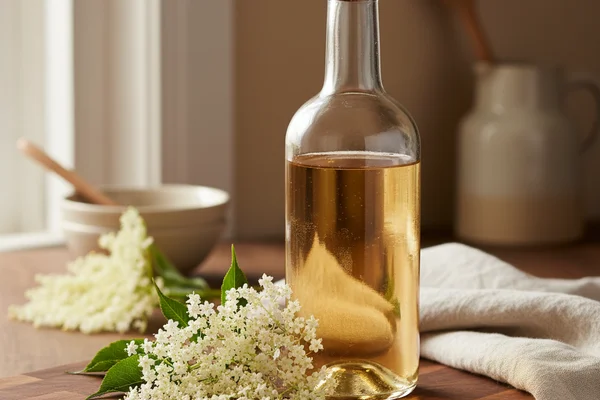
- 4 oz dried elderflowers (find these at homebrew shops or online; chamomile flowers are a mild substitute)
- Juice of 2 lemons
- Juice of 1 orange
- 5⅔ cups granulated white sugar
- 7¼ pints (roughly 3.6 liters) water
- 1 Campden tablet, crushed (a standard sulfite sanitizer tablet)
- 1 tsp yeast nutrient
- 1 packet wine yeast (Lalvin 71B or EC-1118 work well)
Method
- Rinse the dandelion petals under cold water and pick off any remaining green bits — stems, base, all of it.
- Combine the petals, elderflowers, citrus juice, sugar, water, Campden tablet, and yeast nutrient in your primary fermenter; stir well until the sugar fully dissolves.
- Cover the fermenter loosely and let it sit in a cool spot for 4 days, or in the refrigerator for up to one week to cold-steep the flavors.
- Activate your yeast according to the packet directions, then add it to the must and stir.
- Stir the must once daily for the next 5–7 days while fermentation is most active.
- After vigorous fermentation slows, press the solids gently through a straining bag or fine mesh sieve and discard them.
- Transfer the liquid to a glass secondary fermenter (carboy or jug) — do not fill it to the top yet.
- Fit an airlock and let it ferment undisturbed for 30 days.
- Rack the wine into a clean vessel, top it up to the shoulder, reattach the airlock, and repeat this racking every two months until the wine runs clear and no new sediment appears between rackings.
- Stabilize with potassium sorbate and another Campden tablet, wait two weeks, taste for sweetness (it likely won’t need any), then bottle.
- Age at least 6 months in the bottle before opening — a full year makes it noticeably better.
Why this works
Dandelion petals and elderflowers are both loaded with aromatic compounds — terpenes and esters — that are delicate enough to dissolve into the must during a cold steep without cooking off. Keeping the infusion cold slows oxidation and microbial activity, so those aromas are still there when fermentation starts. The citrus juice does two jobs at once: it drops the pH to a range where yeast thrive and harmful bacteria struggle, and the vitamin C acts as a mild antioxidant. The long racking schedule isn’t impatience — yeast and flower solids compact slowly, and pulling the wine off spent material every two months prevents autolysis (that yeasty, bread-dough off-flavor that ruins delicate floral wines).
Notes
Dried elderflowers are the most reliable option here — fresh ones vary wildly in intensity and can carry unwanted wild yeast. If you can’t source dandelions, it’s a fine elderflower-only wine with the same quantities of everything else. For a slightly richer body, swap ½ cup of the granulated sugar for raw honey added after the cold steep.