Dandelion and Rhubarb Wine
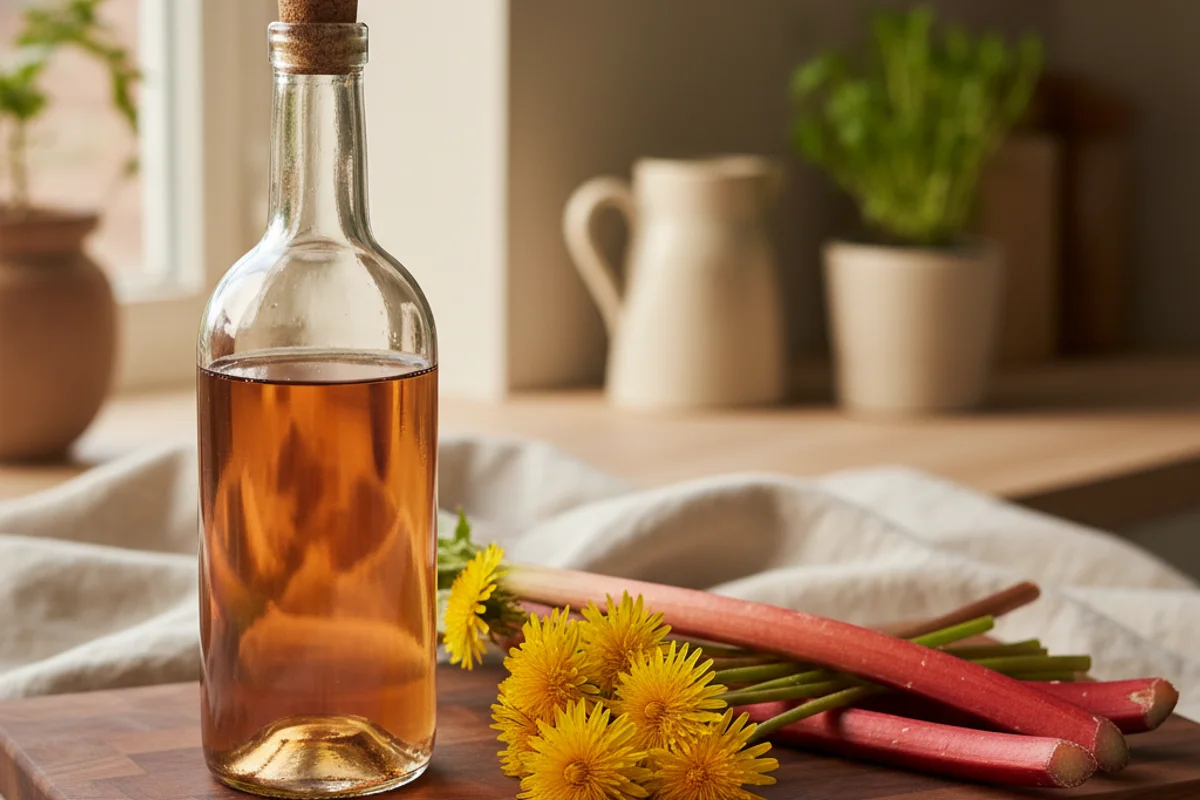
Spring delivers two ingredients that most people overlook or actively avoid: the dandelions taking over the lawn and the rhubarb running wild in the garden corner. Together, they make something genuinely surprising — a pale, tart wine with floral lift and a bright, lip-smacking acidity. The dandelion brings delicate honey-like aroma, and the rhubarb drives a clean, fruity sharpness that keeps the whole thing from tasting like a meadow. Patience is the main ingredient here; this wine needs time to shed its rough edges and become something worth sharing.
The beginner trap: Leaving any green parts — stems, sepals, or the white base of the petals — on the dandelion flowers will push bitter, vegetal flavors into the wine that no amount of aging will fix.
Ingredients
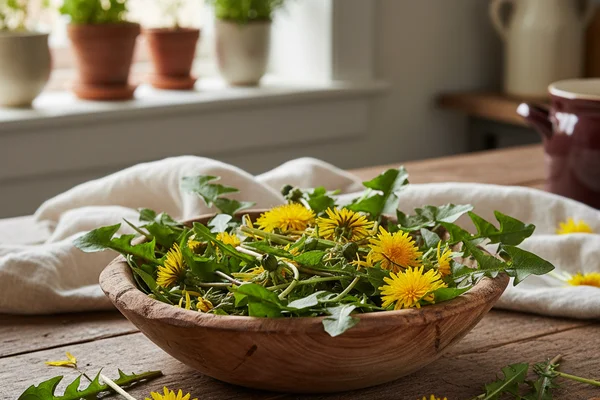
- 3 quarts dandelion flower petals, green parts completely removed
- 4 quarts rhubarb stalks, cut into ½-inch pieces (fresh or frozen)
- 2¼ lbs granulated white sugar
- 5¾ pints water (about 3.6 quarts)
- ½ tsp pectic enzyme (found at homebrew shops or online)
- ¼ tsp powdered tannin (or substitute 1 cup of strong plain black tea)
- 1 Campden tablet, crushed (potassium metabisulfite; sold at homebrew shops)
- 1 tsp yeast nutrient
- 1 packet wine yeast (Lalvin 71B or EC-1118 work well)
Method
- Bring the water to a full boil, then pour it directly over the dandelion petals in your primary fermenter. Cover and let it steep overnight.
- Cut the rhubarb into ½-inch pieces and add them to the fermenter along with the crushed Campden tablet. Cover again and wait 12 hours.
- Stir in the sugar, pectic enzyme, tannin, and yeast nutrient. Cover and let the mixture rest for another 10 hours.
- Activate your yeast according to the packet instructions, then add it to the must. Cover the fermenter loosely to allow gas to escape.
- Once a day for 10 days, stir the must and gently mash the rhubarb pieces to extract flavor and juice.
- Pour the must through a nylon straining bag set over a clean bucket, squeezing firmly to pull out as much liquid as possible. Discard the solids.
- Transfer the strained wine to a clean secondary fermenter (glass carboy or food-grade jug), top up with water if needed to reduce headspace, and fit an airlock.
- After 2 weeks, rack the wine into a clean vessel, top up, and reattach the airlock.
- Continue racking every 2 months until the wine runs clear and leaves no new sediment behind between rackings.
- Stabilize the wine (add a fresh crushed Campden tablet and ½ tsp potassium sorbate per gallon), wait 2 weeks, then sweeten to taste if desired.
- Rack into bottles and age at least 6 months — a full year is better.
Why this works
Rhubarb is loaded with malic and oxalic acids, which give this wine its sharp backbone and help protect it from spoilage. The dandelion petals contribute aromatic compounds but very little sugar or acid on their own, so the two ingredients complement each other perfectly — one brings structure, the other brings aroma. Pectic enzyme breaks down the pectin naturally present in rhubarb, which would otherwise cause a stubborn haze that clearing agents can’t easily fix. The Campden tablet at the start knocks out wild yeast and bacteria so your chosen wine yeast can take over cleanly. All those racking steps aren’t busywork — they remove dead yeast cells that can leave off-flavors if left sitting too long.
Notes
Frozen rhubarb works just as well as fresh and is often easier to find off-season; freezing also breaks down cell walls, so you may get even better juice extraction. If you can’t find powdered tannin, a strong cup of black tea (steeped 10 minutes, cooled) adds a similar structure. Harvest dandelions away from roadsides or lawns treated with pesticides or herbicides — clean flowers make a noticeably cleaner wine.