Dandelion Wine (1)
Every spring, lawns across the country wage a losing battle against Taraxacum officinale — the common dandelion. Here’s the thing: those “weeds” are packed with delicate floral aromatics that, when coaxed out with hot water and fermented slowly, produce a pale golden wine that tastes faintly of honey and sunshine. This is old-world country winemaking at its most satisfying — turning something most people spray with herbicide into something genuinely worth drinking. Give it a full year in the bottle and you’ll wonder why you ever pulled them up in the first place.
The beginner trap: Green stalks and white pith from the citrus peels both carry bitter compounds that will haunt your finished wine — trim the flower stems completely and peel the citrus as thinly as possible.
Ingredients
- 3 quarts dandelion flower heads, stalks trimmed (fresh-picked)
- 3 lbs granulated white sugar
- 1 lb white raisins (golden raisins work fine)
- 1 gallon water, divided (1 pint reserved, remainder for brewing)
- 2 lemons, zest and juice (avoid the white pith)
- 1 orange, zest and juice (avoid the white pith)
- 1 packet wine yeast (Lalvin 71B or EC-1118, or any dry wine yeast)
- 1 tsp yeast nutrient
Method
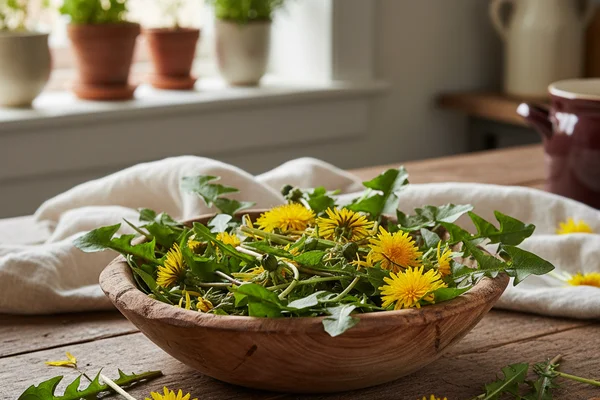
- Pick flowers just before you start and trim away all green stalk material, leaving only the yellow flower heads.
- Place the flower heads in a large heatproof bowl or bucket.
- Set aside 1 pint of water, then bring the remaining water to a full boil and pour it over the flowers.
- Cover the bowl tightly with plastic wrap or a clean cloth and let it steep for exactly two days, stirring twice each day — don’t go longer than 48 hours.
- Pour the flower-and-water mixture into a large pot and bring it to a low boil.
- Add the sugar and the thinly peeled citrus zest (no white pith), then boil for one hour.
- Pour the hot liquid into a sanitized crock or food-grade plastic bucket, then stir in the citrus juice and pulp.
- Let the must cool to 70–75°F (room temperature is fine — just don’t rush it with ice).
- Stir in the yeast and yeast nutrient, cover loosely, and move to a warm spot for three days.
- Strain out all solids and pour the liquid into a 1-gallon secondary fermentation vessel (a glass jug works perfectly).
- Add the raisins, then fit an airlock and leave until fermentation stops completely — no more bubbles for at least a week.
- Rack the wine off the sediment, add the reserved pint of water (plus a little extra if needed to fill the vessel to the neck), and refit the airlock.
- Wait until the wine runs clear, then rack once more and bottle.
- Age at least 6 months before opening — one full year is better.
Why this works
The two-day cold steep pulls floral aromatics and color from the dandelion petals without extracting harsh plant tannins that heat alone would drag out. Boiling the petals with the citrus zest afterward drives volatile aromatics into the liquid while the sugar dissolves. Raisins added during secondary fermentation do double duty: they provide a small sugar boost and contribute light body through their natural grape tannins, replacing structure that dandelions can’t provide on their own. The long bottle aging lets harsh fusel alcohols mellow and allows the delicate floral esters to knit together into something coherent — patience is genuinely the most important ingredient here.
Notes
Golden raisins (standard grocery-store variety) are a direct substitute for “white raisins” — they’re the same thing. If dandelions aren’t available, this recipe doesn’t adapt well to dried flowers; fresh or nothing. Yeast nutrient is sold at homebrew shops or online under brands like Fermaid-O — a pinch of bread yeast nutrient from the grocery store will work in a pinch but may leave off-flavors.