Dandelion Wine (13)
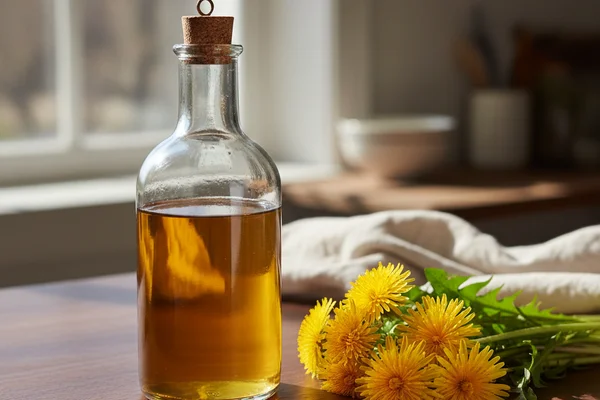
Dandelions are the weed everyone wants dead — until you taste what they can become. The flowers carry a faint honey-like sweetness and a grassy, sun-warmed quality that translates beautifully into wine. Paired with fresh orange, the result is bright, floral, and surprisingly delicate. This is a slow-burn project: you’re looking at six months to a year before the wine hits its stride, but the payoff is a bottle that tastes nothing like anything you can buy at a store.
The beginner trap: Leaving green bits — stems, sepals, or any part of the base — on the flowers will drive bitter, harsh flavors into the wine that no amount of aging will fix.
Ingredients
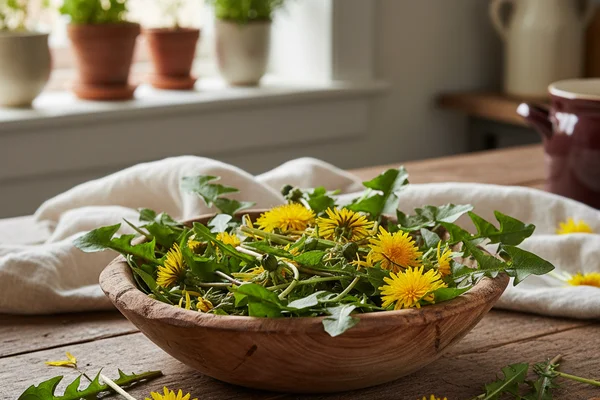
- 3 quarts dandelion flower petals, all green parts removed
- 3 lbs granulated sugar, divided
- 4 oranges, peeled and sectioned (no pith if you can help it)
- ½ tsp pectic enzyme
- ¼ tsp grape tannin (or 1 strong-brewed black tea bag, cooled)
- 1 gallon water
- 1 packet wine yeast (Lalvin 71B or EC-1118 work well)
Method
- Wash the flowers thoroughly and strip every petal from the green base — take your time here, this step matters more than any other.
- Bring the water to a full boil, then pour it over the petals in your primary fermenter and cover tightly.
- Stir the petal mixture twice a day for two days, then transfer the liquid and petals into a pot.
- Add half the sugar (1½ lbs) and the orange sections, then bring the mixture to a gentle simmer for 10 minutes, stirring until all the sugar dissolves.
- Strain the liquid back into the primary fermenter, discard the solids, and cover until the liquid cools to room temperature (around 70–75°F).
- Add the pectic enzyme, tannin, and your activated yeast, then cover and stir once daily for 5 days.
- Stir in the remaining 1½ lbs of sugar and mix thoroughly until fully dissolved.
- Let the fermenter sit undisturbed overnight, then rack the liquid into a clean secondary fermenter (1-gallon glass jug works perfectly) and fit an airlock.
- Once the wine clears, rack it every two months for three total rackings.
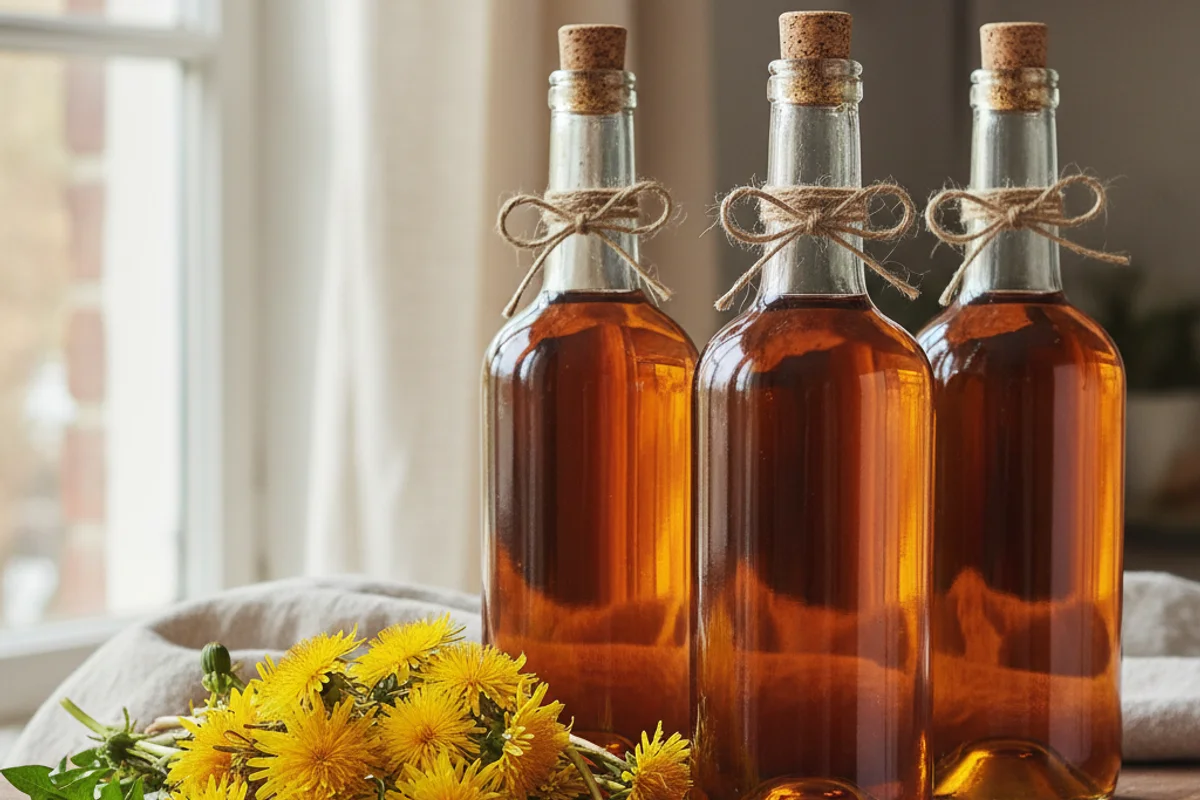
- Stabilize with potassium sorbate and potassium metabisulfite, wait two weeks, then bottle.
- Age at least 6 months before opening — 12 months is better.
Why this works
Sugar is added in two stages here, and that’s not an accident. Dumping all the sugar in at once can stress the yeast with a high-osmotic environment right at the start, slowing fermentation or causing it to stall. Starting with half keeps the yeast comfortable and active. The boiling-water steep pulls aromatic compounds and color from the petals without a prolonged heat exposure that could cook off delicate floral esters. Pectic enzyme breaks down the pectin in the orange and flower tissue, which prevents a permanent haze from forming in the finished wine — something no amount of racking will clear on its own.
Notes
If you can’t harvest enough fresh dandelions, freeze the petals as you collect them over several days — freezing actually helps break down cell walls and improves extraction. For the grape tannin, a cooled cup of strong black tea is a perfectly fine grocery-store substitute. If your wine is slow to clear after fermentation, a drop or two of wine fining agent (like bentonite, available at homebrew shops) will speed things up considerably.