Dandelion Wine (16)
Dandelion wine is liquid nostalgia — a pale gold pour that tastes like a warm afternoon in early May, faintly floral, lightly sweet, with just enough citrus brightness to keep things interesting. The flowers do the heavy lifting on aroma, while white grape juice fills in body that dandelions simply can’t provide on their own. Get the timing right and you end up with something genuinely elegant. Rush it and you get something that tastes like a yard.
The beginner trap: Leaving any green stem or petal base on the flower heads will drive bitter, grassy flavors straight into your wine — trim every bit of green before the flowers hit the water.
Ingredients
- 2 quarts dandelion flower heads, stems and all green parts removed
- 1 quart unsulfited white grape juice (store-bought 100% white grape juice with no preservatives works fine)
- 2¼ lbs granulated sugar
- 4 oranges, juiced
- ¼ tsp wine tannin (or 2 cups plain brewed black tea as a substitute)
- 1 tsp yeast nutrient
- 5 pints water, divided
- 1 packet wine yeast (Lalvin 71B or EC-1118 work well)
Method
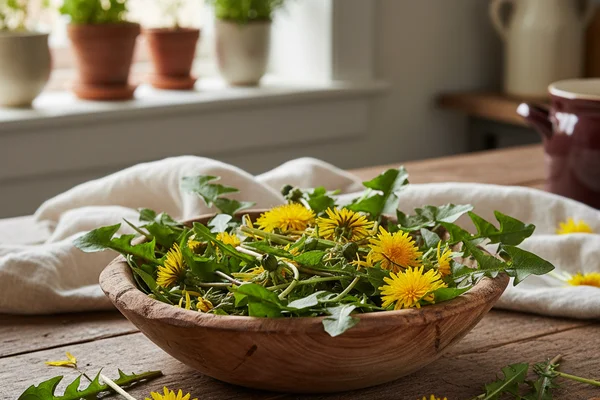
- Wash the flower heads thoroughly, then trim away every trace of stem and green material — only the yellow petals should remain.
- Place the trimmed flower heads in a nylon straining bag, tie it closed, and set it in your primary fermenter.
- Bring 1 quart of water to a boil and pour it directly over the bag. Cover and let it steep while you move on.
- Bring a second quart of water to a boil and dissolve the sugar completely into it to make a simple syrup.
- Add the sugar syrup, the remaining 1 pint of cold water, and the fresh orange juice to the primary fermenter.
- Stir in the yeast nutrient and tannin, cover the fermenter, and let the whole mixture cool to around 70–75°F.
- Activate your yeast according to the packet instructions, then pitch it into the cooled must.
- Squeeze the flower bag 2–3 times daily for 3 days to extract flavor, then remove the bag, squeeze out as much liquid as possible, and discard the spent flowers.
- Let the wine settle overnight, then rack into a clean secondary fermenter — do not top it up yet — and fit an airlock.
- After 2 weeks, top the secondary up to reduce headspace and reattach the airlock.
- Two weeks after that, rack into a clean vessel, top up again, and refit the airlock.
- Continue racking every 2 months for 6 months total, topping up each time.
- Stabilize the wine with potassium sorbate and potassium metabisulfite, wait 2 weeks, then rack into bottles.
- Age at least one year before drinking — this wine genuinely needs the time.
Why this works
Dandelion petals are mostly aroma compounds — terpenes and trace phenolics — with very little sugar, body, or structure on their own. Hot water extracts those volatile aromatics efficiently, but the short 3-day steep time keeps bitterness in check. The unsulfited white grape juice solves the body problem by contributing natural grape sugars, amino acids, and tartaric acid, giving yeast a richer environment to work in. Orange juice adds malic acid and a citrus top note that bridges the floral and fruity elements. The long aging period allows harsh fusel alcohols produced early in fermentation to esterify into smoother, more complex flavor compounds — that’s the chemistry behind why patience pays off here.
Notes
If you can’t find unsulfited grape juice, check the label carefully — any juice listing only grapes (and no sodium benzoate or potassium sorbate) should work. Frozen dandelion flowers can be substituted if you’re not picking in season; freeze them in a single layer first, then measure by volume after thawing. If fresh oranges aren’t available, ¾ cup of 100% bottled orange juice is a reasonable stand-in.