Dandelion Wine (19)
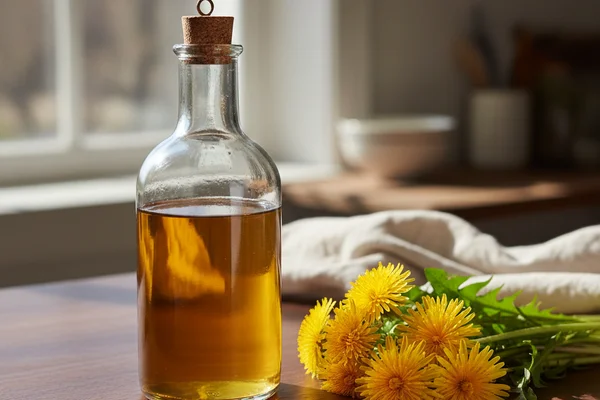
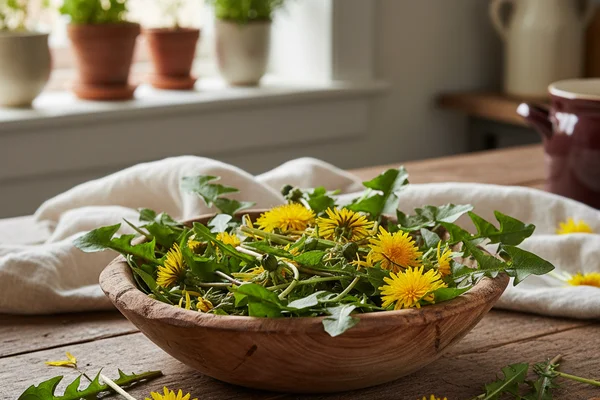
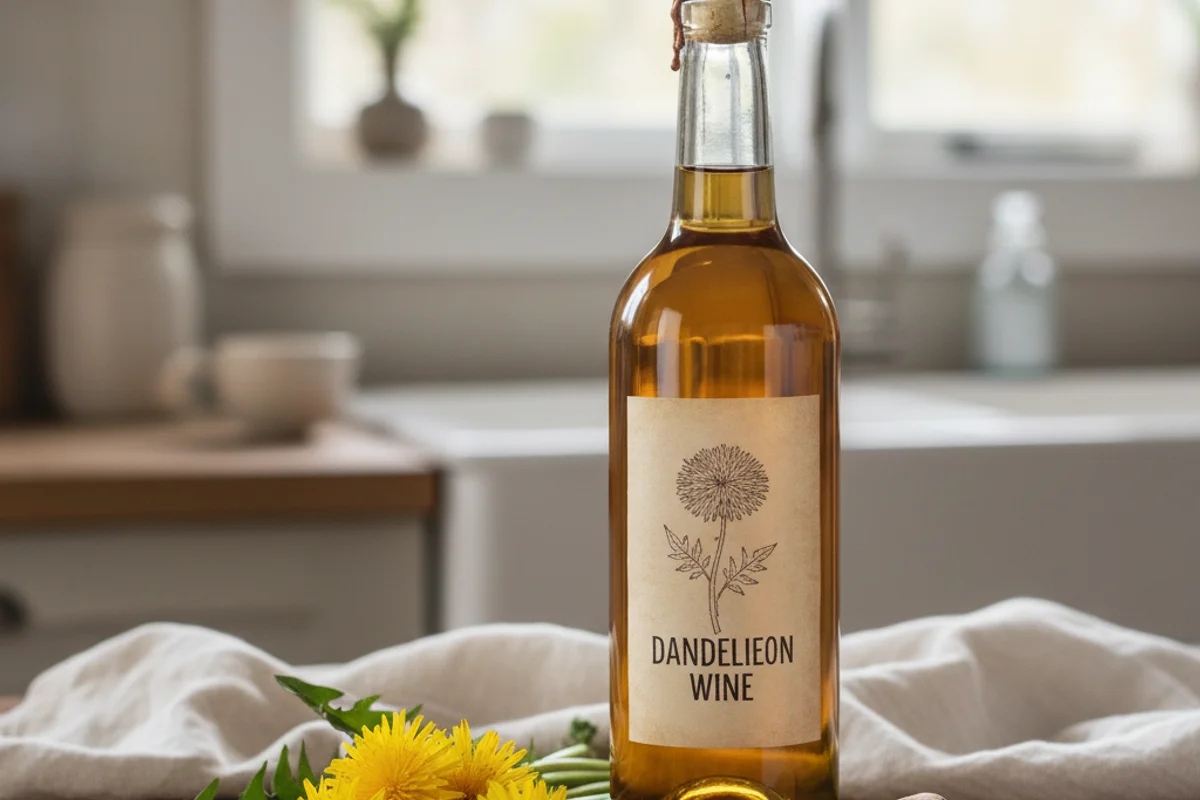
Dandelions are the lawn’s most underestimated crop. Those bright yellow heads carry a honey-like floral sweetness that, when fermented with raisins for body and lemon for brightness, produces a pale golden wine that tastes like a warm spring afternoon in a glass. The window is short — dandelions peak for just a few weeks — so when the yard looks like it’s been spray-painted yellow, that’s your cue to start picking.
The beginner trap: Leaving any green parts — stems, sepals, the base of the flower head — on the blooms will push bitter, grassy flavors into your wine that no amount of aging will fix.
Ingredients
- 3 quarts dandelion flower petals, green parts fully removed
- 1 lb white (golden) raisins, finely chopped
- 2½ lbs granulated sugar
- 2 lemons, juice only
- 1 tsp yeast nutrient
- 1 gallon water
- 1 packet wine yeast (such as Lalvin EC-1118 or Red Star Côte des Blancs)
Method
- Bring the water to a full boil, then dissolve the sugar completely into it.
- While the water heats, wash the flowers and pull off every bit of stem and green material — petals only.
- Combine the flower petals and chopped raisins in your primary fermenter.
- Add the lemon juice and yeast nutrient to the hot sugar water, then pour the whole mixture over the flowers and raisins.
- Let the must cool to room temperature (below 75°F), then add your activated wine yeast and cover the fermenter loosely.
- Stir the must once daily for 3 days.
- Strain the liquid through a fine mesh bag or jelly bag into your secondary fermenter (a 1-gallon glass jug works well), pressing the solids to extract as much liquid as possible.
- Fit an airlock and move the jug somewhere cool and dark.
- After 1 month, rack the wine off its sediment into a clean jug, top up to the shoulder with water or a small amount of reserved wine, and reattach the airlock.
- After 3 more months, rack again and stabilize with potassium sorbate and potassium metabisulfite per package directions.
- Wait one additional month, then rack into bottles and seal.
- Age at least 6 months before opening — the floral character needs time to settle and integrate.
Why this works
Dandelion petals contribute aroma compounds but almost no sugar and very little acid on their own, which is why this recipe leans on three supporting players. The raisins add fermentable sugar, body, and a small amount of natural tannin to give the wine some structure. The lemon juice drops the pH into a range where wine yeast thrives and competing bacteria struggle — roughly 3.2 to 3.5. The yeast nutrient supplies nitrogen, which dandelion flowers simply don’t provide, keeping the yeast healthy and preventing a stalled fermentation. Together, these additions turn what is essentially flavored sugar water into something with real vinous character.
Notes
If you can’t pick enough fresh dandelions at once, freeze the cleaned petals in batches until you hit 3 quarts — freezing actually helps break down cell walls and improves extraction. White raisins are preferred for their neutral flavor, but if you can only find regular brown raisins, they’ll work fine with a slightly richer, darker result. If the wine tastes thin after aging, a small addition of glycerin (1–2 tsp per gallon) at bottling time smooths things out considerably.