Dandelion Wine (22)
Dandelions are the weed your lawn hates and your wine glass will love. These bright, bitter little flowers carry a honey-like floral note that transforms into something surprisingly elegant after a year in the bottle. The ginger adds a quiet warmth, the citrus keeps things lively, and the golden raisins bring enough body to make this feel like a real wine rather than fancy flower water. This is a slow recipe — patient winemakers only — but the payoff is a golden, aromatic wine that tastes nothing like the yard work it came from.
The beginner trap: Leaving any green stalk or white pith behind during prep sounds optional — it isn’t; both will drive a harsh bitterness into the wine that no amount of aging will fix.
Ingredients
- 1 gallon dandelion flower heads, green parts removed
- 4 lbs demerara sugar (raw cane sugar or light brown sugar work as substitutes)
- ½ lb golden raisins, chopped
- 1 lemon, zest and juice separated
- 1 orange, zest and juice separated
- ¼ oz fresh ginger root (about a 1-inch piece), bruised
- 1 gallon water
- 1 packet wine yeast (Lalvin 71B or EC-1118 are widely available)
Method
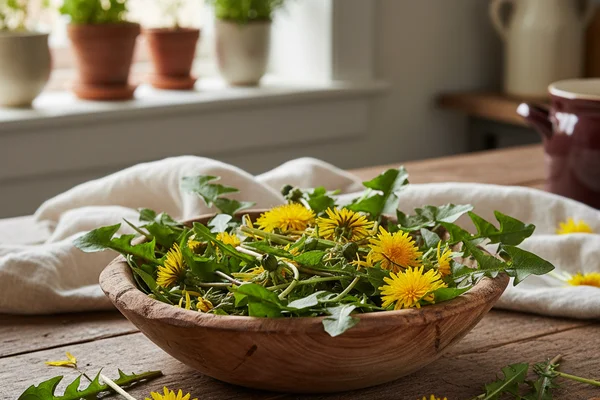
- Bring the water to a full boil. While it heats, wash the dandelion heads and strip off all green stalks and leaves.
- Place the flowers in your primary fermenter and pour the boiling water directly over them.
- Cover the fermenter and let the flowers steep for 3 days, stirring thoroughly at least once a day.
- Strain the liquid into a large pot, pressing the flowers gently to extract as much liquid as possible; discard the spent flowers.
- Add the sugar, citrus zest (no white pith), and bruised ginger to the pot, then bring everything to a boil.
- Reduce heat and simmer for 30 minutes, stirring regularly to fully dissolve the sugar.
- Strain the liquid back into your primary fermenter and cover it loosely while it cools to room temperature (around 70°F).
- Once cooled, stir in the citrus juice, chopped raisins, and wine yeast.
- Cover the fermenter and stir once daily until the vigorous bubbling slows down noticeably, usually 5–7 days.
- Strain the wine into your secondary fermenter (a glass carboy or jug) and fit an airlock.
- Once the wine clears, rack it off the sediment, top up the vessel to minimize headspace, and refit the airlock.
- Rack again after 3 months, then once more 3 months after that.
- Stabilize the wine, let it rest for one month, then rack carefully into bottles.
- Store the bottles for at least one full year before opening — this wine rewards patience.
Why this works
Dandelion petals contain very little sugar and almost no natural acid on their own, which is why this recipe leans hard on added sugar, citrus juice, and raisins to build a fermentable, balanced must. The 3-day cold steep pulls floral aromatics and color from the petals without cooking them, which would destroy volatile fragrance compounds. Boiling the liquid afterward with citrus zest and ginger extracts the oils and spice notes more efficiently than a cold process could. The raisins act as a natural nutrient source for the yeast and add tannin structure, which is why the finished wine holds together after aging rather than tasting thin and flat.
Notes
If fresh dandelions aren’t available or you want to spread the harvest out, frozen dandelion petals work well — freeze them in a single layer on a baking sheet first, then transfer to a bag. Demerara sugar is easy to find at most grocery stores near the baking aisle, but regular raw sugar (turbinado) or even plain light brown sugar are close enough substitutes. If your wine is slow to clear, a fining agent like bentonite (available at homebrew shops) speeds things up.