Dandelion Wine (25)
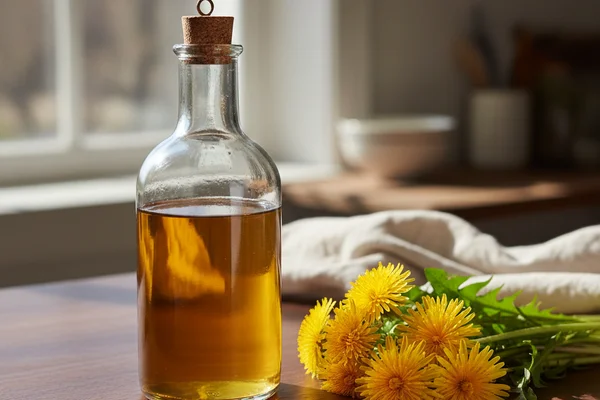
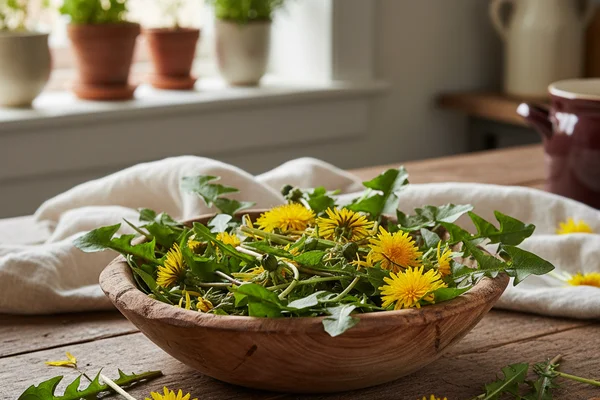
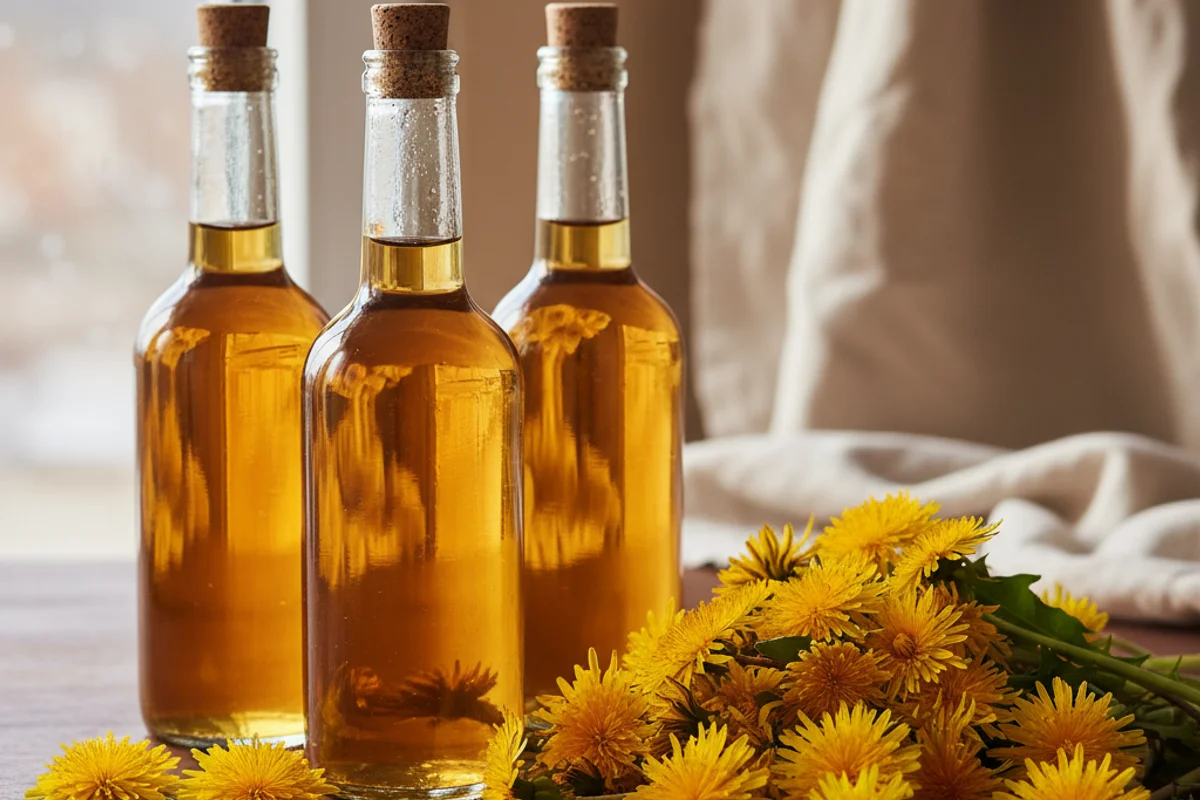
Dandelions are the lawn’s most stubborn weed and, it turns out, one of spring’s most underrated winemaking ingredients. The petals bring a delicate, honey-like floral note that pairs surprisingly well with bright citrus and the quiet body that raisins provide. The result is a pale, dry wine that tastes like early May in a glass — light on its feet, a little wild, and nothing like anything you’d pull off a store shelf. Pick your petals on a dry, sunny morning when they’re fully open for the best flavor.
The beginner trap: Rushing the aging — this wine tastes thin and rough at six months and transforms completely by month eight, so patience is the actual ingredient most people skip.
Ingredients
- 1½ lbs granulated sugar
- 1½ lbs white or golden raisins (sultanas), minced or blended into a rough purée
- ½ pint dandelion petals, tightly packed (green sepals removed)
- 3 oranges, juiced; zest of 1 orange
- 5 pints water
- 1 tsp malic acid (substitute: 1½ tsp cream of tartar, found in the baking aisle)
- 1 tsp yeast nutrient
- 1 packet wine yeast (EC-1118 or any all-purpose wine yeast)
Method
- Combine the raisins, orange juice, orange zest, malic acid, yeast nutrient, and water in your primary fermenter. Pitch the yeast and stir well.
- Once fermentation is rolling vigorously — usually 24 to 48 hours — add the dandelion petals and stir them in gently.
- Let the petals ferment in the must for 3 days, stirring daily.
- Strain out the solids, pressing the pulp lightly to recover liquid without squeezing in bitterness.
- Stir the sugar into the strained liquid until fully dissolved, then transfer to your secondary fermenter.
- Fit an airlock and let fermentation run to dryness, racking into a clean vessel whenever sediment builds up past half an inch.
- Bulk age under airlock for 6 to 8 months — do not rush this step.
- Stabilize with potassium sorbate and potassium metabisulfite, wait 2 weeks, then rack into bottles.
Why this works
Adding the dandelion petals after fermentation kicks off is the key move here. A strong, active ferment creates a CO₂-rich environment that acts like a protective blanket, limiting the petals’ exposure to oxygen and preserving their delicate floral aromatics. If you throw the petals in too early — before the yeast is active — or too late, you either risk oxidation or get weak extraction. The raisins act as a fermentable body-builder, contributing natural sugars, tannins, and a subtle fruity backbone without overwhelming the flower’s character. Malic acid keeps the pH in the right zone for yeast health and gives the finished wine a clean, crisp edge.
Notes
If fresh dandelions aren’t available, some homebrew shops sell dried dandelion petals — use about half the volume since they’re more concentrated. Always remove the green sepals before using petals; they contribute harsh bitterness. Frozen dandelion petals (blanched and frozen yourself in spring) work well and can be added directly to the fermenter without thawing.