Dandelion Wine (3)
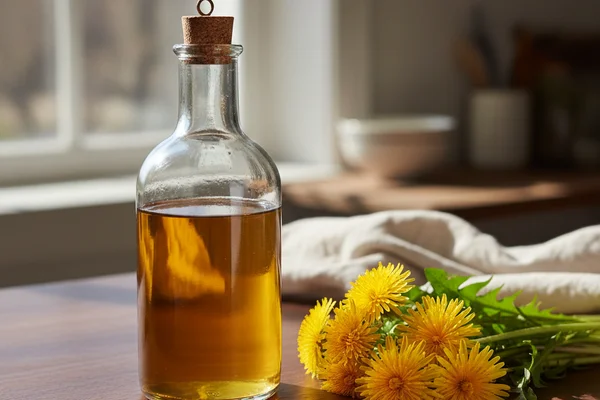
Most people look at a lawn full of dandelions and see a problem. Winemakers see raw material. The bright yellow petals carry a delicate, honey-like floral character that disappears completely if you let any green parts sneak into the batch — but when you get it right, the result is a pale, fragrant wine with a citrus backbone and a surprisingly elegant finish. Think dry white wine meets wildflower meadow. It takes patience, but the ingredients are literally growing in your yard.
The beginner trap: Leaving even a small amount of green stem or sepal attached to the flowers will push bitter, grassy compounds into your wine that no amount of aging can fix.
Ingredients
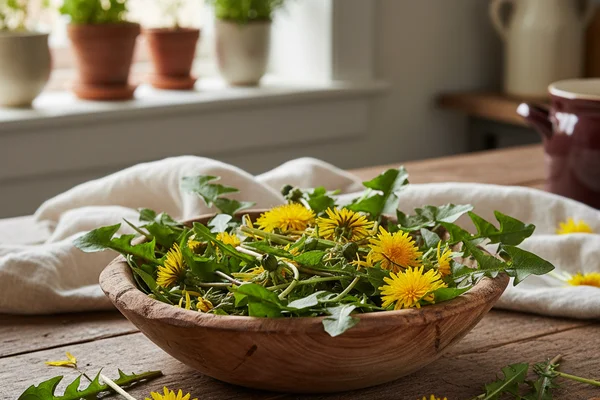
- 2 quarts dandelion petals, green parts fully removed
- 2½ lbs granulated sugar
- Juice of 4 oranges (about 1 cup fresh-squeezed or store-bought 100% orange juice)
- 1 gallon water
- 1 tsp yeast nutrient (found at homebrew shops or online)
- 1 packet Chablis wine yeast (or any dry white wine yeast, such as Lalvin 71B)
Method
- Bring the water to a full boil and stir in the sugar until completely dissolved. Remove from heat.
- While the water heats, wash the dandelion petals thoroughly and pick off every trace of green — stem, sepal, and base. This step is slow, but it matters.
- Add the cleaned petals, orange juice, and yeast nutrient to your primary fermenter (a food-grade bucket works well).
- Pour the hot sugar water over the petal mixture, stir to combine, and cover loosely with a clean cloth.
- Let the must cool to room temperature — around 70°F. Activate your yeast according to the packet instructions, then pitch it into the must.
- After 48 hours, strain out and discard the flowers. Transfer the liquid to a glass carboy or secondary fermenter and fit an airlock.
- Allow fermentation to run to dryness — the airlock will slow to nearly nothing and a hydrometer reading will confirm a final gravity near 0.995–1.000.
- Rack the wine into a clean vessel, top up to minimize headspace, and refit the airlock. Repeat this process every 60 days until no new sediment appears over a full 60-day period.
- Stabilize the wine (potassium metabisulfite plus potassium sorbate if back-sweetening, or just sulfite if leaving it dry), wait two weeks, then rack into bottles.
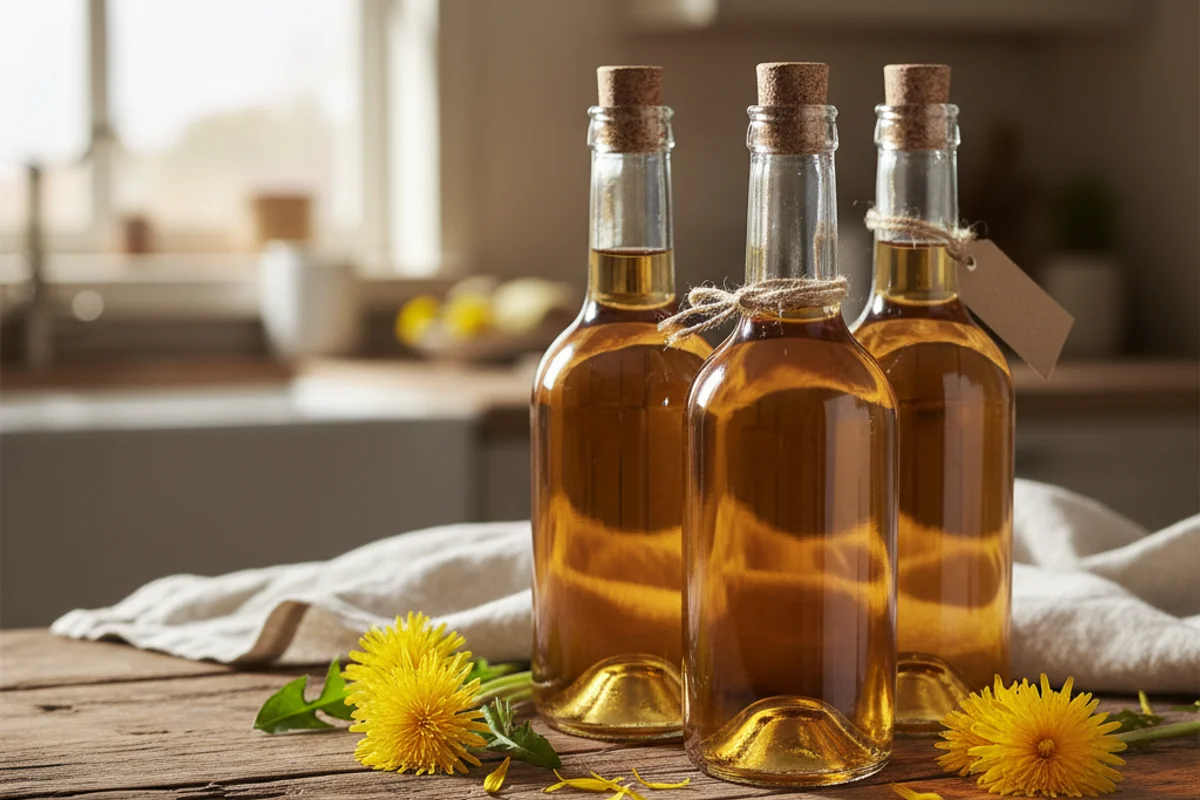
- Store the bottles in a cool, dark place for at least 6 months before opening your first one.
Why this works
Dandelion petals have almost no natural sugar or acid on their own, which is why this recipe leans heavily on both granulated sugar and orange juice. The sugar gives the yeast something to ferment into alcohol, while the citric acid in the orange juice drops the pH into a range where yeast thrive and spoilage bacteria struggle. Boiling the water and pouring it directly over the petals acts as a light pasteurization step, knocking back wild microbes without the need for chemicals at the start. The long, patient racking schedule exists because flower-based wines produce surprisingly stubborn fine particles that need time and gravity to fall out before the wine clears properly.
Notes
If you can’t find Chablis yeast, any neutral dry white wine yeast — Lalvin EC-1118 or Red Star Côte des Blancs — will do the job. Yeast nutrient is sold as “Fermaid-O” or “DAP” at homebrew stores; in a pinch, a small handful of raisins adds trace nutrients but may shift the flavor slightly. This wine benefits from a full year of aging if you can hold out — the floral notes become noticeably more refined after 12 months.