Dandelion Wine (8)
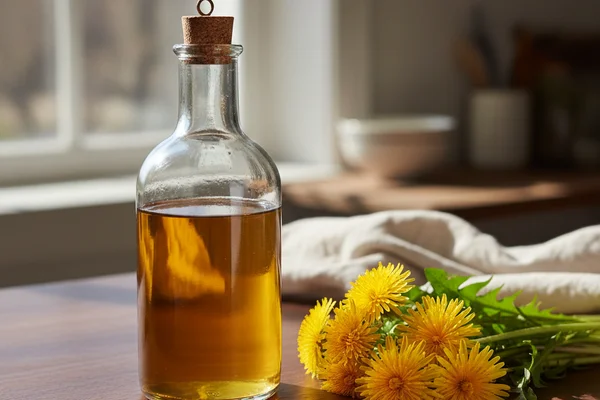
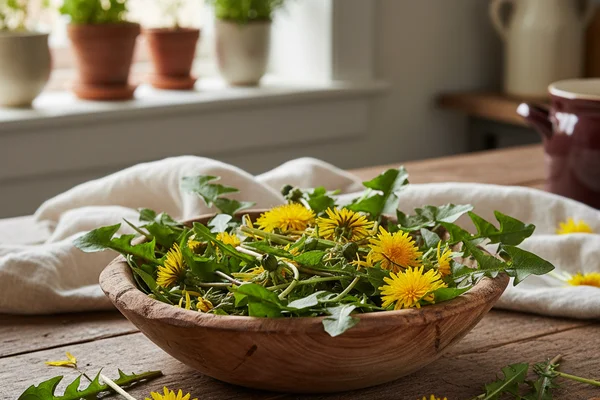
Dandelions are basically the lawn’s way of making wine for you — free, abundant, and stubbornly cheerful. The petals deliver a light, honey-floral character that sits somewhere between a dry Riesling and a meadow on a warm afternoon. Chopped raisins fill in the body that petals alone can’t provide, and a long aging period lets everything settle into something genuinely worth pouring. Pick on a dry, sunny day when the flowers are wide open for the best flavor and the cleanest ferment.
The beginner trap: Including any green parts — the stem, the base of the flower, the calyx — will drive bitter, grassy flavors into the wine that no amount of aging will fix, so pull petals only.
Ingredients
- 6 cups dandelion petals (green parts removed entirely)
- 1 lb white or golden raisins, chopped
- 2 lbs granulated white sugar
- 3 tsp acid blend (found at homebrew shops; or substitute 2 tsp lemon juice + ½ tsp cream of tartar as a rough stand-in)
- ½ tsp yeast energizer (or a pinch of bread yeast nutrients as a substitute)
- ¼ tsp grape tannin powder (or 1 cooled cup of strong black tea)
- 1 gallon water
- 1 packet wine yeast (Lalvin 71B or EC-1118 work well)
Method
- Bring the full gallon of water to a rolling boil.
- Add the petals, chopped raisins, sugar, acid blend, yeast energizer, and tannin to your primary fermenter, then pour the boiling water over everything and stir until the sugar fully dissolves.
- Cover the fermenter with a plastic sheet or loose lid and let it cool to room temperature — around 70°F.
- Sprinkle in the wine yeast, stir gently, and re-cover the fermenter.
- Stir the must once a day for 3 days to keep the petals submerged and the yeast active.
- Strain out all solids through a fine mesh strainer or cheesecloth and transfer the liquid into a 1-gallon glass jug (secondary fermenter), then fit an airlock.
- After 3 weeks, rack the wine off its sediment into a clean jug, top up with a little water or similar wine to minimize headspace, and refit the airlock.
- Rack again after 3 months, again minimizing headspace.
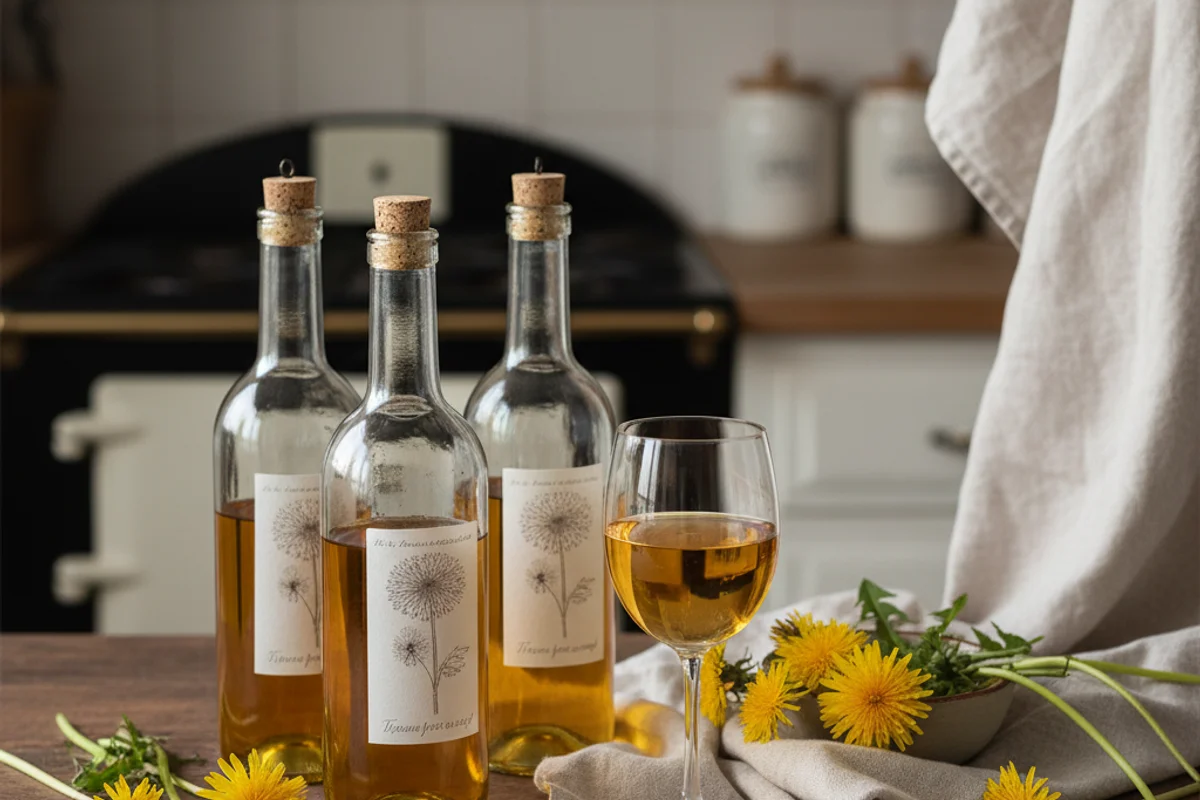
- Once the wine runs clear and shows no bubbling activity, rack it into bottles and cork them.
- Wait at least 6 months before opening your first bottle — longer is better.
Why this works
Dandelion petals have almost no sugar and very little natural acid or tannin on their own, which is why this recipe builds all three from outside sources. The boiling water acts as a quick heat extraction, pulling color and aroma compounds from the petals without a long cold steep. Chopped raisins bring fermentable sugar, body, and a small amount of natural grape tannin that helps the wine age without going flat and thin. Acid blend lowers the pH into the range where wine yeast thrives and spoilage organisms struggle — roughly 3.2 to 3.5. The long aging time after bottling lets the harsh alcohol edges integrate and the floral aromatics develop complexity they simply don’t have right out of the fermenter.
Notes
If you can’t get enough fresh petals at once, freeze them in batches — they work fine from frozen and the cell walls actually break down a little more easily. Lalvin 71B yeast is a good match here because it softens acidity slightly during fermentation, which flatters the delicate floral profile. If the wine tastes thin after aging, a small addition of raisin-based wine or even white grape juice concentrate at the racking stage can add body.