GRAPE CONCENTRATES
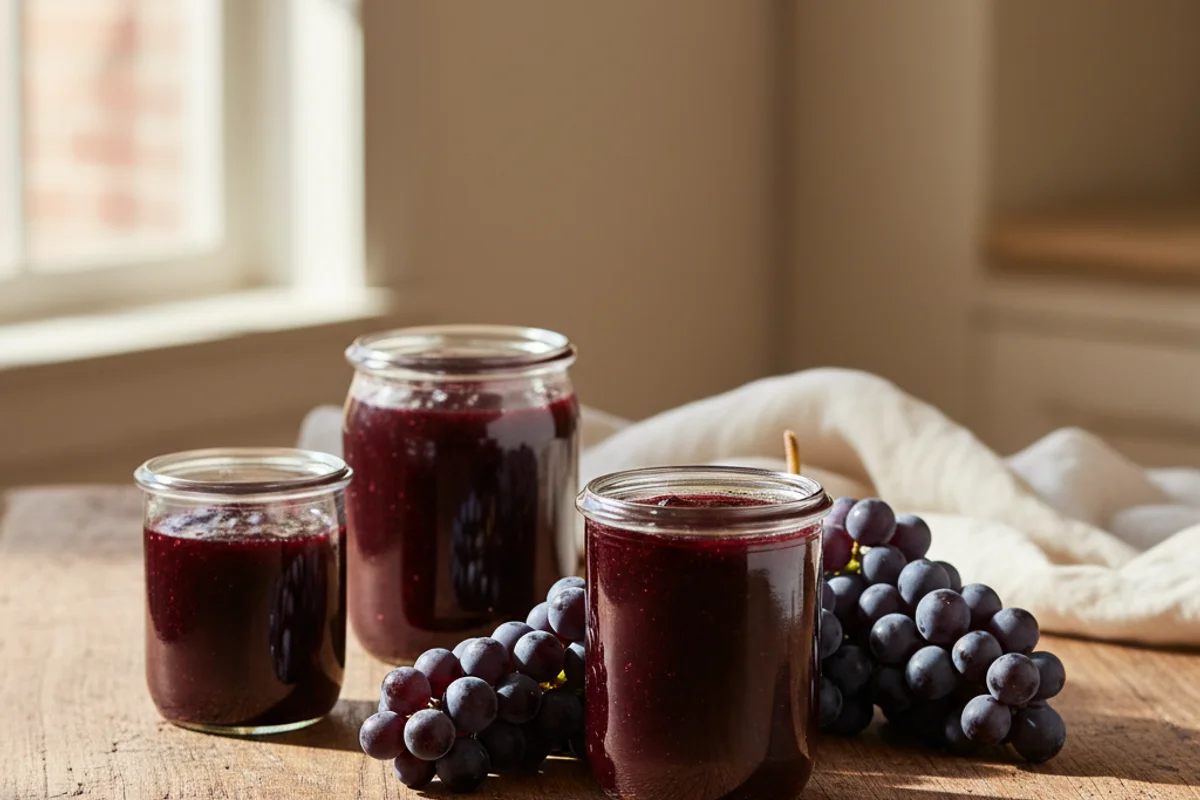
Think of grape concentrate as freeze-dried coffee for winemakers: fast, convenient, available year-round, and completely disconnected from harvest season. Open a can, add water, pitch yeast, and you’re making wine in a one-bedroom apartment in January while fresh grapes are months away. The tradeoff is real — aroma fades during concentration, color in reds runs thin, and bargain-bin product tends to produce bargain-bin wine — but for folks in grape-desert climates or anyone who just wants to make something drinkable without renting a truck and a grape crusher, concentrates absolutely have a seat at the table.
The beginner trap: Buying the cheapest concentrate on the shelf and expecting quality wine — with concentrate, more than almost any other base ingredient, you get exactly what you pay for.
Ingredients
- 1 can or bottle (typically 46–64 fl oz) wine-grade grape concentrate, variety of your choice
- Water, amount specified on concentrate label (usually enough to restore original juice volume)
- 1 packet wine yeast (included with some kits; EC-1118 or Lalvin 71B work well if not)
- Tannin powder, pectic enzyme, and yeast nutrient (often included in kit additive packet; available at any homebrew shop)
- Campden tablets or potassium metabisulfite, for sanitation
Method
- Sanitize all equipment thoroughly with a Campden tablet solution or no-rinse sanitizer, then rinse with clean water.
- Pour the concentrate into your primary fermenter and add the specified amount of water, stirring well to fully combine.
- Stir in any included additive packet — or add tannin, pectic enzyme, and yeast nutrient separately per package directions.
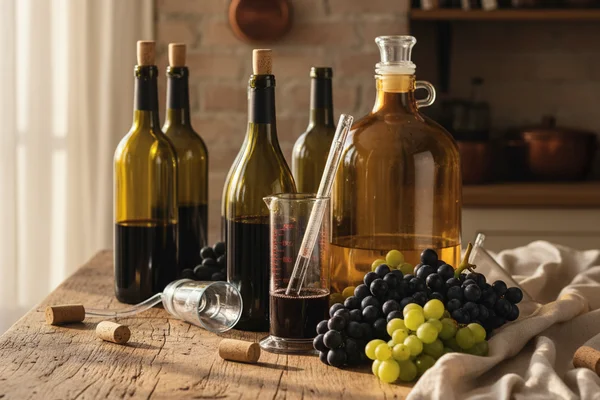
- Check the specific gravity with a hydrometer; most kits target 1.080–1.095 for a table wine, and you can add a small amount of sugar to nudge it up if needed.
- Adjust temperature to 65–75°F (18–24°C), then sprinkle the yeast over the surface and let it hydrate for 15 minutes before stirring in.
- Cover loosely or fit with an airlock and ferment until specific gravity drops to 1.000 or below, usually 7–14 days.
- Rack to a clean secondary vessel, fit with an airlock, and let the wine clear for 4–6 weeks.
- Rack again if sediment builds, stabilize with potassium sorbate if desired, then bottle.
Why this works
Grape concentrate is made by removing 75–80% of the water from fresh juice under low pressure, which lowers the boiling point and reduces heat damage. Even so, volatile aromatic compounds — the esters and terpenes responsible for varietal character — escape during this process, which is why concentrate wines often taste generic rather than distinctly “Merlot” or “Riesling.” Higher heat during production can also convert some natural sugar into 2-hydroxymethylfurfural (HMF), a compound that contributes stale, caramel-like off-flavors. Premium concentrates minimize both problems by using low-temperature vacuum evaporation and quality source grapes, which is exactly why their price tag is higher — and why that price difference usually shows up in the glass.
Notes
For adding body to a weak fruit wine (watermelon, flower wines, etc.), skip the expensive varietal kits and use a small amount of Welch’s 100% Grape Frozen Concentrate (Concord) or Welch’s 100% White Grape Frozen Concentrate (Niagara) — both available in any grocery store freezer aisle. If your finished wine is bland and low in acid, it blends beautifully with high-acid wines made from native American grapes like Concord or Muscadine, softening their sharp, foxy edge while gaining structure in return.