Hibiscus Flower Wine
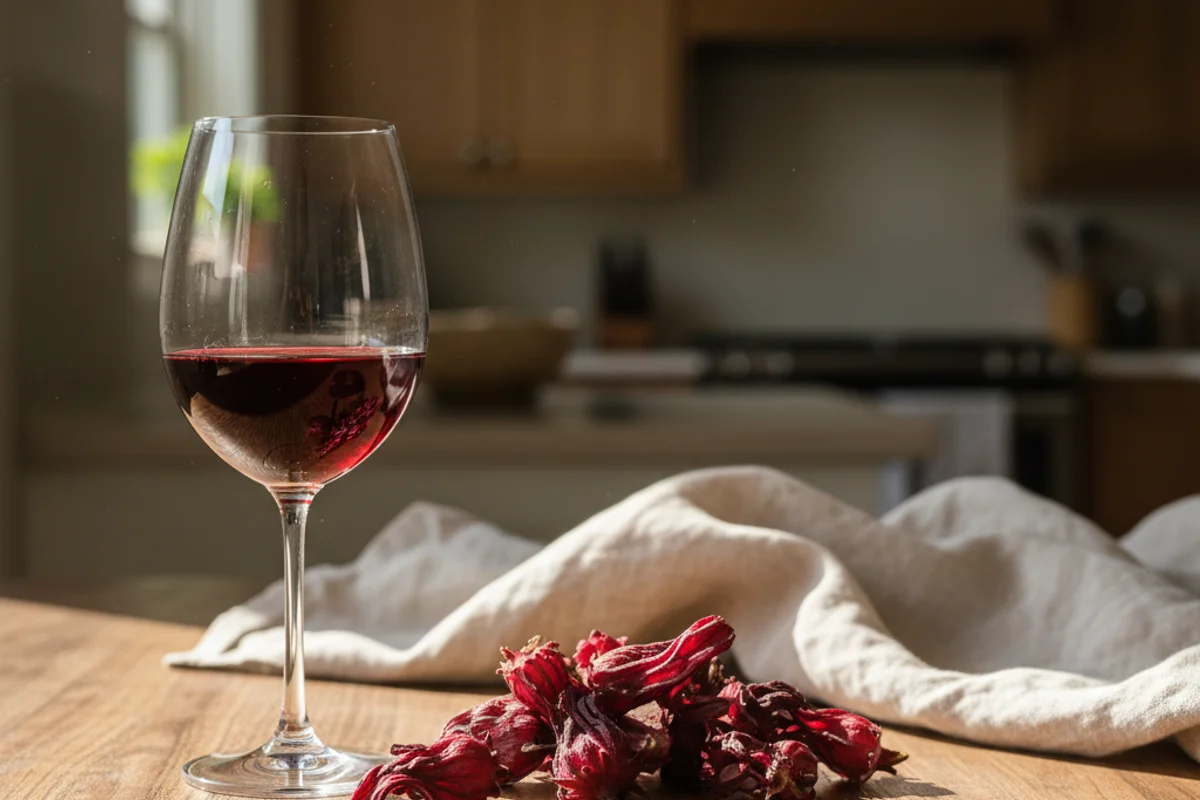
If you’ve ever brewed a cup of hibiscus tea and stopped to think, “this is basically wine already” — you’re not wrong. Dried hibiscus flowers (Hibiscus sabdariffa, the variety you want) pack a bold cranberry-tart punch, a vivid ruby-to-purple color, and just enough floral edge to make a finished wine that tastes nothing like kit wine and everything like something you made on purpose. Six months in the bottle and this thing genuinely surprises people.
The beginner trap: Using too few flowers — stick to the higher end of the range (2 oz) for real color and flavor depth, because dried hibiscus is mild by volume and a light pour produces a thin, watery result.
Ingredients
- 1–2 oz dried hibiscus flowers (H. sabdariffa; sold as “Jamaica flowers” or “flor de Jamaica” at most Latin grocery stores, or in the tea aisle at health food stores)
- 2 lbs granulated white sugar
- 7 pints (3.5 quarts) water
- 1½ tsp acid blend (available at homebrew shops; or substitute 1 tsp lemon juice per ½ tsp acid blend as a rough stand-in)
- 1 tsp yeast nutrient
- 1 packet Côte des Blancs wine yeast (Red Star or Lalvin EC-1118 work as grocery-accessible alternatives)
Method
- Combine water and sugar in a large pot over medium-high heat, stirring until the sugar fully dissolves, then bring to a boil.
- Place the dried hibiscus flowers in a nylon straining bag and set it in your primary fermenter (a food-grade bucket works fine).
- Pour the boiling sugar-water over the flower bag, then stir in the acid blend and yeast nutrient. Do not add yeast yet.
- Cover the fermenter and let the must cool to room temperature — this takes a few hours, so be patient.
- Once cooled, squeeze the flower bag firmly to pull out as much color and flavor as possible, then remove and discard the spent flowers (or rinse and steep for tea).
- Activate your yeast according to the packet instructions, add it to the must, cover the fermenter, and stir once daily for 7–8 days until vigorous fermentation slows down.
- Rack the wine into a clean secondary fermenter (a 1-gallon glass jug works well), top up with water to minimize headspace, and fit an airlock.
- After 30 days, rack again into a clean vessel and refit the airlock.
- Rack one more time after another 30 days, then wait 2 months before stabilizing the wine with potassium sorbate and potassium metabisulfite.
- Wait 10–14 days after stabilizing, then bottle in dark glass. It’s drinkable right away but noticeably better at the 6-month mark.
Why this works
Hibiscus flowers get their deep red-purple color from water-soluble pigments called anthocyanins — the same family of compounds found in red cabbage, blueberries, and red wine grapes. Pouring boiling sugar-water over the flowers acts like a fast extraction, pulling those pigments (and flavor compounds) out quickly and efficiently. The acid blend lowers the must’s pH, which does two things: it keeps the anthocyanins stable (they fade fast in a neutral or alkaline environment) and creates a cleaner environment for the yeast while suppressing bacteria. Côte des Blancs yeast is a low-foamer that preserves delicate floral aromatics rather than blowing them off during a hard, hot ferment — that’s why it’s the right tool here.
Notes
Dried flor de Jamaica is widely available at Latin supermarkets and is often cheaper per ounce than the tea-aisle version — same flower, different aisle. For the clearest finished wine, avoid squeezing the bag too aggressively, as flower solids can cause stubborn hazes. Dark glass bottles are important here because anthocyanins are light-sensitive and will fade if stored on a bright shelf.