LAVENDER WINE
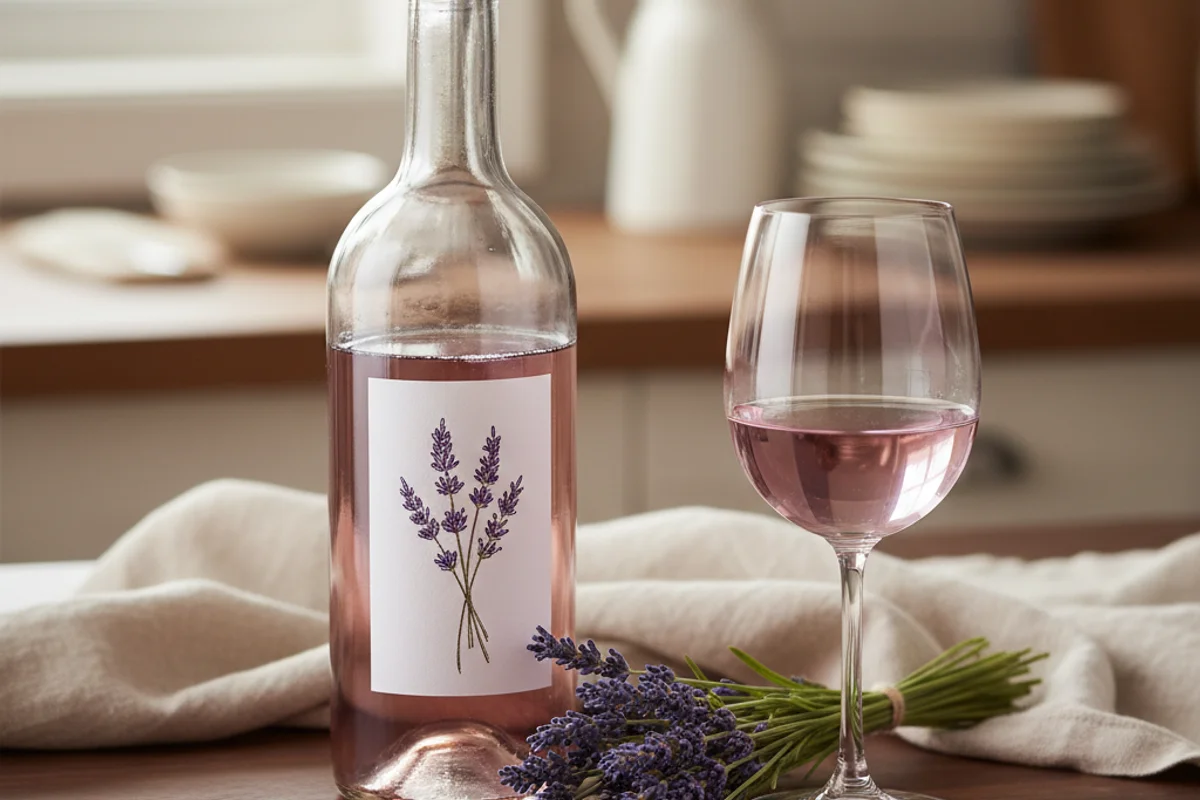
Lavender is one of those ingredients that lives in two worlds at once — it’s perfume and it’s food, spa day and Sunday dinner. Fermented slowly with a neutral white grape base, it becomes something genuinely surprising: floral without being cloying, dry enough to pair with food, and aromatic enough to fill a room the moment you pull the cork. Think of it as Provence in a bottle, built right in your kitchen with flowers you can grow in a window box or buy dried at a grocery store.
The beginner trap: Using too many flowers — more lavender does not mean more flavor, it means soap water with a cork in it.
Ingredients
- 1 to 1½ pints fresh lavender flowers (or ¾ to 1 cup dried culinary lavender)
- 1¾ lb granulated white sugar
- 1 can (10.5 oz) Welch’s 100% white grape juice frozen concentrate
- ½ tsp citric acid (or 2 tbsp fresh lemon juice)
- ⅛ tsp tannin powder (or 1 unsweetened black tea bag, steeped and cooled)
- 7½ pints water, divided
- 1 tsp yeast nutrient
- 1 packet Champagne yeast (or any dry white wine yeast)
Method
- Bring half a gallon of water to a boil, add the sugar, and stir until fully dissolved.
- Stir in the frozen grape concentrate and bring the mixture back to a boil, then remove from heat.
- Place the lavender flowers, citric acid, tannin powder, and yeast nutrient into your primary fermenter (a clean food-grade bucket works fine).
- Pour the hot sugar-grape liquid over the dry ingredients in the fermenter — do not add yeast yet.
- Let the must cool to lukewarm (around 70–75°F), then add the remaining water.
- Sprinkle the yeast over the surface, cover the fermenter loosely with a clean cloth, and ferment at room temperature for 7 days.
- Strain out all the flowers, transfer the liquid to a glass carboy or secondary fermenter, and seal with an airlock.
- Let it ferment undisturbed for 60 days, then rack into a clean vessel, top up to reduce headspace, reseal with the airlock, and wait another 60 days.
- Rack the cleared wine into bottles and age for at least one year before opening.
Why this works
Lavender’s aromatic punch comes from essential oils — mainly linalool and linalool acetate — that extract quickly into liquid. That’s why a short 7-day primary is enough contact time; leave the flowers in longer and those same compounds turn harsh and soapy. The frozen white grape concentrate does double duty: it adds fermentable sugar and brings a light body and mild acidity that give the finished wine structure without competing with the floral notes. Champagne yeast is a good match here because it ferments cleanly and doesn’t contribute fruity esters that would muddy the lavender character. The long aging time lets volatile compounds mellow and integrate — patience is doing real work in this recipe.
Notes
Dried culinary lavender (sold at Whole Foods, Trader Joe’s, or online) works well and is easier to measure than fresh; use about half the volume since drying concentrates the oils. If you grow your own, pick flowers just as they open for peak aroma and freeze extras in a zip-top bag for your next batch. Tannin powder is sold at homebrew shops, but a single steeped black tea bag is a perfectly functional substitute that most people already have on hand.