LILAC WINES
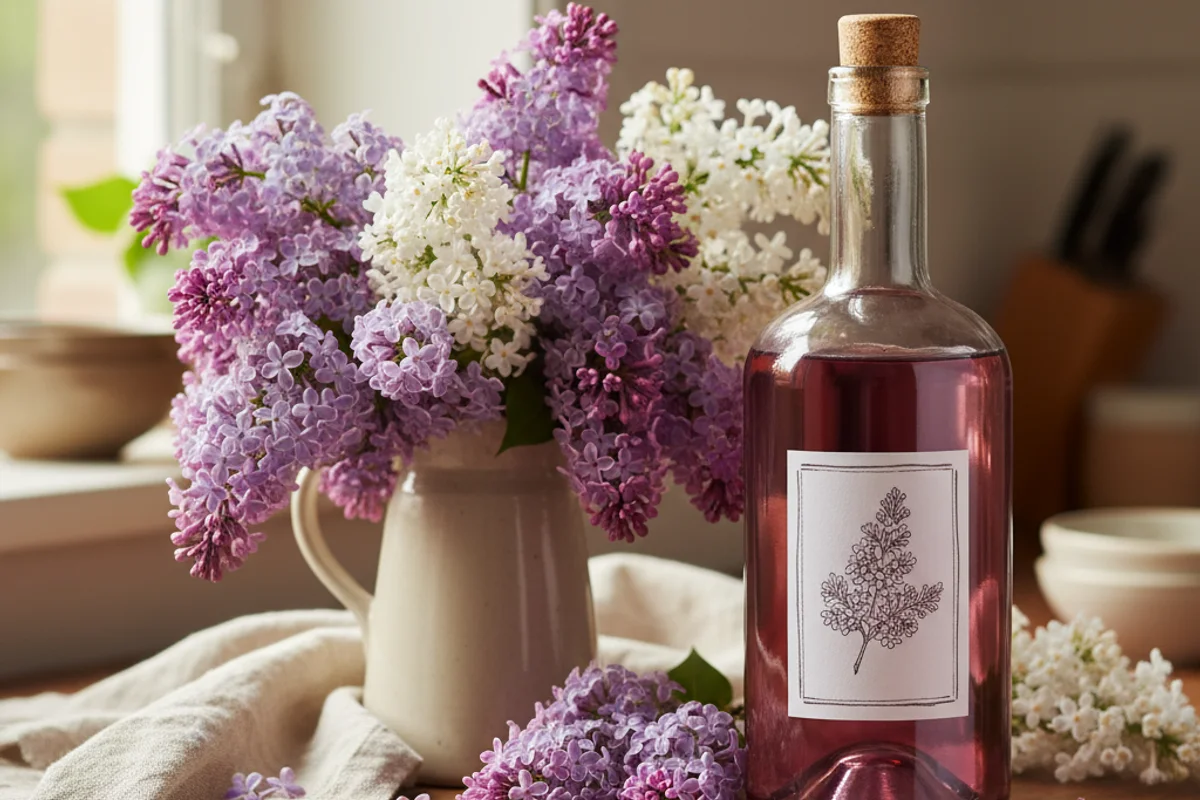
Every spring, lilac bushes put on a show that lasts maybe two weeks — fragrant purple and white clusters that most people just walk past. Here’s the thing: those blossoms make a genuinely remarkable wine. Light-bodied, floral, and surprisingly complex, lilac wine carries the scent of the bush right into the glass. There are two versions here — a clean, straightforward build and a slightly richer one that uses white grape concentrate for extra body and structure. Both reward patience.
The beginner trap: Using flowers still attached to their green stems, which adds bitterness and off-flavors — strip the tiny florets away from all stem material before you start.
Recipe 1 — Classic Lilac
Ingredients
- 3½ quarts (about 14 cups) lilac florets, stems removed, fresh or frozen
- 2 lbs granulated sugar
- Juice of 2 lemons (or 12 g lactic acid — find it at homebrew shops)
- 7½ pints (about 15 cups) water
- 1 tsp yeast nutrient
- 1 packet Champagne yeast (or any dry wine yeast)
Method
- Sort through the florets, discard any green bits, and rinse them gently. Place them in your primary fermenter (a food-grade bucket works great).
- Bring the water to a full boil, then pour it directly over the flowers. Cover the bucket tightly and leave it alone for 48 hours.
- Pour the liquid through a mesh straining bag, squeeze the spent flowers firmly to pull out every bit of flavor, then discard the pulp.
- Stir in the sugar, lemon juice (or lactic acid), and yeast nutrient until everything is fully dissolved.
- Sprinkle the dry yeast over the surface — don’t stir it in. Cover loosely and ferment at room temperature for 7 days.
- Transfer the liquid to a glass carboy or jug and fit an airlock. Ferment for 30 days.
- Rack the wine off the sediment into a clean vessel, top up with water to minimize headspace, and refit the airlock. Repeat every 30 days until the wine is clear and no more sediment is forming.
- Rack into bottles and age for at least 3–6 months before drinking.
Recipe 2 — Lilac with Grape Concentrate
Ingredients
- 3½ quarts (about 14 cups) lilac florets, stems removed, fresh or frozen
- 1½ lbs granulated sugar
- 1 can (10.5 oz) frozen white grape juice concentrate, thawed (Welch’s 100% white grape works perfectly)
- 1½ tsp citric acid (or substitute the juice of 3 lemons)
- ⅛ tsp grape tannin powder (optional — a splash of strong black tea works as a substitute)
- 7¼ pints (about 14½ cups) water
- 1 tsp yeast nutrient
- 1 packet Champagne yeast (or any dry wine yeast)
Method
- Sort and rinse the florets, removing all green stem material. Place them in your primary fermenter and pour boiling water over them. Cover tightly and steep for 48 hours.
- Strain through a mesh bag, squeezing the flowers well, and discard the pulp.
- Ladle about 2 cups of the floral liquid into a small saucepan, bring to a boil, and stir in the sugar until fully dissolved. Pour this back into the main batch.
- Stir in the grape concentrate, citric acid, tannin, and yeast nutrient. Mix well.
- Once the must cools to lukewarm (under 80°F), sprinkle the dry yeast over the surface without stirring. Cover and ferment for 5 days.
- Transfer to a glass carboy or jug and fit an airlock. Ferment for 30 days.
- Rack off the sediment, top up, and refit the airlock. Repeat every 30 days until the wine is clear and stable.
- Bottle and age for 3–6 months. The grape concentrate rounds out the flavor noticeably after the first few months.
Why this works
Lilac flowers hold most of their aromatic compounds — primarily terpenes like linalool — in their tiny petals, not their stems or leaves. Pouring boiling water over them acts like a gentle extraction, pulling those volatile aromatics into solution without cooking out the more delicate ones. The 48-hour steep balances extraction against oxidation risk. Lemon juice or lactic acid isn’t just there for flavor — it drops the pH into a range where yeast thrive and spoilage bacteria struggle. Recipe 2 adds grape concentrate for two reasons: fermentable sugar and a small dose of body-building compounds (like natural grape tannins and glycerol precursors) that a pure flower wine simply lacks.
Notes
Frozen lilac florets work just as well as fresh — freeze them in zip-top bags in single-batch portions right after picking. If you can’t find lactic acid at a homebrew shop, the juice of 2 lemons is a reliable swap. Tannin powder is sold at homebrew retailers; if you skip it, steep one regular black tea bag in a cup of hot water for 5 minutes and stir that in instead.