LOCUST BLOSSOM WINE
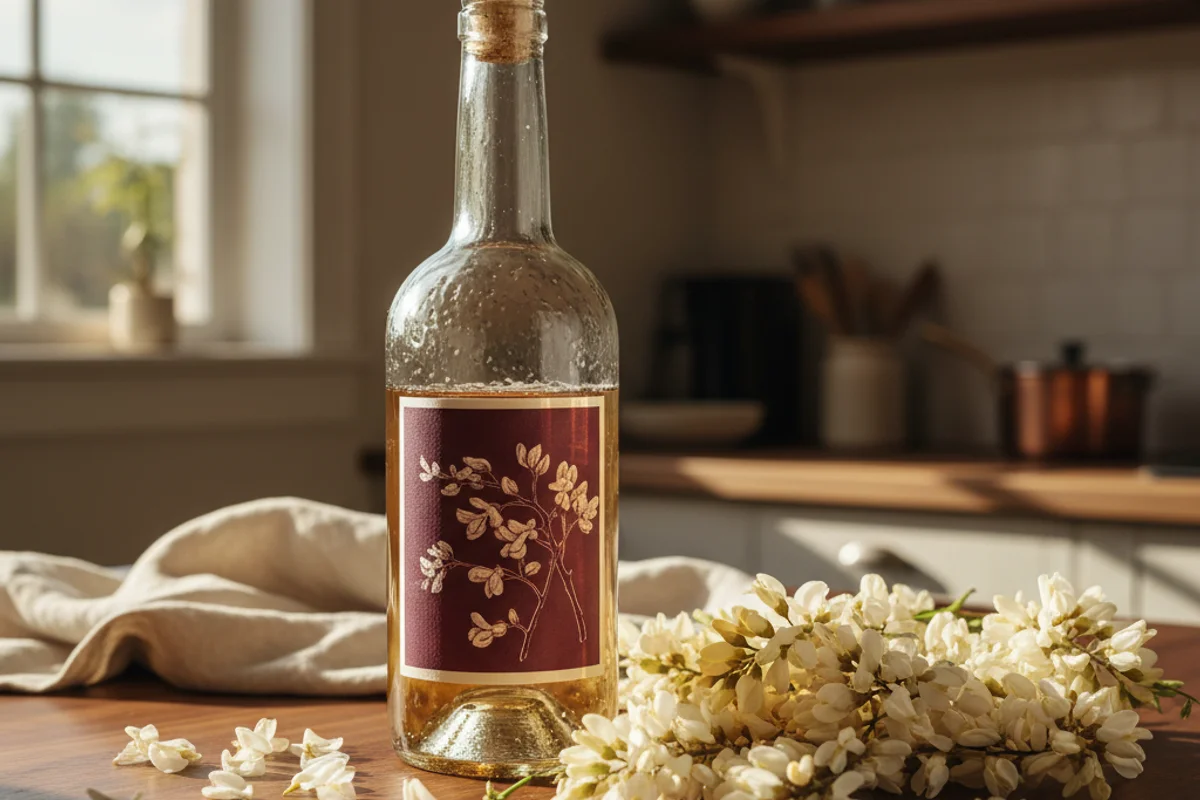
Black locust trees bloom for only a week or two each spring, filling the air with a scent somewhere between grape and vanilla. The flowers are small, white, and packed into hanging clusters — and they carry just enough flavor to build a delicate, pale wine around. Think of it as capturing a moment that most people walk right past. This is a one-gallon recipe, so the window to pick enough blossoms is tight, but the payoff is a wine unlike anything you’ll find on a store shelf.
The beginner trap: Skipping the long soak after simmering — that 10-to-14-hour rest is where most of the flavor actually moves from the flowers into the water.
Ingredients
- 1½ lbs black locust flowers, stems removed
- 1¾ lbs granulated white sugar
- 1 can (11.5 oz) Welch’s 100% White Grape Juice frozen concentrate, thawed
- 2 tsp acid blend (or 1½ tsp lemon juice as a rough substitute)
- ¼ tsp grape tannin (or 1 unsweetened black tea bag, steeped and removed)
- 1 tsp yeast nutrient
- 1 packet general-purpose wine yeast (Lalvin EC-1118 or Red Star Montrachet work well)
Method
- Rinse the flowers in cool water, pull off any remaining stems, and stir them into 1 quart of boiling water. Reduce heat and simmer for 30 minutes.
- Remove the pot from heat, cover it, and let the flowers soak for 10 to 14 hours. While you wait, set the frozen concentrate on the counter to thaw.
- Strain the flower liquid into your primary fermenter and discard the spent flowers. Add the sugar, thawed grape concentrate, acid blend, grape tannin, and yeast nutrient. Stir until everything dissolves.
- Top up with lukewarm water (no warmer than 98°F) to reach exactly 1 gallon. Sprinkle in the yeast, cover the fermenter loosely, and move it to a warm spot.
- After 7 to 10 days, when active bubbling slows down, check the specific gravity. If it reads 1.010 or below, rack the wine into a 1-gallon glass jug and fit an airlock.
- If the wine hasn’t cleared after 30 days, add 1 tsp of pectic enzyme to a clean jug and rack the wine into it. Reattach the airlock and wait another 30 days.
- Rack the wine again, then stir in 1 Campden tablet (crushed and dissolved in a little water) and ½ tsp potassium sorbate dissolved in water. Wait 10 days.
- Sweeten to taste, let the wine rest another 30 days, then rack into bottles. Age at least 3 months before drinking.
Why this works
Locust blossoms don’t hold much sugar or acid on their own — they’re mostly water and aromatic compounds. The long simmer breaks down cell walls and releases those fragrant molecules into the water. The extended cold soak lets fat-soluble aromatics finish migrating out as the liquid cools. White grape concentrate fills in the body and a touch of grape character that flowers alone can’t provide. Acid blend and tannin give the yeast a better environment to work in and add structure to what would otherwise be a very thin wine. Pectic enzyme is the insurance policy: flower-based wines often stay hazy because of natural pectins, and the enzyme breaks those down so the wine can clear.
Notes
Black locust blossoms freeze well — spread them on a baking sheet to freeze individually, then bag them for use any time of year. Do not substitute honey locust (Gleditsia triacanthos) flowers; only black locust (Robinia pseudoacacia) blossoms are recommended for winemaking. If you can’t find acid blend, a mix of cream of tartar and lemon juice can stand in, though results will vary.