LOGANBERRY WINE
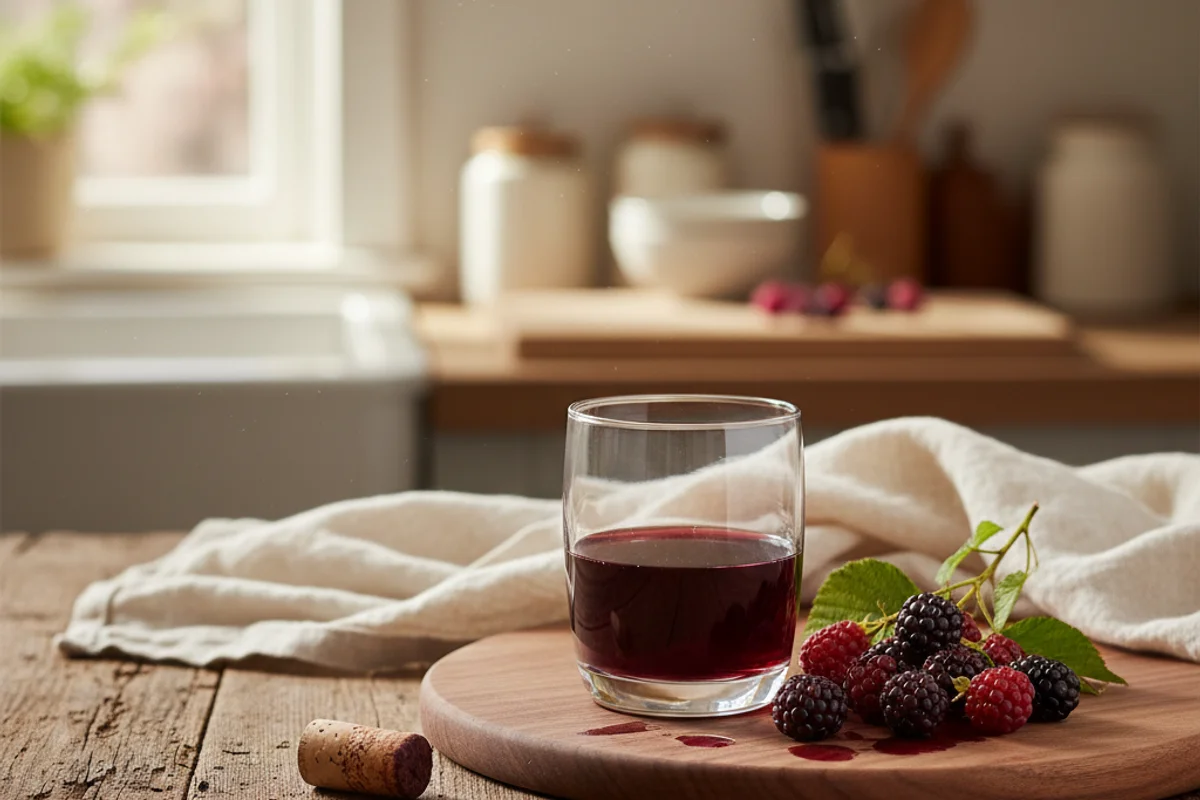
Think of a loganberry as a blackberry and a raspberry that decided to do something more interesting. The result is a large, deep-red berry that stays bright even when fully ripe, with a tartness that hits harder than either parent. That bite is exactly what makes loganberry wine so compelling — fermentation smooths the sharp edges while keeping the fruit front and center. Made dry, this wine rewards patience with serious depth. Made sweet, it’s ready to share far sooner.
The beginner trap: Cracking open a dry loganberry wine before the two-year mark — it will taste thin and harsh, and you’ll think the recipe failed when it just needs more time.
Ingredients
- 4 lbs loganberries, fresh or frozen
- 1¾ lbs granulated sugar
- 7 pints (3.5 quarts) water
- 1 Campden tablet, crushed
- ¼ tsp pectic enzyme
- 1 tsp yeast nutrient
- 1 packet wine yeast (Lalvin 71B or EC-1118 work well)
Method
- Bring the water to a boil, add the sugar, and stir until fully dissolved. Remove from heat.
- Wash and sort the berries, discarding any that look damaged or unripe. Place them in a nylon mesh straining bag, tie it shut, and set it in your primary fermenter.
- Crush the berries inside the bag with clean hands or a potato masher.
- Pour the hot sugar water over the fruit, cover the fermenter, and let it cool to room temperature.
- Once cool, stir in the crushed Campden tablet. Cover and wait 12 hours.
- Add the pectic enzyme and yeast nutrient, stir to combine, cover, and wait another 12 hours.
- Add your activated wine yeast. Ferment for 4 days, stirring the must twice each day.
- Lift out the straining bag and press it firmly to squeeze out as much liquid as possible. Discard the pulp.
- Transfer the liquid to a clean secondary fermenter (a glass carboy works great) and fit an airlock.
- Rack into a clean vessel every 30 days, topping up to minimize headspace and refitting the airlock each time. Continue until the wine is clear and no new sediment appears over a full 30-day period.
- Stabilize with a fresh Campden tablet and potassium sorbate. Sweeten to taste if desired, wait 10 days, then rack into bottles.
Why this works
Loganberries are high in pectin — the same stuff that makes jam gel. Left alone, pectin creates a stubborn haze that no amount of racking will fix. Pectic enzyme breaks those long pectin chains apart, which lets the wine clear on its own over time. The Campden tablet goes in first to knock out wild yeast and bacteria living on the fruit’s skin, giving your chosen wine yeast a clean environment to work in. Waiting 12 hours between the Campden addition and the pectic enzyme matters: sulfite can degrade the enzyme if they’re added together, so the delay lets the sulfite do its job before the enzyme gets to work.
Notes
Frozen loganberries are an excellent choice here — freezing ruptures the cell walls, which means more juice and more color with less effort during crushing. Fresh loganberries can be hard to find outside the Pacific Northwest; if your store doesn’t carry them, check the frozen fruit section or look at farmers markets in summer. A dry loganberry wine typically needs at least two years in the bottle to fully come together, so label your bottles with the date and hide them somewhere you’ll forget about them.