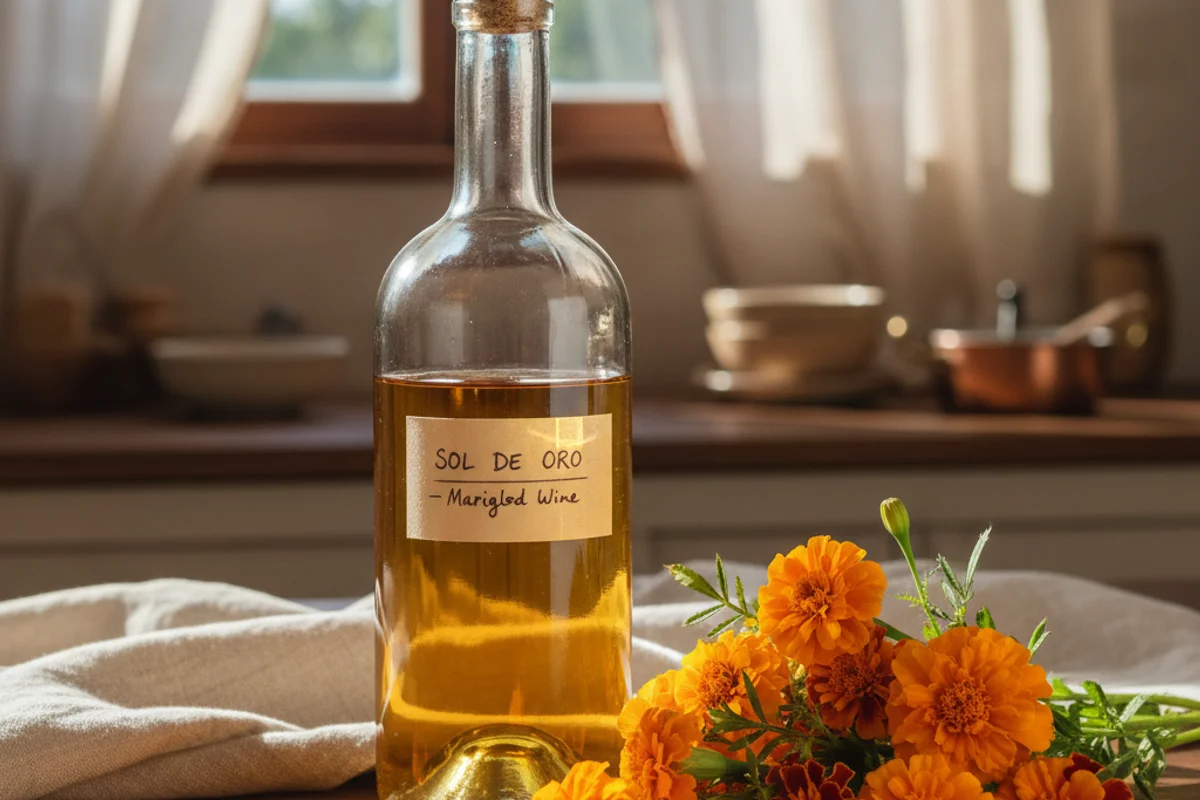
MARIGOLD WINE
Marigolds are not just a garden border plant — they’re a flavor machine. The petals carry a faintly spicy, herbaceous quality that ferments into something golden, complex, and surprisingly dry. Think of it as a floral white wine with an earthy edge and a citrus backbone. This is a slow builder: it needs time in the bottle to mellow, but the payoff is a genuinely interesting wine that most guests won’t be able to identify until you tell them.
The beginner trap: Using the whole flower head instead of petals only — green parts introduce bitter compounds that no amount of aging will fix.
Ingredients
- 3¾ cups (1 qt) fresh marigold petals, firmly packed — frozen works too
- ½ lb golden raisins, chopped (or sultanas from the baking aisle)
- 1⅞ lbs granulated white sugar
- 1 medium orange, zested and juiced
- 1 medium lemon, zested and juiced
- ½ tsp tartaric acid (or substitute 1 tsp lemon juice if unavailable)
- 7½ pts (just under 1 gallon) water
- 1 tsp yeast nutrient
- 1 packet wine yeast (Lalvin EC-1118 or Red Star Côte des Blancs work well)
Method
- Bring the water to a boil and stir in the sugar until fully dissolved. Remove from heat.
- Zest the orange and lemon, then squeeze out the juice and set both aside.
- Place the marigold petals, chopped raisins, and citrus zest into a nylon straining bag (a paint-strainer bag from the hardware store works fine). Tie it shut.
- Set the bag in your primary fermenter. Add the tartaric acid, yeast nutrient, and citrus juice, then pour the hot sugar water over everything. Cover and let cool to room temperature.
- Once the must is at room temperature or just slightly warm, add the activated wine yeast. Re-cover the fermenter.
- Gently squeeze the bag twice a day for 5–6 days to pull flavor from the petals and raisins.
- Squeeze the bag firmly to extract as much liquid as possible, then discard the solids. Let the must settle overnight, then rack into a clean secondary fermenter (a 1-gallon glass jug works great).
- Fit an airlock and leave it alone. After 30 days, rack again, top up with a little water to minimize headspace, and refit the airlock.
- Rack one more time after another 60 days, then move to a cool spot for 4 months. Check the airlock seal every few weeks.
- Taste the wine. If you want it slightly sweet, add stabilizer (potassium sorbate) and a small amount of dissolved sugar. Wait 14 days to confirm no re-fermentation before bottling. If dry, go straight to bottles.
- Cellar the bottles for at least 12 months before opening. Patience is the real ingredient here.
Why this works
Marigold petals are rich in carotenoids and aromatic compounds that dissolve readily into hot water — which is why the boiling extraction step matters. The raisins pull double duty: they add unfermentable sugars that round out the body, and their natural grape character gives the finished wine some familiar depth. Tartaric acid lowers the pH to a range where yeast are happy and spoilage bacteria are not (roughly 3.2–3.5). Citrus zest brings volatile aromatic oils that survive fermentation and add complexity. The long aging time allows harsh fusel alcohols to esterify into smoother, more pleasant compounds — this is chemistry working slowly in your favor.
Notes
Petals can be frozen in zip-lock bags as you harvest them throughout the season — just keep adding until you hit a full quart. If tartaric acid is hard to find locally, an extra teaspoon of fresh lemon juice is a reasonable stand-in, though tartaric gives more precise acidity control. This wine finishes beautifully dry, so resist the urge to sweeten heavily — a very light back-sweetening, if any, is all it needs.