MARIONBERRY WINE
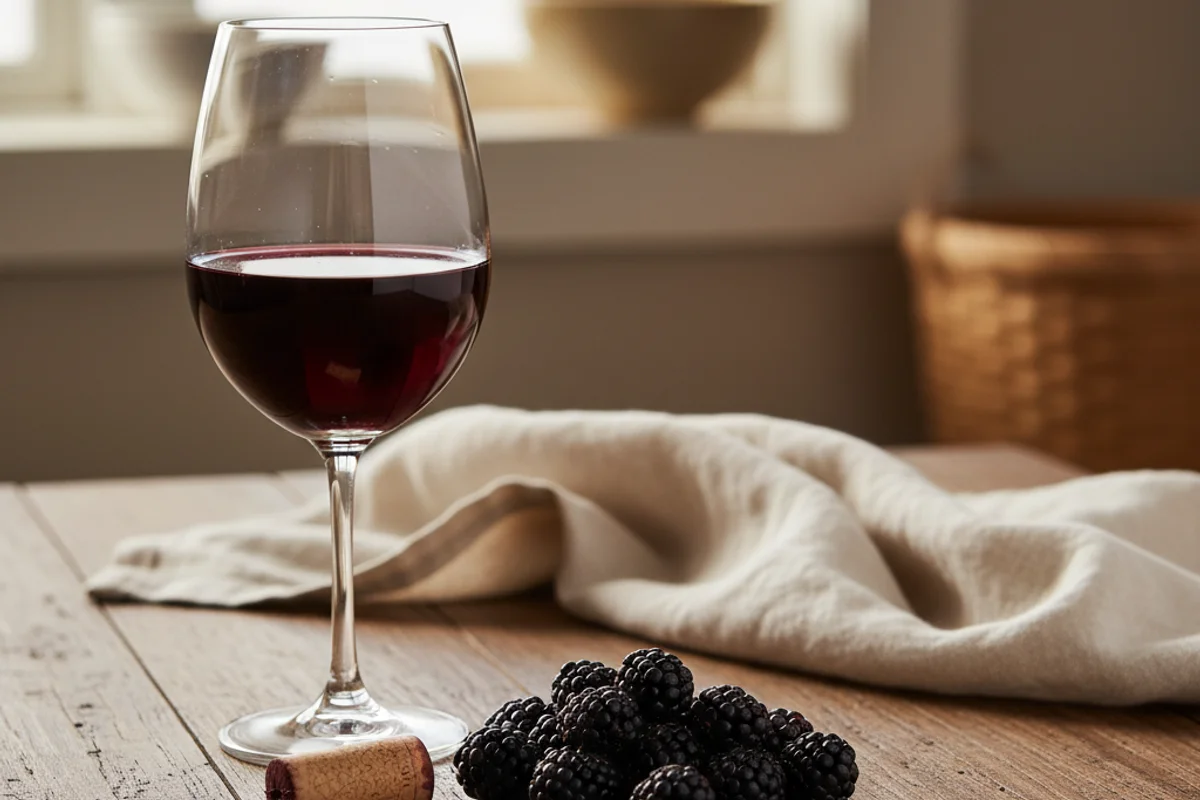
Think of the marionberry as a blackberry that went to finishing school. Developed in the Pacific Northwest, it’s deeper, more complex, and slightly more tart than a standard blackberry — with an earthy, almost jammy backbone that holds up beautifully through fermentation. The wine it produces sits somewhere between a rustic Côtes du Rhône and a fruit-forward table red: dark-colored, full-bodied, and genuinely interesting. Give it enough time in the bottle and it stops tasting like “fruit wine” and starts tasting like something you’d actually serve to guests without explaining yourself.
The beginner trap: Skipping the 24-hour wait after adding pectic enzyme — rushing straight to the yeast means the enzyme never gets a chance to break down the pectin, and your finished wine will be cloudy no matter how long you wait.
Ingredients
- 6–7 lb marionberries, fresh or frozen
- 1¼ to 1½ lb white granulated sugar
- 6 pints (12 cups) water
- ¾ tsp pectic enzyme
- 1 tsp yeast nutrient (available at homebrew shops or online)
- 1 packet Lalvin RC-212 wine yeast (sold as “Burgundy yeast”; Red Star Côte des Blancs works as a milder substitute)
- 2 Campden tablets (potassium metabisulfite), crushed — one per racking
Method
- Wash the berries well in a colander, then crush them by hand or with a potato masher in a large bowl and transfer the crushed fruit to your primary fermentation bucket.
- Bring 6 pints of water to a boil and pour it over the crushed fruit; cover the bucket and let it steep for 48 hours at room temperature.
- Strain the liquid through a fine mesh bag or nylon sieve into a clean bucket, pressing the pulp firmly to extract as much juice as possible; discard the solids.
- Add the sugar to the strained liquid and stir until it fully dissolves.
- Stir in the pectic enzyme and yeast nutrient, cover the bucket loosely, and let it rest for 24 hours.
- Sprinkle the yeast over the surface, cover again, and ferment for 5–6 days at room temperature, stirring once daily.
- Transfer the wine into a dark glass carboy (or wrap a clear one in brown paper), filling only to the upper shoulder — not the neck — and fit an airlock; store any leftover must in a small sealed bottle to use for topping up.
- Once vigorous foaming stops, top up the carboy to reduce headspace, add one crushed Campden tablet, and move to a cool, dark spot (60–65°F) for three months.
- Rack into a clean carboy, add the second Campden tablet, and allow the wine to settle for another two months.
- If the wine tastes flat or thin, stir in ½ tsp acid blend (found at homebrew shops) or a small squeeze of lemon juice, then rack once more.
- Bottle in dark glass and age at least 6 months before opening.
Why this works
Marionberries are loaded with pectin — the same stuff that makes jam gel. In a wine, pectin doesn’t gel, but it does create a stubborn haze that no amount of settling will fix. Pectic enzyme is a biological catalyst that chops pectin molecules into smaller pieces the yeast and gravity can handle. The catch is that yeast activity slows the enzyme down; adding the enzyme before the yeast, and giving it a full 24-hour head start, lets it do its job without interference. The hot-water steep pulls color, tannin, and flavor compounds out of the fruit quickly, which is why this recipe skips a traditional cold soak — the boiling water acts as both extractor and sanitation step in one.
Notes
Frozen marionberries work excellently here — freezing ruptures the cell walls and actually makes juice extraction easier than fresh fruit. Look for them at Trader Joe’s, Whole Foods, or any Pacific Northwest grocery chain. If you can’t find marionberries at all, Marion-cross blackberries or standard grocery-store blackberries are solid substitutes; reduce the fruit by about half a pound since they tend to be less tart.