MIMOSA FLOWER WINE
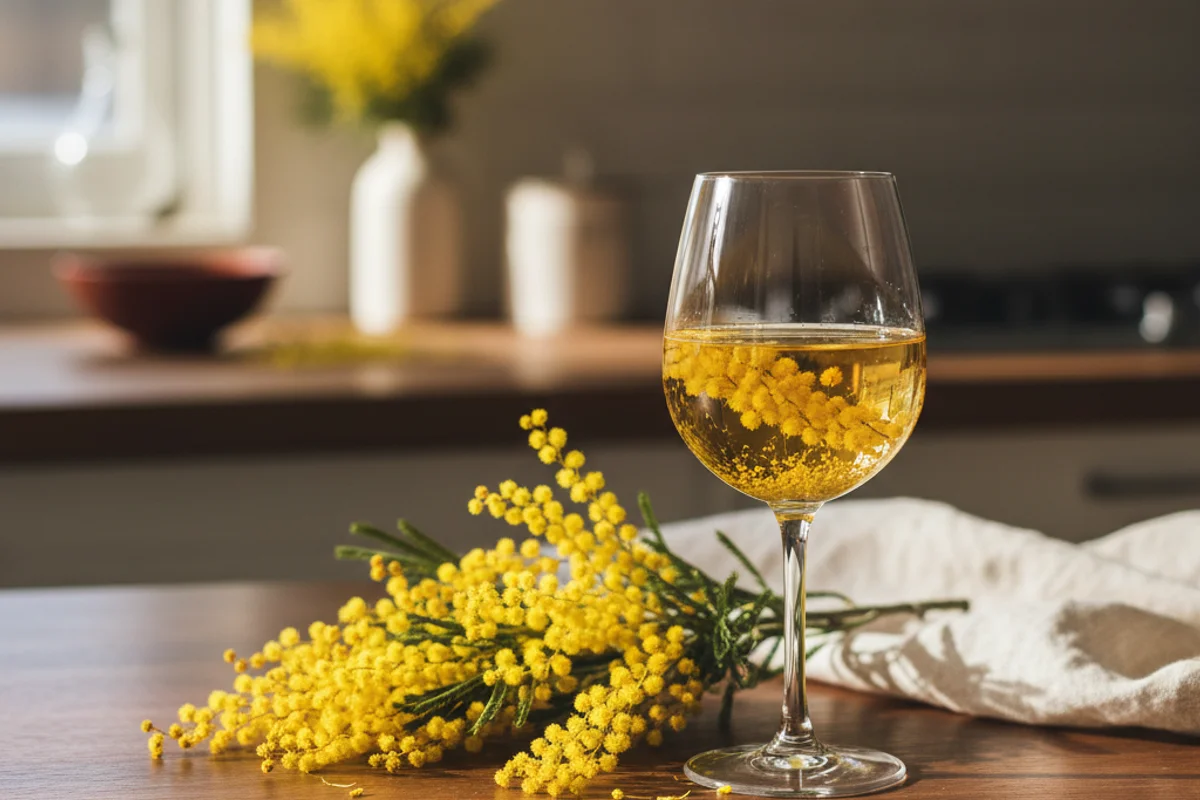
Walk past a mimosa tree in full summer bloom and you’ll understand immediately why someone thought to make wine from it. Those pink, feathery pom-pom flowers smell like a cross between honeysuckle and fresh hay, with a faint floral sweetness that practically begs to be captured in a bottle. This is a light, delicate white wine — the kind you serve cold on a porch in July. The flavor is subtle, almost whisper-quiet, which is exactly why the finish matters so much here.
The beginner trap: Fermenting this one bone-dry will flatten the floral character completely — a touch of residual sweetness (around SG 1.006–1.010) is what pulls the mimosa flavor forward, so don’t skip the back-sweetening step.
Ingredients
- 2 quarts mimosa flowers, loosely packed, freshly picked
- 1 can (11 oz) frozen 100% white grape juice concentrate
- 1 lb 3 oz (about 2⅔ cups) granulated white sugar
- 6½ pints (about 3.25 quarts) water, divided
- 1½ tsp acid blend (available at homebrew shops; no common substitute)
- ⅛ tsp grape tannin (or 1 cooled cup of strong plain black tea)
- 1 tsp yeast nutrient
- 1 Campden tablet, crushed
- 1 packet Hock or Champagne wine yeast (or any dry white wine yeast)
Method
- Rinse the flowers well and load them into a nylon straining bag. Drop a dozen clean marbles inside to weigh the bag down, then tie it closed and place it in your primary fermenter.
- Heat 1 quart of the water in a saucepan and dissolve the sugar completely. Remove from heat.
- Add the frozen grape juice concentrate and the remaining water to the sugar solution to cool it down, then pour the whole mixture into the primary over the flower bag.
- Add the acid blend, grape tannin, yeast nutrient, and crushed Campden tablet. Stir well, then cover the fermenter and wait 10–12 hours before adding yeast.
- Activate the yeast per the packet instructions, then add it to the must. Re-cover the fermenter, move it to a warm spot (68–75°F), and stir the must daily.
- When the specific gravity (SG) reaches 1.015 or lower, lift the bag and let it drip-drain — do not squeeze it. Transfer the wine to a secondary fermenter (carboy) and attach an airlock. Move it to a slightly cooler location.
- Rack the wine at 30 days, and again 30 days after that. Top up the carboy and reattach the airlock each time.
- Once the wine is fully clear (pollen can keep settling for 2–3 months after fermentation ends), wait 90 more days, then rack one final time. Bulk age another 90 days.
- Stabilize with potassium sorbate and potassium metabisulfite per package directions, then sweeten to taste — SG 1.006 to 1.010 is the sweet spot here. Bottle the wine and wait at least 6 months before opening.
Why this works
Mimosa flowers carry most of their aromatic compounds in volatile, fragile molecules that don’t survive heavy fermentation heat or aggressive alcohol levels well. Keeping the starting gravity at SG 1.076 limits the final alcohol to roughly 10–11%, which is intentional — higher alcohol would steamroll the floral notes. The white grape juice concentrate pulls double duty: it adds fermentable sugar and supplies a neutral grape backbone that supports the flower flavor without competing with it. Back-sweetening isn’t just about taste preference; a small amount of residual sugar physically slows the escape of aromatic compounds from the wine, which is why the flavor “wakes up” noticeably once you add even a little sweetness.
Notes
Hock or Champagne yeast is the right call here because both strains ferment clean and cold-tolerant without generating fusel alcohols that would muddy a delicate floral wine. If you can only find a generic dry white wine yeast at a local homebrew shop, that will work fine. Acid blend is worth buying — it is widely available online and at homebrew retailers — but a blend of ½ tsp citric acid and ½ tsp tartaric acid can stand in if needed.