More Watermelon Wines
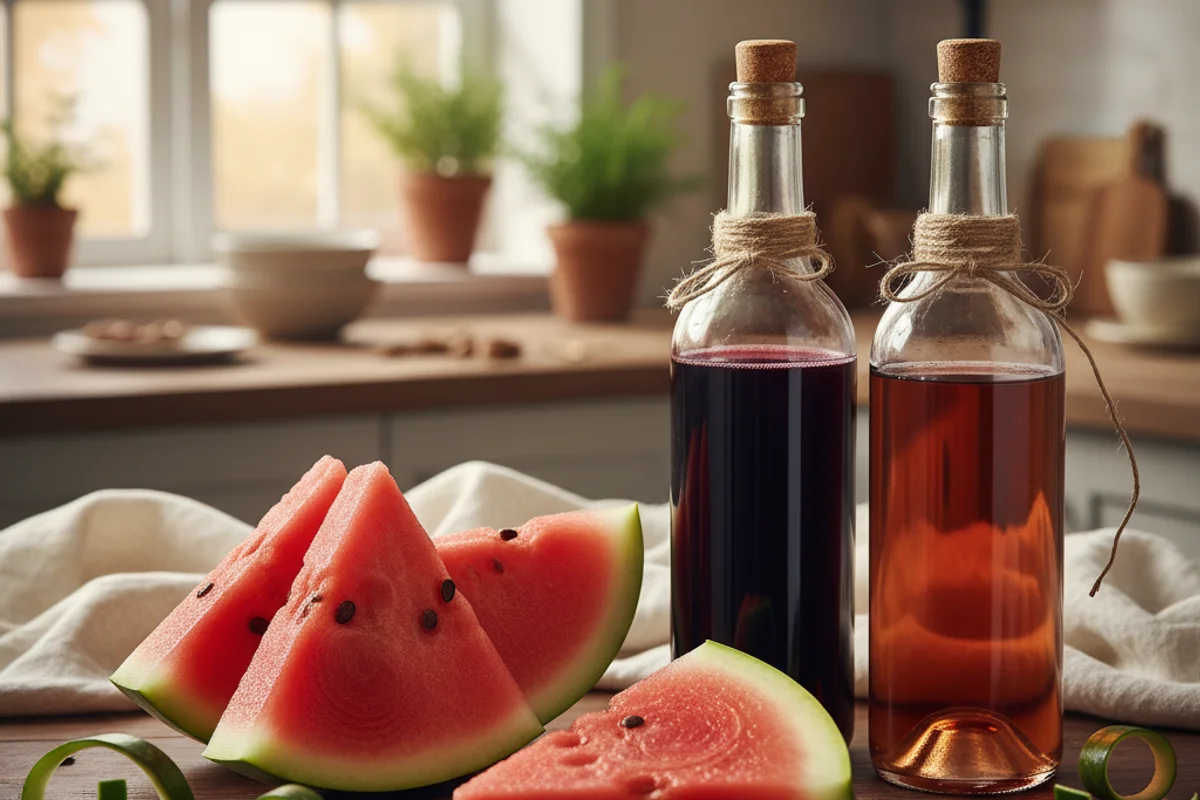
Watermelon is basically a water balloon with good PR. It’s 92% water, so when you ferment it alone, you end up with something thin, flat, and vaguely sad — like a summer memory that’s faded too much to enjoy. The fix is elegant: pair watermelon with a fruit that brings structure to the party. Dried elderberries add tannin, depth, and a dark berry backbone. Fresh grapes bring natural sugar and body. Either way, the watermelon stays front and center — it just finally has something to lean on.
The beginner trap: Skipping the pectic enzyme — watermelon is loaded with pectin, and without enzyme treatment you’ll end up with a hazy wine that won’t clear no matter how long you wait.
Ingredients
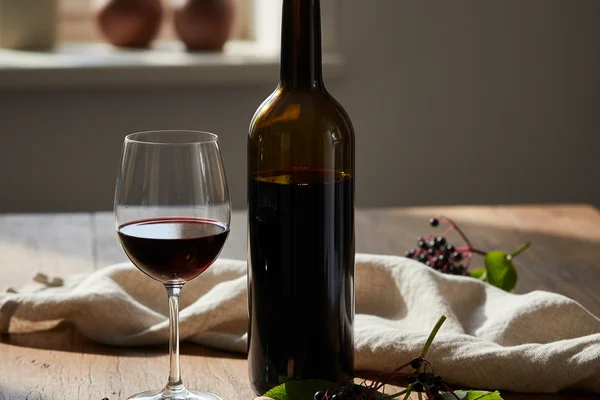
Watermelon-Elderberry Wine
(makes 1 gallon)
- 6½ lb watermelon flesh (rind removed, seeds pulled out)
- ¼ lb dried elderberries (find these at homebrew shops or online)
- Juice and zest of 2 lemons
- 1⅔ lb granulated white sugar, plus ⅓ cup reserved for racking
- 1 tsp pectic enzyme
- 1 tsp yeast nutrient
- 1 Campden tablet, crushed (plus 1 more at stabilizing)
- ¼ tsp potassium sorbate (for stabilizing before bottling)
- 1 packet wine yeast (Lalvin EC-1118 or Red Star Côte des Blancs work well)
- Water to bring total volume to 1 gallon
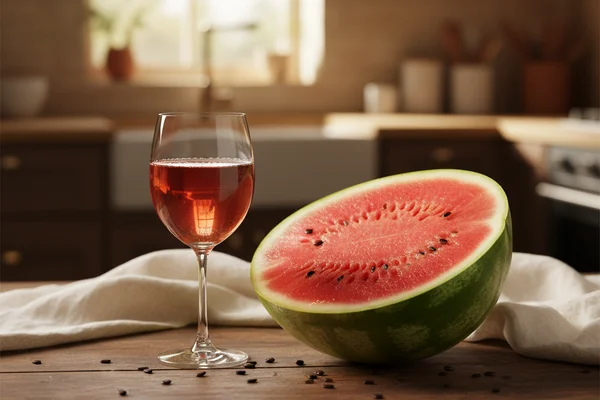
Watermelon-Grape Wine
(makes 1 gallon)
- 6 lb watermelon flesh (rind removed, seeds pulled out)
- 1½ lb fresh red or green table grapes (seedless grocery-store grapes work fine)
- Juice and zest of 2 lemons
- 1⅔ lb granulated white sugar
- 1 tsp pectic enzyme
- 1 tsp yeast nutrient
- 1 Campden tablet, crushed (plus 1 more at stabilizing)
- ¼ tsp potassium sorbate (for stabilizing before bottling)
- 1 packet wine yeast
- Water to bring total volume to 1 gallon
Method
Watermelon-Elderberry Wine
- Cut watermelon flesh into 1-inch cubes and place them along with any collected juice into your primary fermenter (a food-safe plastic bucket works perfectly).
- Zest the lemons — yellow only, avoid the bitter white pith — then juice them and add both zest and juice to the bucket.
- Add the dried elderberries, pectic enzyme, and yeast nutrient, then pour in enough water to bring the total volume to 1 gallon.
- Stir in the sugar until fully dissolved, then cover the bucket with a clean cloth and let it sit for 12 hours.
- Sprinkle in the wine yeast, re-cover, and ferment for 3 days at room temperature, stirring the must once each day.
- Strain the liquid through a fine mesh strainer or cheesecloth into your 1-gallon glass jug (demijohn) and fit an airlock.
- Ferment for 30 days, then rack the wine into a clean jug; dissolve ⅓ cup sugar into a small amount of water and use it to top up the jug.
- Add one crushed Campden tablet, refit the airlock, and continue racking every 30 days for 6 months total.
- About one week before bottling, add ¼ tsp potassium sorbate and one more crushed Campden tablet to stabilize the wine.
- Bottle the wine and age it at least 6 months — longer aging improves it noticeably.
Watermelon-Grape Wine
- Cut watermelon flesh into 1-inch cubes and place them with any collected juice into your primary fermenter.
- Zest the lemons (yellow only), juice them, and add both zest and juice to the bucket.
- Wash and destem the grapes, then crush them thoroughly in a bowl; add the grapes and all their juice to the bucket along with one crushed Campden tablet.
- Add water to bring the total volume to 1 gallon, then stir in the sugar until dissolved.
- Cover the bucket with a cloth and wait 12 hours, then add the pectic enzyme and yeast nutrient.
- Wait another 12 hours, then add the wine yeast; cover and ferment for 5 days, stirring once daily.
- Strain the liquid into your 1-gallon glass jug, fit an airlock, and ferment for 30 days.
- Rack into a clean jug, top up with water, refit the airlock, and rack again 30 days later.
- After 60 more days, rack one final time, top up, then add ¼ tsp potassium sorbate and one crushed Campden tablet to stabilize.
- Wait 10 days, sweeten to taste if desired, then bottle and age at least 1 year.
Why this works
Watermelon juice is mostly water with a small amount of fructose and almost no tannins or acids. When yeast converts that sugar to alcohol, the delicate aromatic compounds that make watermelon taste like watermelon largely break down or evaporate. The result is thin and flat. Adding elderberries solves this structurally: their natural tannins build body and mouthfeel, and their anthocyanin pigments stabilize color. Grapes do similar work, adding natural acids, tannins, and more fermentable sugar. The lemon zest contributes aromatic oils and tartaric acid, which keeps the pH in a range where yeast thrive and spoilage bacteria don’t. Pectic enzyme breaks down the pectin chains in watermelon pulp, which would otherwise form a persistent haze that no amount of racking will fix.
Notes
Dried elderberries are sold at most homebrew supply stores and are widely available online — if you truly can’t find them, a small handful of dried blueberries can substitute, though the flavor profile will be milder. For the grape wine, any seedless table grape from the grocery store works; red grapes will deepen the color and add a bit more tannin than green. If fresh watermelon isn’t in season, frozen seedless watermelon chunks (thawed and drained) can substitute in either recipe.