RED CLOVER WINE (2)
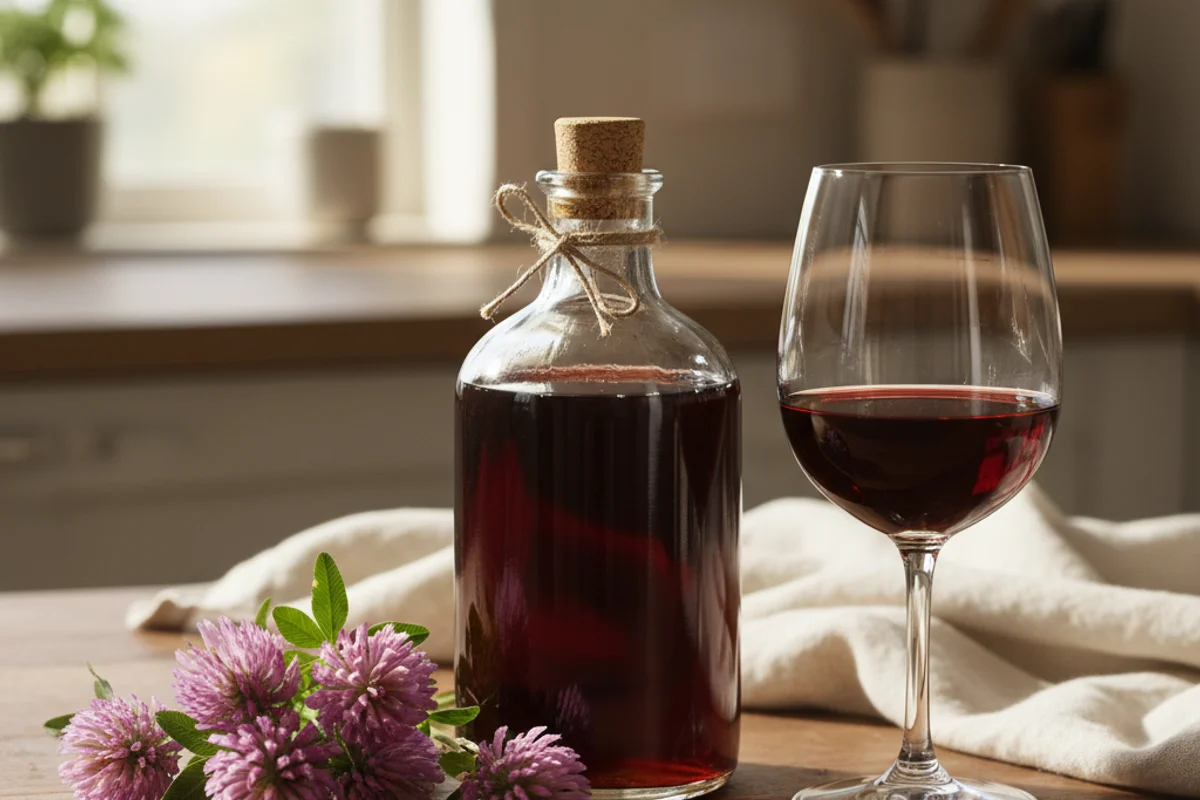
Red clover blossoms smell faintly of honey and fresh hay, and that character carries right into the glass — floral, lightly sweet, and surprisingly complex for something you might mow over without a second thought. What makes this version interesting is the banana. Yes, banana. Those overripe ones browning on your counter are secretly a winemaker’s secret weapon, lending body and a subtle richness that clover alone just can’t provide. The result is a pale, fragrant wine that rewards patience with something genuinely worth pouring.
The beginner trap: Skipping the full aging time — this wine tastes thin and sharp at three months, but genuinely comes together after six, so don’t rush to the bottle.
Ingredients
- 1 quart (about 4 cups) fresh red clover flowers, green parts removed
- 1½ lbs ripe bananas (the spottier the better), sliced with peels removed
- 2¼ lbs granulated white sugar
- 2 tsp acid blend (or substitute 3 tsp lemon juice as a rough swap)
- 1 tsp yeast nutrient
- ¼ tsp wine tannin (or substitute 1 cup strongly brewed plain black tea)
- Water to bring total volume to 1 gallon
- 1 packet wine yeast (Lalvin 71B or EC-1118 work well)
Method
- Slice the bananas and combine with 1 quart of water in a saucepan. Bring to a boil, then reduce heat and simmer for 10 minutes.
- Place the clover flowers and sugar in your primary fermenter (a food-safe bucket works fine). Strain the hot banana liquid over them, pressing the solids to extract as much liquid as possible — discard the banana pulp.
- Add enough cool water to bring the total volume to 1 gallon, then stir in the acid blend, yeast nutrient, and tannin until fully dissolved.
- Let the must cool to lukewarm (around 70–75°F / 21–24°C), then sprinkle in your yeast. Cover the fermenter loosely with a clean cloth or paper towel secured with a rubber band.
- Stir the mixture down 2–3 times daily for 7 days to keep the flower cap submerged and prevent mold.
- After 7 days, strain the liquid into a 1-gallon glass jug (secondary fermenter) and fit an airlock. Leave no more than an inch or two of headspace.
- After 30 days, rack the wine into a clean jug, top up with a small amount of water or similar wine to minimize headspace, and refit the airlock.
- Wait another 60 days and rack again the same way.
- Set the wine aside for 3 months undisturbed. Check for clarity.
- If the wine is clear, add a stabilizer (potassium sorbate per package directions), wait 10 days, rack one final time, sweeten to taste, and bottle.
- If the wine is still cloudy, rack it, top up, refit the airlock, and wait until it clears — then follow step 10.
- Wait at least 6 months after bottling before opening a bottle.
Why this works
Clover flowers bring aroma but almost no body or structure on their own. That’s where the bananas earn their place. As bananas ripen, starches convert to sugars and their cell walls break down, releasing pectin and long-chain carbohydrates. When you simmer them, those compounds dissolve into the water and carry over into your must, adding viscosity — what winemakers call “mouthfeel.” The acid blend corrects the naturally low acidity of this flower-based must, giving yeast a friendlier environment and keeping the finished wine from tasting flat. Tannin adds just enough grip to balance the sweetness. Together, these additions turn a one-dimensional floral liquid into something that actually behaves like wine.
Notes
Frozen red clover blossoms can be substituted for fresh — freeze them in a single layer first to break down cell walls and improve extraction. If you can’t find acid blend at a homebrew shop, lemon juice works in a pinch, though the results will be slightly less precise. Potassium sorbate is the standard stabilizer; find it at any homebrew retailer or online.