SARSAPARILLA WINES
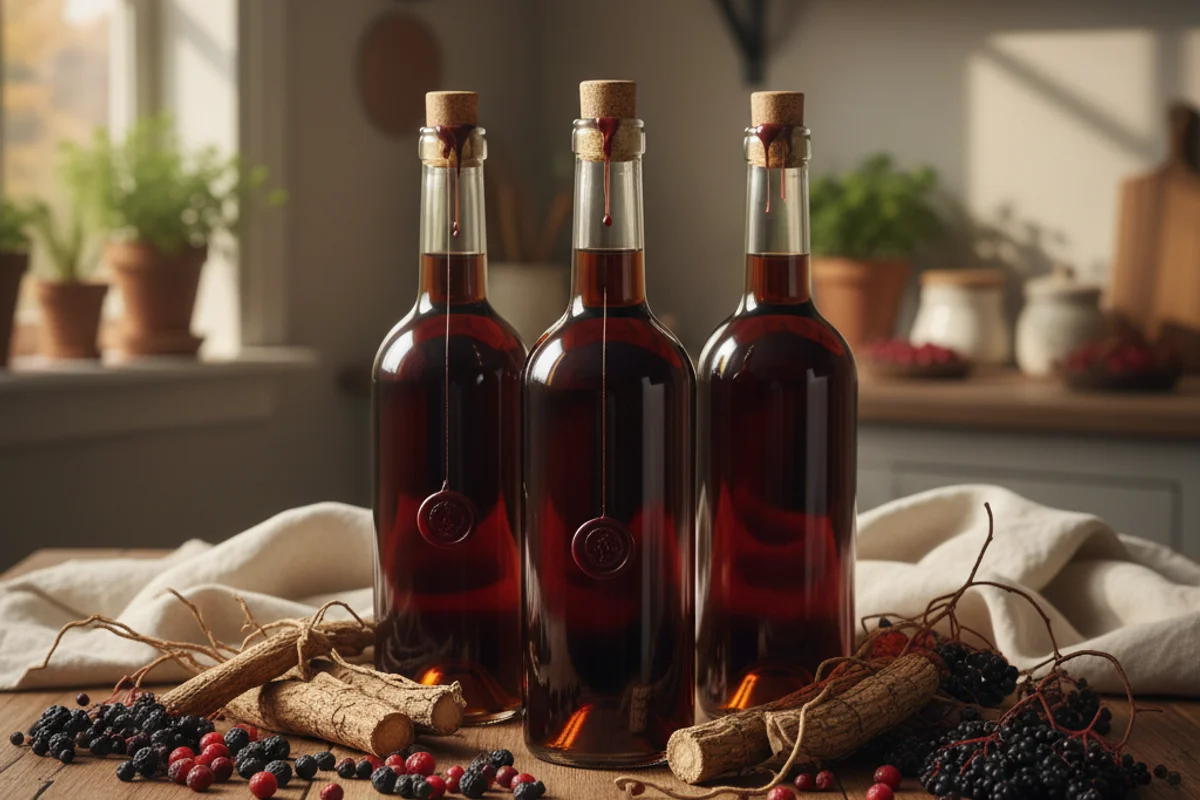
Think root beer — but fermented, drier, and with a complexity that the soda fountain version never dreamed of. Sarsaparilla root carries earthy, slightly sweet, vaguely medicinal aromatics that transform under fermentation into something genuinely interesting. Four versions exist here: a classic root-based wine with a caramel note, a lighter leaf-based pour, a banana-boosted root wine with real body, and a delicate floral expression from the plant’s small white blossoms. Each one is its own experience.
The beginner trap: Skipping the 12-hour Campden tablet rest before pitching yeast — that wait is what kills wild microbes and gives your wine yeast a clean runway.
Recipe 1 — Ground Root (Classic)
Ingredients
- 1½ oz ground dried sarsaparilla root (find online or at herb shops)
- ½ oz caramel (liquid caramel or caramel syrup works)
- 2 lbs granulated sugar
- 7½ pts water, divided
- 1½ tsp tartaric acid (or substitute juice of 2 lemons)
- 1 Campden tablet, crushed
- 1 tsp yeast nutrient
- 1 packet wine yeast
Method
- Bring 1½ pints of water to a boil. Stir in the sarsaparilla root, caramel, and sugar until fully dissolved.
- Remove from heat and pour in the remaining water to cool the must down faster.
- Stir in the tartaric acid and yeast nutrient. Cover and let the mixture cool to room temperature.
- Stir in the crushed Campden tablet, cover again, and wait 12 hours.
- Add your activated yeast. Ferment in the primary for 4 days, stirring 2–3 times daily.
- Pour the liquid through a nylon straining bag into your secondary fermenter and fit an airlock.
- Rack, top up, and refit the airlock every 30 days until the wine clears and no new sediment appears over a full 30-day period.
- Stabilize, sweeten if you like, wait 10 days, then bottle. Drinkable young, but 6 months of aging pays off.
Recipe 2 — Sarsaparilla Leaves
Ingredients
- 1½ lbs fresh sarsaparilla leaves, coarsely chopped
- 2½ lbs granulated sugar
- 7½ pts water
- ½ oz citric acid (or substitute juice of 3 lemons)
- 1 Campden tablet, crushed
- 1 tsp yeast nutrient
- 1 packet wine yeast
Method
- Bring all the water to a boil and stir in the sugar until dissolved.
- Wash the leaves, chop them coarsely, and place them in your primary fermenter.
- Add the citric acid and yeast nutrient to the primary, then pour the hot sugar-water over everything. Cover and let it cool to room temperature.
- Stir in the crushed Campden tablet, recover, and wait 12 hours.
- Add activated yeast, cover the primary, and stir twice a day for 5 days.
- Strain the liquid into your secondary fermenter and fit an airlock.
- Rack, top up, and refit the airlock every 30 days until the wine clears and stays clear for a full 30-day stretch.
- Stabilize, sweeten if desired, wait 10 days, then bottle. Good young; better at 6 months.
Recipe 3 — Root and Banana
Ingredients
- 2 oz ground dried sarsaparilla root
- 3 lbs ripe bananas (skins on, thinly sliced)
- 2½ lbs granulated sugar
- 7½ pts water
- ½ oz citric acid (or juice of 3 lemons)
- ¼ tsp wine tannin (or substitute 1 cup plain black tea, brewed strong)
- 1 Campden tablet, crushed
- 1 tsp yeast nutrient
- 1 packet wine yeast
Method
- Bring all the water to a boil and dissolve the sugar into it.
- Slice the bananas thinly — skins and all — and place them in the primary with the sarsaparilla root, citric acid, tannin, and yeast nutrient.
- Pour the boiling sugar-water over everything in the primary. Cover and let it cool to room temperature.
- Stir in the crushed Campden tablet, cover, and wait 12 hours.
- Add activated yeast, cover, and stir once daily for 10 days.
- Strain into your secondary, top up to the shoulder, and fit an airlock.
- Rack, top up, and refit the airlock every 30 days until clear and stable for 30 days.
- Stabilize, sweeten to taste, wait 10 days, then bottle. Age at least 6 months — 12 months is noticeably better.
Recipe 4 — Sarsaparilla Flowers
Ingredients
- 1½ to 2 quarts fresh sarsaparilla flowers, gently rinsed
- 2½ lbs granulated sugar
- 7½ pts water
- 1½ oz acid blend (or substitute juice of 3–4 lemons)
- ¼ tsp wine tannin (or substitute 1 cup strong-brewed black tea)
- 1 Campden tablet, crushed
- 1½ tsp yeast nutrient
- 1 packet Côte des Blancs or D-47 wine yeast (or any low-temperature white wine yeast)
Method
- Bring all the water to a boil and stir in the sugar until fully dissolved.
- Place the flowers in your primary fermenter along with the acid blend, tannin, and yeast nutrient.
- Pour the hot sugar-water over the flowers, cover, and let everything cool to room temperature.
- Stir in the crushed Campden tablet, cover, and rest for 12 hours.
- Add your activated yeast, cover the primary, and stir once daily for 6–7 days.
- Strain into the secondary, top up, and fit an airlock.
- Rack, top up, and refit the airlock every 30 days until the wine is clear and stable over a full 30-day period.
- Stabilize, sweeten if desired, wait 10 days, then bottle. Cellar for at least 6 months before opening.
Why this works
Sarsaparilla root gets its distinctive flavor from saponins and a handful of volatile aromatic compounds. Hot water does the heavy lifting here — it pulls those flavor molecules out of the root (or leaves, or flowers) far more efficiently than cold water ever would. Tartaric acid in Recipe 1 and citric acid in the others drop the must pH into the range where wine yeast thrives and spoilage organisms struggle. The banana in Recipe 3 contributes more than body: banana flesh is rich in pectin and natural sugars that give the finished wine a rounder mouthfeel, while the tannin from the skins adds just enough grip to keep things balanced. Caramel in Recipe 1 isn’t just flavor — it adds a touch of color and very small amounts of melanoidins that contribute to the wine’s depth.
Notes
- Ground dried sarsaparilla root is the hardest ingredient to source locally. Check online herb retailers or natural food stores. It is sometimes labeled “zarzaparrilla.” Do not substitute sarsaparilla soda or extract — the sugar and preservatives will wreck your fermentation.
- If you cannot find wine tannin, a single cup of cold-brewed strong black tea is a reliable grocery-store swap in Recipes 3 and 4.
- All four wines benefit from patience. The root-based versions especially need time to mellow; an impatient early taste may mislead you — bottle it and forget it for six months.