Sunflower Wine (1)
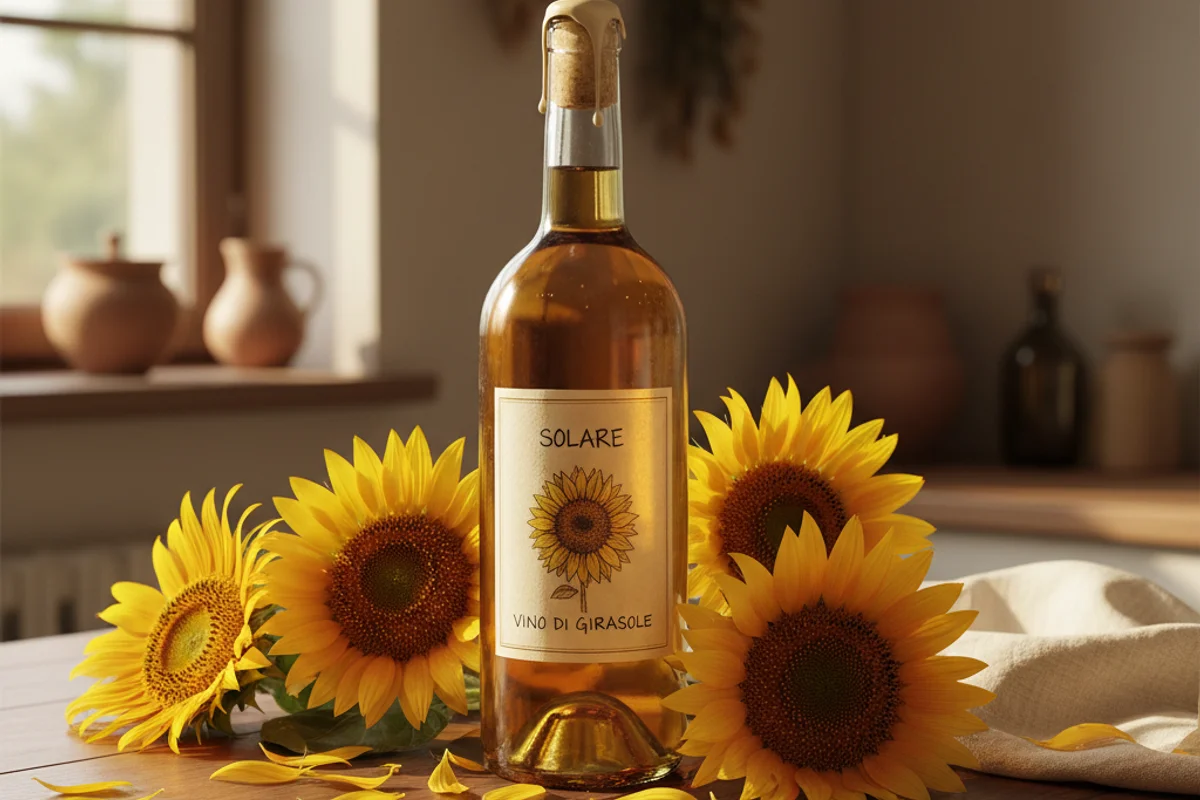
Sunflowers are not just for fields and vases. Strip away those golden petals and you have a surprisingly delicate winemaking ingredient — floral without being perfumy, with a faint earthy warmth underneath. Frozen grape juice concentrate and fresh citrus zest round out the body and brightness, turning what sounds like a novelty into a genuinely drinkable, pale-gold white wine. This one rewards patience: a full year in the bottle is not optional, it’s the whole point.
The beginner trap: Skipping the full 3-day cold-steep of the petals and zest cuts your flavor extraction short — the wine ends up thin and one-dimensional.
Ingredients
- 2 quarts sunflower petals, freshly picked and rinsed
- 1 can (11 oz) Welch’s 100% White Grape Juice frozen concentrate
- 1 lb 10 oz granulated sugar
- 2 lemons, juice and zest
- 3 oranges, juice and zest
- 1 tsp yeast nutrient
- ½ tsp pectic enzyme
- ½ tsp grape tannin (or 1 cup strong-brewed unsweetened black tea as a substitute)
- 6½ pints water
- Côtes-du-Rhône or Hock wine yeast (or any dry white wine yeast such as Lalvin 71B)
Method
- Bring the water to a full boil. While it heats, zest the lemons and oranges, then juice them and set the juice aside.
- Place the sunflower petals and citrus zest together in a nylon straining bag and tie it closed.
- Set the bag in your primary fermenter and pour the boiling water directly over it. Cover the fermenter.
- Squeeze the bag several times each day for 3 days to pull color and flavor from the petals and zest.
- After 3 days, drain and squeeze the bag firmly to recover all liquid, then remove and discard it.
- Stir the sugar into the warm liquid until it fully dissolves.
- Add the grape juice concentrate, citrus juice, yeast nutrient, pectic enzyme, and tannin. Stir well, cover, and let the must rest for 10–12 hours.
- Prepare your yeast according to the packet instructions, then add the activated yeast to the must and cover.
- Stir the must twice a day for 5 days.
- Transfer the wine to a sealed secondary fermenter (carboy) and fit an airlock.
- Once the wine clears, rack it off the sediment into a clean carboy, add one crushed Campden tablet, top up to minimize headspace, and reattach the airlock.
- Rack again every 2 months for 6 months total — add a second crushed Campden tablet at the middle racking and stabilize with potassium sorbate plus a final Campden tablet at the last racking.
- Wait one more month, then rack into bottles and cellar for 12 months before opening.
Why this works
Sunflower petals carry aromatic compounds and faint pigments, but they have almost no sugar, acid, or tannin on their own — which is exactly why this recipe layers in so much support. The frozen grape concentrate adds fermentable sugar and a neutral fruit backbone without dominating the flower character. Citrus zest contributes volatile aromatics and natural pectin, while the pectic enzyme breaks that pectin down so the finished wine clears properly instead of staying hazy. Tannin gives the wine just enough structure to age without going flat. The long bottle aging lets all these pieces knit together into something coherent — rush it and you’ll taste the parts instead of the whole.
Notes
Harvest petals from pesticide-free sunflowers only — garden-grown or farmers’ market flowers are safest. If fresh sunflowers are out of season, dried petals from a homebrew supplier can work; use about 1 oz dried in place of 2 quarts fresh. Any dry white wine yeast from a grocery-store wine kit will substitute for the specialty strains listed.